
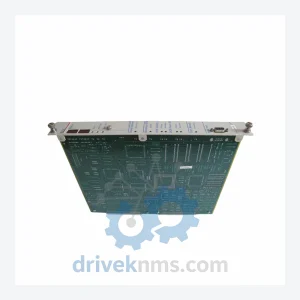
WESTINGHOUSE 4256A88G01 4256A88G04 PLC Controller – Ovation Series
Westinghouse 4256A88G01 4256A88G04 is listed for OVATION RFQ review. Confirm quantity, condition and destination before quotation.
RFQ-ready industrial model
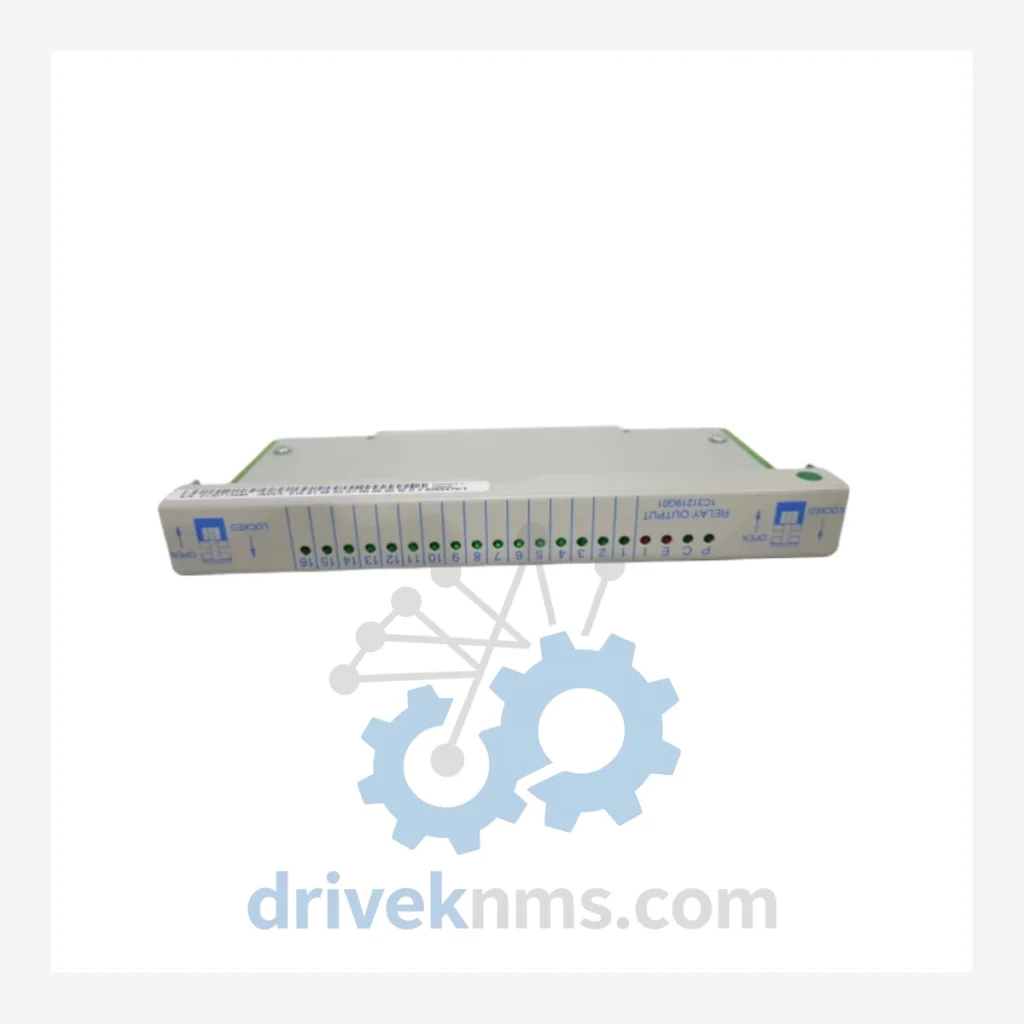
Model: 1C31219G01
Product Overview
Commercial availability is handled through direct RFQ, model verification and export-oriented follow-up rather than public cart checkout.
Datasheet Preview
Use attached product manuals when available. If the manual is not public yet, request the full file directly through RFQ.
Commercial Path
Product pages on DRIVEKNMS are designed to verify model, brand and series first, then move the buyer into one clean quotation path.
Technical Dossier
The Emerson Ovation Distributed Control System (DCS) is one of the most widely deployed process automation platforms in global heavy industry. Installed across coal-fired and nuclear power generation facilities, petroleum refineries, chemical processing plants, and water treatment infrastructure, the Ovation platform has accumulated a multi-decade installed base that continues to demand active spare parts support. Its modular I/O architecture, deterministic scan cycle, and redundancy-capable backplane design made it the preferred DCS for high-availability continuous process environments throughout the 1990s and 2000s. As of 2026, a significant portion of the global Ovation installed base remains in active production, creating sustained procurement demand for both current and end-of-life modules.
The Ovation platform was originally developed by Westinghouse Process Control, subsequently acquired by Emerson Electric in 1998 and integrated into the Emerson Process Management portfolio. The system architecture has evolved through three identifiable generations:
Generation 1 (Westinghouse WDPF era, pre-1998): Early Ovation hardware shared backplane and I/O conventions with the WDPF platform. Modules from this era used the 1C3xxxx and 5X0xxxx part numbering conventions. Compatibility between WDPF and early Ovation I/O was partial and required careful revision-level verification.
Generation 2 (Emerson Ovation 1.x–2.x, 1998–2010): This period saw the standardization of the Ovation Drop architecture, where each Drop consists of a controller, power supply, and up to 12 I/O modules on a shared backplane. The 1C31xxx and 5X00xxx module families were consolidated and expanded. Ethernet-based communication between Drops and the Ovation Network was introduced, replacing earlier proprietary bus structures.
Generation 3 (Ovation 3.x–3.5+, 2010–present): Current Ovation releases support virtualized operator stations, IEC 62443 cybersecurity compliance, and expanded I/O density. However, the physical I/O module form factor has remained largely backward-compatible, allowing older 1C31xxx modules to operate within newer Drop configurations subject to firmware constraints. Sites running Ovation 3.x frequently require legacy I/O modules that are no longer in active production.
The following SKUs represent the most commonly sourced Ovation modules across active and end-of-life procurement channels. All models are classified by functional category.
Relay & Digital Output Modules
1C31219G01: Relay Output Module; 16-channel Form C relay outputs, 120/240 VAC rated, used in breaker control and valve actuation circuits.
1C31197G01: Digital Output Module; 32-channel 24 VDC sourcing output, high-density DO for solenoid and indicator loads.
1C31197G02: Digital Output Module; 32-channel 24 VDC sinking output variant, field-selectable per channel group.
Digital Input Modules
1C31116G01: Digital Input Module; 32-channel 24 VDC DI, wet contact input, standard process status monitoring.
1C31116G02: Digital Input Module; 32-channel 120 VAC DI, used in legacy panel interface applications.
1C31234G01: Digital Input Module; 16-channel isolated DI, suitable for high-voltage field signal environments.
Analog Input Modules
1C31129G01: Analog Input Module; 16-channel 4–20 mA AI with HART pass-through, standard transmitter interface.
1C31129G02: Analog Input Module; 16-channel ±10 VDC AI, used in turbine and compressor control loops.
1C31113G01: Thermocouple Input Module; 16-channel TC input supporting J, K, T, E, R, S, B types with CJC.
1C31238G01: RTD Input Module; 8-channel PT100/PT1000 RTD input, 3-wire and 4-wire configuration.
Analog Output Modules
1C31132G01: Analog Output Module; 8-channel 4–20 mA AO, used in control valve positioner and speed reference applications.
1C31132G02: Analog Output Module; 8-channel ±10 VDC AO, for drives and legacy actuator interfaces.
Controller & Processor Modules
5X00070G01: Ovation Controller Module; primary Drop controller, dual-redundancy capable, Ethernet network interface.
5X00119G01: Ovation Controller Module; enhanced processing variant with expanded memory for large I/O Drop configurations.
5X00481G03: Ovation Controller; current-generation Drop controller supporting Ovation 3.4+ firmware, backward-compatible I/O bus.
Power Supply Modules
1C31222G01: Drop Power Supply; 24 VDC backplane power, single-wide module, supports up to 12 I/O modules per Drop.
1C31222G02: Drop Power Supply; redundant power input variant, for high-availability Drop configurations.
A substantial portion of the 1C31xxx module family has reached end-of-active-production status with Emerson. Modules such as the 1C31219G01, 1C31116G02, and 1C31238G01 are no longer available through standard Emerson distribution channels and must be sourced through the secondary market or specialist industrial spare parts suppliers.
DriveKNMS maintains a global procurement network specifically structured for end-of-life DCS components. Our sourcing process for obsolete Ovation modules includes:
Ovation I/O modules use a proprietary backplane bus protocol. Functional verification requires hardware-level simulation of the Ovation Drop environment, not generic I/O bench testing. DriveKNMS applies the following QC procedures specific to the Ovation platform:
Q: How are RFQ terms confirmed?
A: Quantity, required condition, documentation needs, destination and sourcing route are confirmed during RFQ review before quotation.
Continue The Model Path
Move from this exact model into the matching system hub, brand archive, model-family archive or lifecycle sourcing route before sending a final RFQ list.
Related Paths
Westinghouse 4256A88G01 4256A88G04 is listed for OVATION RFQ review. Confirm quantity, condition and destination before quotation.
Westinghouse 2840A21G01 is listed for OVATION RFQ review. Confirm quantity, condition and destination before quotation.
Emerson KC3010X1-BA1 12P6762X042 is listed for OVATION RFQ review. Confirm quantity, condition and destination before quotation.