
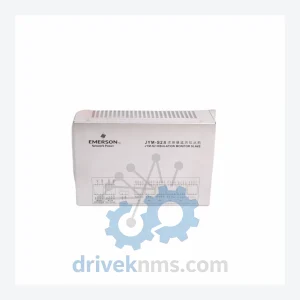
Emerson JYM-S2
Emerson JYM-S2 is listed for Monitoring Systems RFQ review. Confirm quantity, condition and destination before quotation.
RFQ-ready industrial model
Model: PR6423/00R-111 CON041
Product Overview
Commercial availability is handled through direct RFQ, model verification and export-oriented follow-up rather than public cart checkout.
Datasheet Preview
Use attached product manuals when available. If the manual is not public yet, request the full file directly through RFQ.
Commercial Path
Product pages on DRIVEKNMS are designed to verify model, brand and series first, then move the buyer into one clean quotation path.
Technical Dossier
RFQ support for obsolete parts: Send the model number, required quantity and destination so DriveKNMS can confirm sourcing options before quotation.
Note: Electrical parameters such as sensitivity, gap range, and cable length vary by sub-variant. Confirmed specifications are provided upon order inquiry. No parameters are published here that cannot be verified — equipment safety depends on accuracy.
The PR6423/00R-111 CON041 was engineered for continuous-duty vibration monitoring in high-stakes rotating equipment environments. Turbines, centrifugal compressors, and large pumps in petrochemical, power generation, and heavy manufacturing plants depend on this class of sensor to feed real-time shaft displacement data into protection systems. When Emerson discontinued the PR6423 line, it did not eliminate the installed base — it created a supply gap that grows more acute with each passing year.
Facilities that built their machinery protection architecture around Epro-series sensors face a hard choice: source the original component, or commit to a full platform migration. Migration is rarely a straightforward decision. It involves not only hardware replacement but also reconfiguration of trip setpoints, re-baselining of vibration signatures, and in regulated industries, re-submission of safety documentation. For a mid-sized power plant or refinery, this process can consume 12 to 24 months and budgets that were never allocated for it.
Maintaining a strategic inventory of PR6423/00R-111 CON041 units is not stockpiling — it is asset protection. A single sensor held in a climate-controlled spare parts cabinet can defer a multi-million dollar capital project by five to ten years. That is the calculus that experienced plant engineers and reliability managers understand. DriveKNMS exists to support that calculus with verified, available inventory.
For plant management facing pressure to retire aging control and protection systems, the following strategy has been applied successfully across petrochemical and power generation facilities to defer capital expenditure while maintaining operational integrity:
2. Establish a Minimum Viable Spare Quantity (MVSQ). For a sensor with a 7–10 year field life under normal operating conditions, holding two to three units per critical loop provides a statistically sound buffer against unplanned failure without excessive capital tie-up.
4. Implement Condition-Based Monitoring on Legacy Sensors. Trend the output signal of installed PR6423-series sensors against baseline. Early drift detection allows planned replacement during scheduled outages rather than forced emergency shutdowns.
5. Document and Preserve Configuration Data. For systems where sensor replacement requires re-gapping or driver recalibration, maintain written records of the original installation parameters. This eliminates re-commissioning uncertainty when a replacement unit is installed.
Applied together, these measures routinely extend the productive life of legacy rotating machinery protection systems by five to ten years — at a fraction of the cost of platform migration.
DriveKNMS applies a 5-step quality assurance process to all discontinued components before dispatch review:
Step 1 – Visual and Mechanical Inspection: Full external examination for physical damage, connector pin integrity, and cable jacket condition. Corroded or mechanically compromised units are rejected at this stage.
Step 2 – Electrolytic Capacitor Assessment: For refurbished units, capacitors in associated driver electronics are evaluated for ESR drift and leakage — the primary failure mode in aged analog instrumentation.
Step 3 – Firmware and Labeling Verification: Part number, revision code, and any embedded firmware identifiers are cross-checked against procurement documentation to confirm authenticity and revision compatibility.
Step 4 – Pin and Contact Corrosion Screening: Connector contacts are inspected under magnification and cleaned where necessary. Contact resistance is verified to be within acceptable limits.
The PR6423/00R-111 CON041 is a direct mechanical and electrical replacement for the original installed unit. No modification to the existing sensor mounting, cable routing, or driver/proximitor configuration is required in standard replacement scenarios. This means:
— No re-engineering of the sensor mounting bracket or target gap setup beyond standard re-gapping procedure.
— No reprogramming of the connected protection monitor, provided the replacement unit matches the original revision.
— No changes to trip setpoints, alarm thresholds, or I/O wiring in the protection system.
— Elimination of the engineering hours and contractor costs associated with a non-equivalent substitution.
— Immediate return to service following installation and gap verification.
For maintenance teams operating under tight turnaround windows, this drop-in compatibility is the difference between a four-hour sensor swap and a four-week engineering project.
Q: How do I know the unit is genuine and not a counterfeit?
A: All units are sourced through documented industrial channels. Part markings, date codes, and revision labels are verified during our QA process. Procurement documentation is available for review upon request for qualified buyers.
Q: Can you source other Emerson Epro or Bently Nevada components?
A: Yes. DriveKNMS specializes in hard-to-find and discontinued industrial automation components across multiple platforms. Submit your full bill of materials to our team for availability assessment.
Continue The Model Path
Move from this exact model into the matching system hub, brand archive, model-family archive or lifecycle sourcing route before sending a final RFQ list.
Related Paths
Emerson JYM-S2 is listed for Monitoring Systems RFQ review. Confirm quantity, condition and destination before quotation.
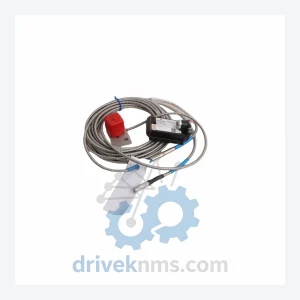
Emerson PR6426/010-030 CON021/916-160 is listed for Monitoring Systems RFQ review. Confirm quantity, condition and destination before quotation.
Emerson KJ3102X1-BB1 12P1864X032 is listed for DeltaV RFQ review. Confirm quantity, condition and destination before quotation.