Technical Dossier
Product Details And Specifications
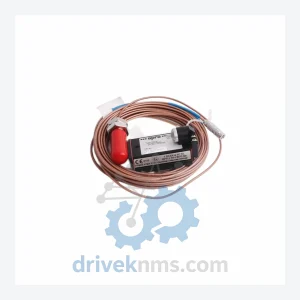
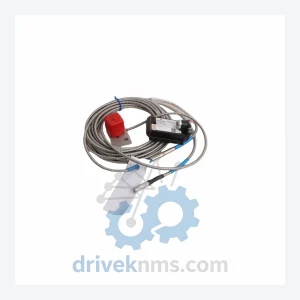
Emerson PR6423/10R-040 CON021 Eddy Current Sensor – Obsolete Epro Series Spare Part
RFQ support for obsolete parts: Send the model number, required quantity and destination so DriveKNMS can confirm sourcing options before quotation.
Technical Specifications
| Parameter | Detail |
| Manufacturer | Emerson (Epro) |
| Part Number | PR6423/10R-040 CON021 |
| Series | Epro PR6423 |
| Type | Eddy Current Proximity Sensor |
| Cable Length | 040 (approx. 4.0 m extension cable) |
| Connector Type | CON021 |
| Target Material Compatibility | Steel / Stainless Steel shafts (standard) |
| Typical System Compatibility | Emerson Epro CON0xx series drivers; legacy Bently Nevada 3300/3500 racks (with appropriate driver) |
| Discontinuation Status | Discontinued – no longer in active production by Emerson Epro |
| Country of Origin | Germany |
Note: Electrical parameters such as sensitivity (mV/µm), measurement range, and gap voltage are system-dependent and must be verified against the paired driver/proximitor datasheet. DriveKNMS does not publish unverified specifications.
Solving the Discontinued Hardware Crisis
The Emerson Epro PR6423 sensor series has been the backbone of shaft vibration and position monitoring in power generation, oil & gas, and petrochemical plants for decades. These sensors are embedded in protection systems where replacement is not a simple procurement exercise — the sensor, extension cable, and driver form a calibrated measurement chain. Substituting any element without verified compatibility risks false trips, missed fault detection, or — in worst cases — undetected shaft contact leading to catastrophic bearing or seal failure.
How to Extend Automation Asset Life by 5–10 Years: A Maintenance Strategy for Plant Management
For facilities managing rotating machinery under legacy vibration monitoring systems, the following framework has been applied successfully to defer capital expenditure while maintaining protection system integrity:
3. Define controlled storage conditions. Eddy current sensors are precision electromechanical components. Long-term storage requires humidity control (typically below 60% RH), protection from electrostatic discharge, and original or equivalent anti-static packaging. Shelf life under controlled conditions can exceed 10 years without measurable degradation of the sensing coil or cable assembly.
4. Document the measurement chain. For each installed PR6423 sensor, record the paired driver part number, gap voltage at installation, and calibration date. This documentation is essential for rapid replacement without recalibration delays. A replacement sensor installed with a documented gap setting can restore a protection channel to service in under two hours.
Applied consistently, this framework has allowed plant operators to maintain API 670-compliant protection systems on machinery with 20–30 year service histories, deferring system replacement until a planned capital cycle rather than an emergency shutdown.
Condition & Reliability Assurance
DriveKNMS applies a structured 5-step inspection protocol to all discontinued eddy current sensors before dispatch:
Q: How are RFQ terms confirmed?
A: Quantity, required condition, documentation needs, destination and sourcing route are confirmed during RFQ review before quotation.
Step 2 – Connector pin inspection. CON021 connector pins are inspected under magnification for oxidation, bending, or contamination. Pin corrosion is a primary failure mode in sensors removed from humid or process-adjacent environments.
Step 3 – Coil continuity and insulation resistance check. The sensing coil is verified for continuity and insulation resistance to confirm the core measurement element is intact.
Step 4 – Electrolytic capacitor assessment (where applicable in associated electronics). For any associated driver or signal conditioning electronics supplied alongside the sensor, electrolytic capacitor condition is assessed, as capacitor degradation is the leading age-related failure mode in legacy industrial electronics.
Step 5 – Firmware and configuration verification (driver units). Where a driver or proximitor unit is supplied, firmware version and configuration parameters are documented and verified against the original factory specification where reference data is available.
Units that pass all five stages are classified as verified serviceable. Units with any unresolved finding are either remediated to standard or withheld from sale.
Key Features for System Maintenance
The PR6423/10R-040 CON021 is a direct form-fit-function replacement for the original installed sensor in any system where this part number was specified. Key maintenance advantages include:
Drop-in replacement: The sensor mounts to the original bracket, connects to the original extension cable (or a replacement of identical specification), and interfaces with the original driver without modification. No field wiring changes are required.
No reprogramming required: The protection system rack — whether an Emerson Epro or compatible Bently Nevada architecture — does not require reconfiguration. The measurement chain parameters remain unchanged, provided the replacement sensor is installed to the documented gap specification.
Avoids engineering reconstruction costs: A verified original spare eliminates the need for system re-engineering, new rack procurement, field cable replacement, and the associated API 670 re-compliance verification that a platform migration would require. The cost differential between a spare part and a system upgrade is typically two to three orders of magnitude.
Maintains protection system integrity: Replacing a failed sensor with a verified original part preserves the calibrated measurement chain and the protection system's trip setpoint accuracy. This is not achievable with non-original substitutes that have not been characterized against the original driver.
Q: How is condition confirmed before quotation?
A: Available condition, photos, test records and documentation are checked according to the requested model and sourcing channel before a formal RFQ response.
Q: How do I confirm the part is genuine and not counterfeit?
A: DriveKNMS provides sourcing documentation for all obsolete inventory, including acquisition records and inspection reports. We do not source from unverified secondary markets. Customers with specific authentication requirements — including label verification and coil impedance testing — should state this requirement at the time of inquiry.
Q: Should I purchase more than one unit?
A: For any machine train where this sensor is installed in a protection-critical application, purchasing a minimum of two units is the standard recommendation. Given that production of the PR6423 series has ended and RFQ-reviewed sourcing status is finite, procurement decisions made today directly determine your options during the next unplanned failure event.
Q: Can this sensor be used with a Bently Nevada 3500 rack?
A: Compatibility between Emerson Epro sensors and Bently Nevada drivers is system-specific and depends on the driver module and configuration. DriveKNMS recommends verifying compatibility against your specific driver part number before procurement. We can assist with compatibility assessment upon request.