
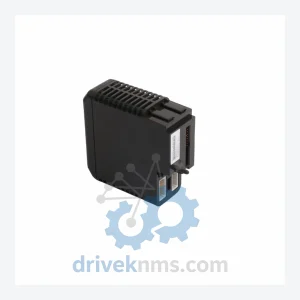
Emerson DeltaV KJ3241X1-BA1 12P2506X072 Interface Card
Emerson KJ3241X1-BA1 12P2506X072 is listed for DeltaV RFQ review. Confirm quantity, condition and destination before quotation.
RFQ-ready industrial model
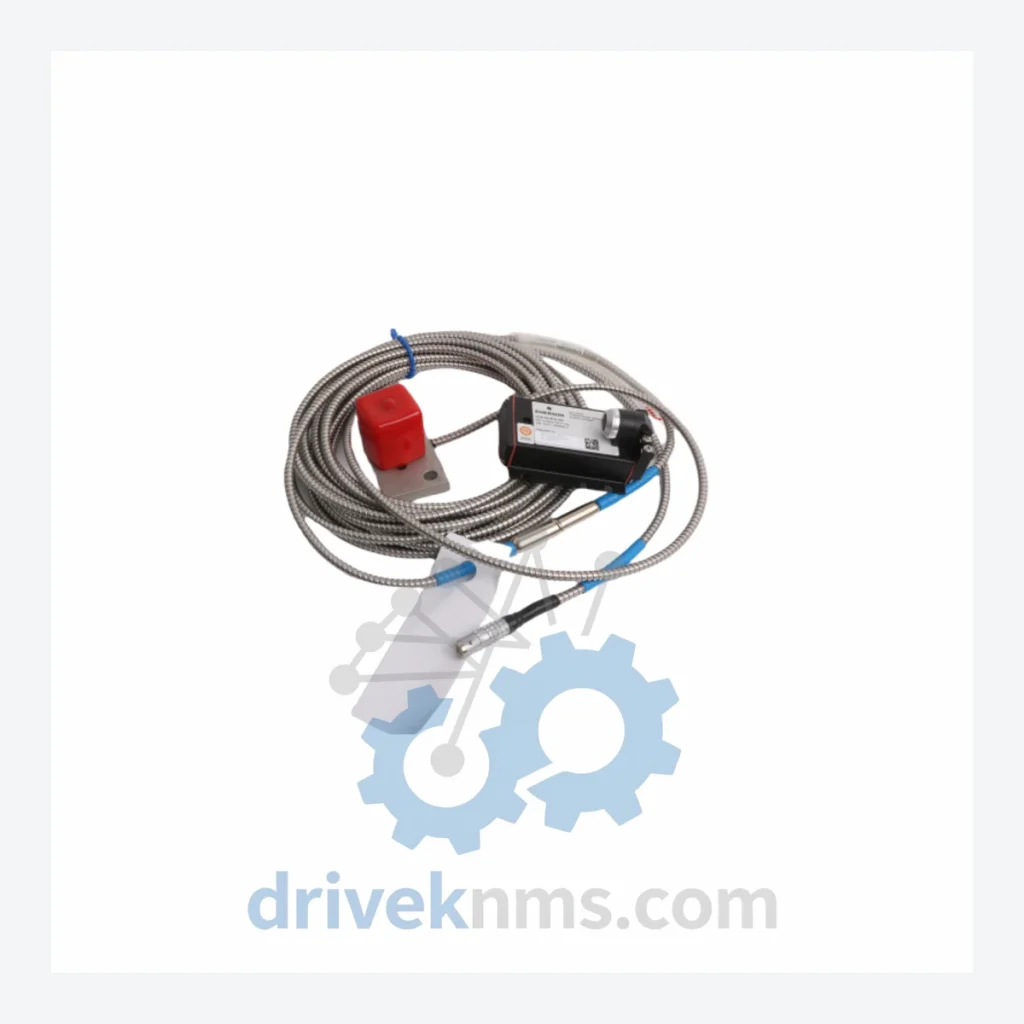
Model: PR6426/010-030 CON021/916-160
Product Overview
Commercial availability is handled through direct RFQ, model verification and export-oriented follow-up rather than public cart checkout.
Datasheet Preview
Use attached product manuals when available. If the manual is not public yet, request the full file directly through RFQ.
Commercial Path
Product pages on DRIVEKNMS are designed to verify model, brand and series first, then move the buyer into one clean quotation path.
Technical Dossier
The EMERSON PR6426 series is a line of eddy current (non-contact) proximity transducer systems engineered for continuous vibration, position, and displacement monitoring in rotating machinery. Deployed across petrochemical refineries, nuclear power stations, offshore platforms, LNG terminals, and heavy industrial compressor trains, the PR6426 system forms a core sensing layer within Bently Nevada-compatible machinery protection architectures. The series operates on the principle of electromagnetic induction: a probe tip generates a high-frequency magnetic field; when a conductive target enters the field, eddy currents are induced, altering the probe's impedance in a manner proportional to the gap distance. This signal is conditioned by a dedicated extension cable and driver/oscillator unit (CON021 series) to produce a calibrated DC voltage output, typically –24 VDC at 2 mm gap with a sensitivity of 7.87 V/mm. The PR6426 system is API 670-compliant and is the standard sensor of choice for turbine shaft radial vibration, axial position, and differential expansion measurement in critical rotating equipment.
The PR6426 series was developed under the Bently Nevada product lineage, which was acquired by GE in 2002 and subsequently transitioned to EMERSON as part of the broader Automation Solutions portfolio. Early-generation eddy current probes in this family used discrete coaxial cable assemblies with fixed-length extension cables (typically 5 m or 9 m), requiring precise impedance matching between probe, extension cable, and driver. The CON021 driver/oscillator unit was introduced to standardize signal conditioning across variable cable lengths, replacing earlier field-tuned oscillator modules that required manual calibration.
Architecturally, the PR6426 system is a three-component chain: (1) the probe body (PR6426/xxx-xxx), (2) the extension cable (CON041/xxx-xxx), and (3) the driver/oscillator (CON021/xxx-xxx). Each component is impedance-matched at the factory; field substitution of individual components without re-matching will produce calibration errors. Later revisions introduced metric-thread probe tips (M8 × 1.0 and M10 × 1.0) and extended temperature ratings for high-temperature turbine environments (up to 177°C probe tip). The CON021/916-160 driver variant specifically supports a 5 m extension cable with a –24 VDC supply and 4–20 mA output compatibility for integration with modern DCS platforms including DeltaV and Ovation.
The following SKUs represent verified, commonly stocked configurations within the PR6426 eddy current proximity transducer system. Each entry identifies the probe body or driver variant and its primary functional specification.
PR6426/000-030: 8 mm probe, 5 m integral cable, standard temperature, M10 thread, –24 VDC supply.
PR6426/000-040: 8 mm probe, 9 m integral cable, standard temperature, M10 thread, –24 VDC supply.
PR6426/010-030: 8 mm probe, 5 m integral cable, high-temperature rated (177°C tip), M10 thread, –24 VDC supply.
PR6426/010-040: 8 mm probe, 9 m integral cable, high-temperature rated, M10 thread, –24 VDC supply.
PR6426/020-030: 5 mm probe, 5 m integral cable, standard temperature, M8 thread, –24 VDC supply.
PR6426/020-040: 5 mm probe, 9 m integral cable, standard temperature, M8 thread, –24 VDC supply.
PR6426/030-030: 11 mm probe, 5 m integral cable, standard temperature, M14 thread, –24 VDC supply.
PR6426/030-040: 11 mm probe, 9 m integral cable, standard temperature, M14 thread, –24 VDC supply.
PR6426/040-030: 5 mm probe, 5 m integral cable, high-temperature rated (177°C), M8 thread, –24 VDC supply.
PR6426/040-040: 5 mm probe, 9 m integral cable, high-temperature rated, M8 thread, –24 VDC supply.
CON021/916-100: Driver/oscillator, 5 m cable system, –24 VDC, voltage output, standard housing.
CON021/916-160: Driver/oscillator, 5 m cable system, –24 VDC, voltage output, extended temperature housing, DCS-compatible.
CON021/916-200: Driver/oscillator, 9 m cable system, –24 VDC, voltage output, standard housing.
CON021/916-260: Driver/oscillator, 9 m cable system, –24 VDC, voltage output, extended temperature housing.
CON041/916-030: Extension cable, 5 m, impedance-matched for PR6426 8 mm probe systems.
CON041/916-040: Extension cable, 9 m, impedance-matched for PR6426 8 mm probe systems.
CON041/916-050: Extension cable, 14 m, impedance-matched for PR6426 8 mm probe systems, long-reach installations.
Each PR6426 probe body and CON021 driver unit processed by DriveKNMS undergoes a structured verification protocol specific to eddy current transducer systems. Probe coil resistance is measured at the tip connector using a calibrated LCR meter; values outside the factory specification (typically 8–12 Ω for 8 mm probes) indicate coil degradation or moisture ingress and result in immediate rejection. Extension cable impedance is verified end-to-end using a time-domain reflectometer (TDR) to detect cable breaks, impedance discontinuities, or connector corrosion. Driver/oscillator units (CON021) are bench-tested against a calibrated target plate at known gap distances (0.25 mm, 1.0 mm, 2.0 mm) to verify output linearity and sensitivity (target: 7.87 ± 0.25 V/mm). System-level gap voltage curves are recorded and supplied with each matched set. Units exhibiting non-linear response, output drift exceeding ±2%, or oscillator frequency deviation are quarantined and not released for sale. All test data is retained for a minimum of five years and is available to customers upon request.
Continue The Model Path
Move from this exact model into the matching system hub, brand archive, model-family archive or lifecycle sourcing route before sending a final RFQ list.
Related Paths
Emerson KJ3241X1-BA1 12P2506X072 is listed for DeltaV RFQ review. Confirm quantity, condition and destination before quotation.
Emerson KJ3003X1-EA1 12P0921X062 is listed for DeltaV RFQ review. Confirm quantity, condition and destination before quotation.
Emerson JYM-S2 is listed for Monitoring Systems RFQ review. Confirm quantity, condition and destination before quotation.