
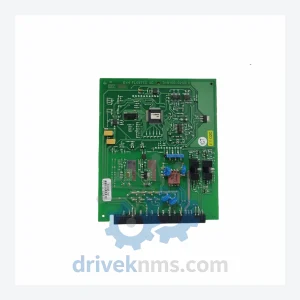
Endress+Hauser 319100-0200B PC Board
Endress+Hauser 319100-0200B is listed for Monitoring Systems RFQ review. Confirm quantity, condition and destination before quotation.
RFQ-ready industrial model
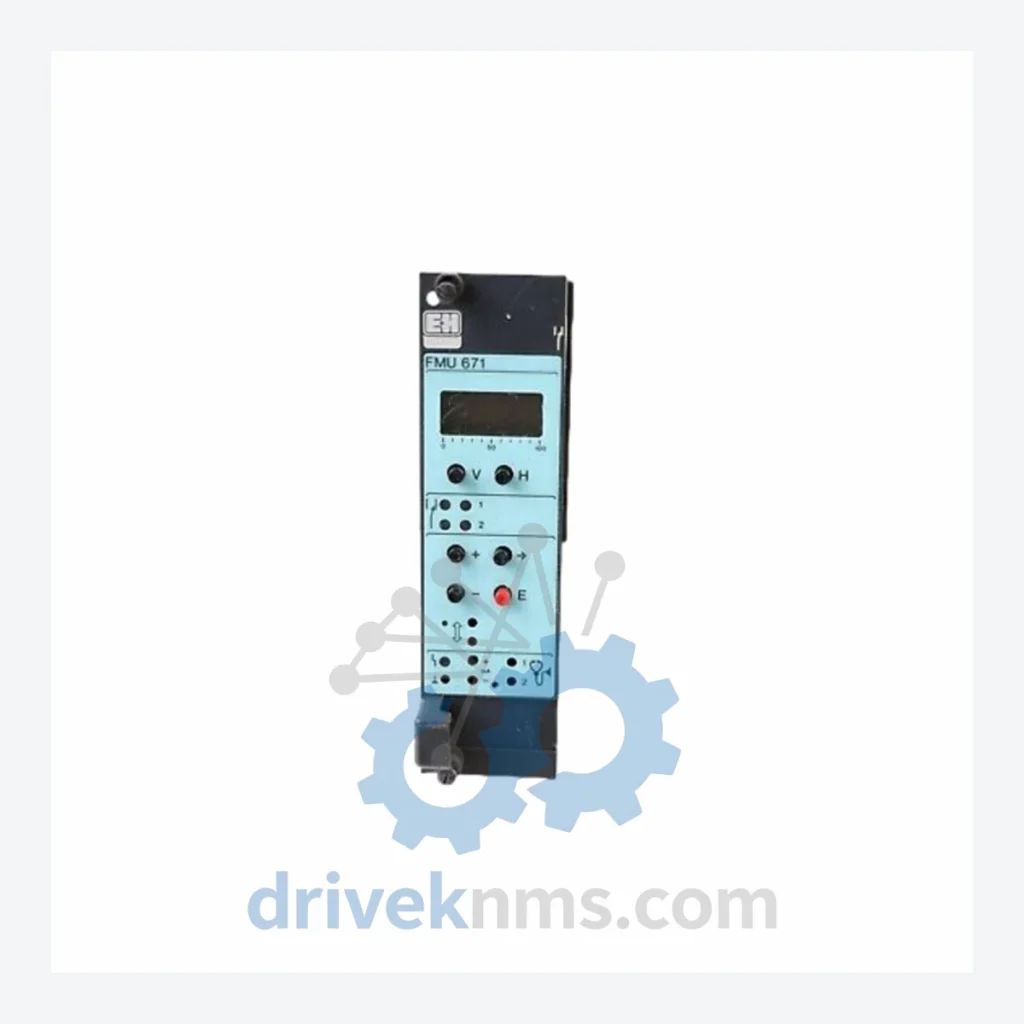
Model: FMU671
Product Overview
Commercial availability is handled through direct RFQ, model verification and export-oriented follow-up rather than public cart checkout.
Datasheet Preview
Use attached product manuals when available. If the manual is not public yet, request the full file directly through RFQ.
Commercial Path
Product pages on DRIVEKNMS are designed to verify model, brand and series first, then move the buyer into one clean quotation path.
Technical Dossier
RFQ support for obsolete parts: Send the model number, required quantity and destination so DriveKNMS can confirm sourcing options before quotation.
| Manufacturer | Endress+Hauser (E+H) |
| Model / Part Number | FMU671 |
| Series | Nivosonic |
| Measurement Principle | Ultrasonic, non-contact |
| Application | Continuous level and volume measurement of liquids and bulk solids |
| Country of Origin | Germany |
| Product Status | Discontinued / Obsolete – No longer manufactured by Endress+Hauser |
| Typical System Compatibility | HART 4–20 mA process control loops; compatible with legacy DCS platforms including Siemens SIMATIC PCS 7, Honeywell Experion, ABB System 800xA, and older Endress+Hauser Fieldcare installations |
The FMU671 was engineered for demanding industrial environments where non-contact measurement is required — corrosive media, high-dust atmospheres, and tanks where physical contact with the product is not permissible. Its signal processing firmware was tuned specifically for the Nivosonic transducer geometry. This is not a generic ultrasonic transmitter that can be substituted with a current-generation unit without engineering intervention.
Facilities running the FMU671 in a HART loop tied to a legacy DCS face a specific problem: the current Endress+Hauser portfolio has moved to FMU90 and FMU95 platforms, which carry different device descriptions (DD files), different parameterization structures, and in some cases different transducer mounting dimensions. A direct swap is not guaranteed without re-engineering the loop. For plants operating under strict change-management protocols — pharmaceutical, chemical, food and beverage — any hardware substitution triggers a formal change control process that can take months and cost more than the original installation.
Maintaining the FMU671 in service with a verified spare unit is the operationally sound decision. It preserves the existing device description in the DCS, avoids re-parameterization, and keeps the process running under the validated configuration. For asset managers under pressure to defer capital expenditure, this is the argument that holds up in a budget review: one spare part versus a six-figure system modification project.
Plant managers facing system retirement pressure from corporate asset teams are often working with a false premise: that discontinued instrumentation equals unreliable instrumentation. The FMU671, when properly maintained and supported by verified spare inventory, is capable of continued reliable service well beyond its official end-of-life date. The following strategy has been applied successfully in petrochemical, water treatment, and bulk materials handling facilities.
1. Establish a dedicated spare inventory. A minimum of one verified FMU671 unit held on-site eliminates the single point of failure that forces emergency procurement at premium prices or, worse, forces an unplanned system upgrade. For critical measurement points, two units in reserve is the standard recommendation.
2. Document the exact order code. The FMU671 was available in multiple configurations. The order code determines the transducer frequency, housing type, approval rating, and output configuration. Maintaining a record of the exact order code for each installed unit ensures that any replacement sourced from the secondary market is a true drop-in match.
3. Implement a scheduled inspection cycle. Ultrasonic transmitters in dusty or humid environments are susceptible to transducer face contamination and cable seal degradation. A biannual inspection of the transducer face, cable entry seals, and terminal connections extends service life and catches degradation before it becomes a failure event.
4. Preserve the device parameterization. Export and archive the full parameter set from each installed FMU671 using Endress+Hauser FieldCare or a compatible HART communicator. In the event of a unit failure, a replacement can be configured to the exact same parameter set in hours rather than days.
5. Engage a qualified secondary market supplier. Not all secondary market inventory is equal. Units sourced without inspection history or functional verification carry risk. DriveKNMS applies a structured QA process to every unit before it leaves our facility.
Every FMU671 unit processed by DriveKNMS passes through a five-stage inspection protocol before it is offered for sale. This protocol was developed specifically for discontinued process instrumentation where the consequences of a field failure are measured in production hours, not component cost.
Stage 1 – Electrolytic Capacitor Assessment: Capacitors in the power supply and signal conditioning circuits are inspected for physical signs of aging — bulging, electrolyte leakage, and elevated ESR. Units with capacitors showing degradation are either recapped with equivalent-specification components or removed from inventory.
Stage 2 – Firmware Version Verification: The installed firmware version is read and recorded. Known firmware revisions with documented field issues are flagged. Where a firmware update was released by Endress+Hauser prior to end-of-life, the update status is confirmed.
Stage 3 – Terminal and Pin Corrosion Inspection: All terminal blocks, connector pins, and cable entry points are inspected under magnification for oxidation, corrosion, and mechanical damage. Affected contacts are cleaned or the unit is rejected from inventory.
Stage 4 – Functional Bench Test: Where test equipment permits, the unit is powered and the output signal is verified against the expected response. Transducer continuity is confirmed.
Stage 5 – Packaging and Storage: Units are packaged in anti-static, moisture-barrier packaging and stored in a climate-controlled environment. Each unit is tagged with its inspection date and condition grade.
The primary operational value of sourcing a genuine FMU671 replacement is the elimination of re-engineering cost. A verified FMU671 unit installed in place of a failed unit requires no changes to the DCS device description, no re-parameterization of the measurement loop, and no modification to the existing cable infrastructure. The process can be restored to validated operating conditions by maintenance personnel without specialist instrumentation engineers on-site.
Should I purchase more than one unit?
For any measurement point classified as critical to production continuity, holding a minimum of one on-site spare is standard practice. For facilities with multiple FMU671 installations, a centralized spare pool of two to three units is the cost-effective approach. The secondary market supply of verified FMU671 units is finite. Procurement now, at a known cost, is preferable to emergency sourcing at an unknown price when a unit fails.
Continue The Model Path
Move from this exact model into the matching system hub, brand archive, model-family archive or lifecycle sourcing route before sending a final RFQ list.
Related Paths
Endress+Hauser 319100-0200B is listed for Monitoring Systems RFQ review. Confirm quantity, condition and destination before quotation.
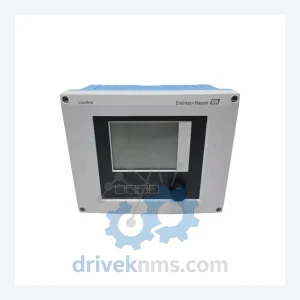
Endress+Hauser CM442-AAM1A2F010A is listed for Monitoring Systems RFQ review. Confirm quantity, condition and destination before quotation.
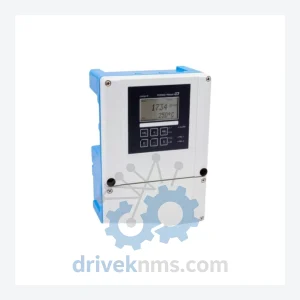
Endress+Hauser CLM253-CD0005 is listed for Monitoring Systems RFQ review. Confirm quantity, condition and destination before quotation.