Technical Dossier
Product Details And Specifications
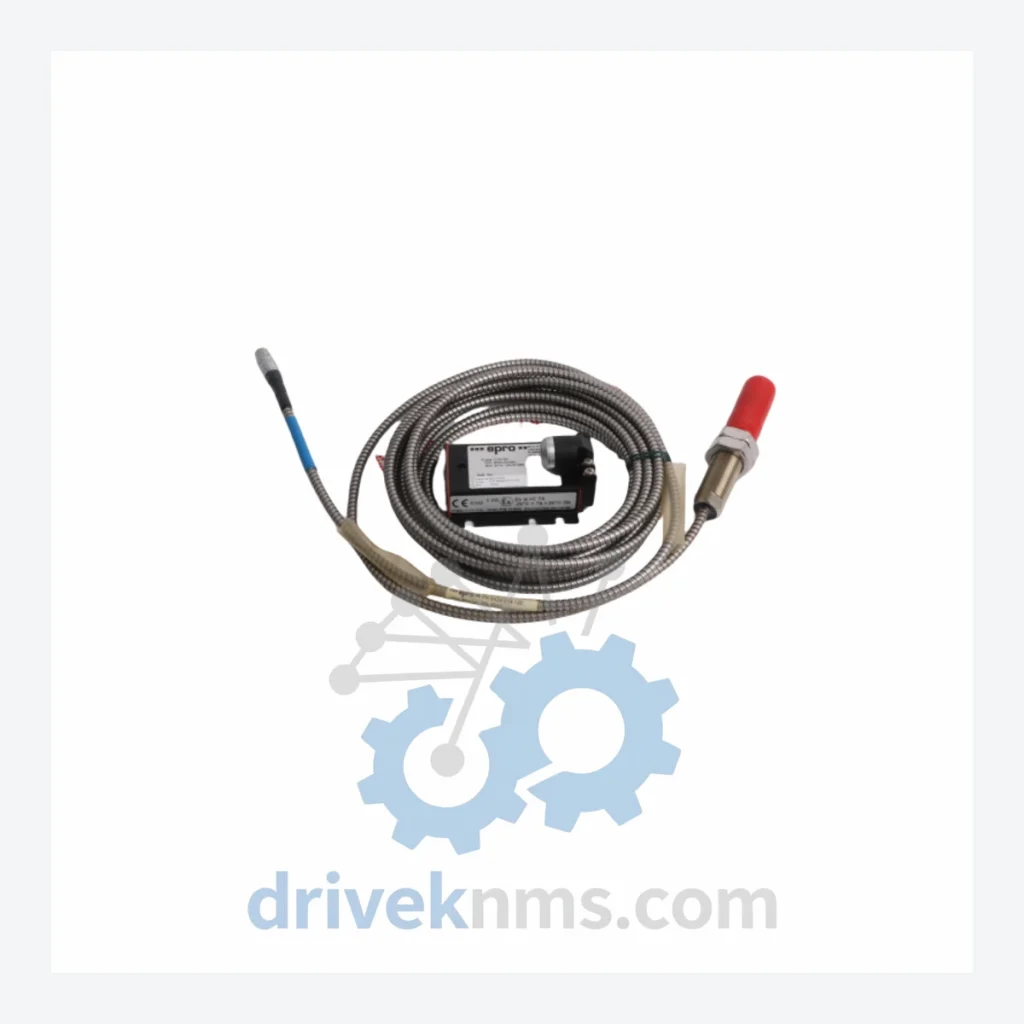
EPRO PR6424/014-120 CON021 Power Supply – Obsolete EPRO Series Spare Part
RFQ support for obsolete parts: Send the model number, required quantity and destination so DriveKNMS can confirm sourcing options before quotation.
Technical Specifications
Note: Electrical parameters (voltage input/output, current rating) are not published here to prevent specification errors. Please contact our technical team for confirmed datasheet documentation prior to installation.
Solving the Discontinued Hardware Crisis
The EPRO PR6424 series was engineered for continuous-duty operation in turbine overspeed protection, vibration monitoring, and machinery safeguarding applications — environments where system uptime is measured in years, not quarters. Many of these installations remain in active service at power generation facilities, petrochemical plants, and heavy industrial sites worldwide.
For plant managers operating under capital expenditure constraints, maintaining a qualified spare inventory of critical discontinued modules is not deferred maintenance. It is asset protection strategy.
Extending Automation Asset Life by 5–10 Years: A Practical Framework
Facilities that successfully extend legacy protection system service life by a decade share a common operational discipline. The following framework reflects field-proven practice, not theoretical guidance.
1. Criticality mapping: Identify every module in the protection chain that is discontinued or approaching end-of-life. Prioritize by failure consequence — modules whose failure triggers a full unit trip or loss of protection function rank highest.
2. Minimum spare holding: For high-criticality discontinued modules, maintain a minimum of two qualified spares on-site. One for immediate swap, one as a verified backup. The carrying cost of two spare modules is negligible against the cost of a single unplanned outage.
3. Condition-based monitoring: Implement periodic functional verification of installed modules — particularly power supply units, which are subject to electrolytic capacitor degradation over time. Early detection of performance drift allows planned replacement rather than emergency response.
4. Firmware and configuration documentation: Archive all firmware versions, configuration parameters, and calibration records for installed modules. When a replacement is installed, verified configuration data eliminates re-commissioning uncertainty.
5. Qualified secondary sourcing: Establish a relationship with a vetted secondary market supplier before a failure event occurs. Emergency sourcing under production pressure increases the risk of receiving counterfeit or improperly stored components.
Applied consistently, this framework allows facilities to defer platform migration decisions until capital budgets, engineering resources, and planned outage windows align — rather than being forced by an unplanned component failure.
Condition & Reliability Assurance
Every PR6424/014-120 CON021 unit shipped by DriveKNMS passes a structured 5-stage quality process before dispatch:
Stage 1 – Electrolytic Capacitor Assessment: Power supply modules are particularly vulnerable to capacitor aging. Each unit undergoes ESR (Equivalent Series Resistance) measurement and visual inspection for bulging, leakage, or thermal stress marks. Units with degraded capacitors are either recapped with specification-matched components or rejected.
Stage 2 – Firmware Version Verification: Where applicable, installed firmware is identified and documented. Customers are informed of the firmware revision prior to shipment to confirm compatibility with their installed system version.
Stage 3 – Pin and Connector Inspection: All connector pins, edge contacts, and terminal blocks are inspected under magnification for oxidation, corrosion, mechanical deformation, or contamination. Affected contacts are treated or the unit is rejected.
Stage 4 – Functional Power-On Test: Units are powered and subjected to functional verification under controlled conditions. Output stability and protection response are confirmed where test infrastructure permits.
Stage 5 – Packaging and Storage Compliance: Units are packaged in anti-static materials with desiccant and stored in climate-controlled conditions. Shipping packaging is designed to withstand international freight handling.
Key Features for System Maintenance
The PR6424/014-120 CON021 is a direct drop-in replacement for the original installed unit. No hardware modification, no software reconfiguration, and no re-engineering of the protection loop is required. The module installs into the existing rack, connects to existing wiring, and restores system function — eliminating the engineering cost and schedule risk associated with non-equivalent substitutions.
For plant maintenance teams operating under tight turnaround windows, this compatibility is operationally significant. A verified replacement module reduces mean time to repair (MTTR) to the time required for physical swap and functional verification — not weeks of engineering work.