
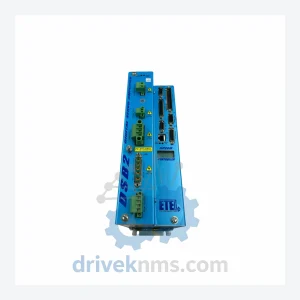
Etel DSB2S154-211E-000H
Etel DSB2S154-211E-000H is listed for Servo Drives RFQ review. Confirm quantity, condition and destination before quotation.
RFQ-ready industrial model
Model: EA-P2M-300-07/15A-0000-01
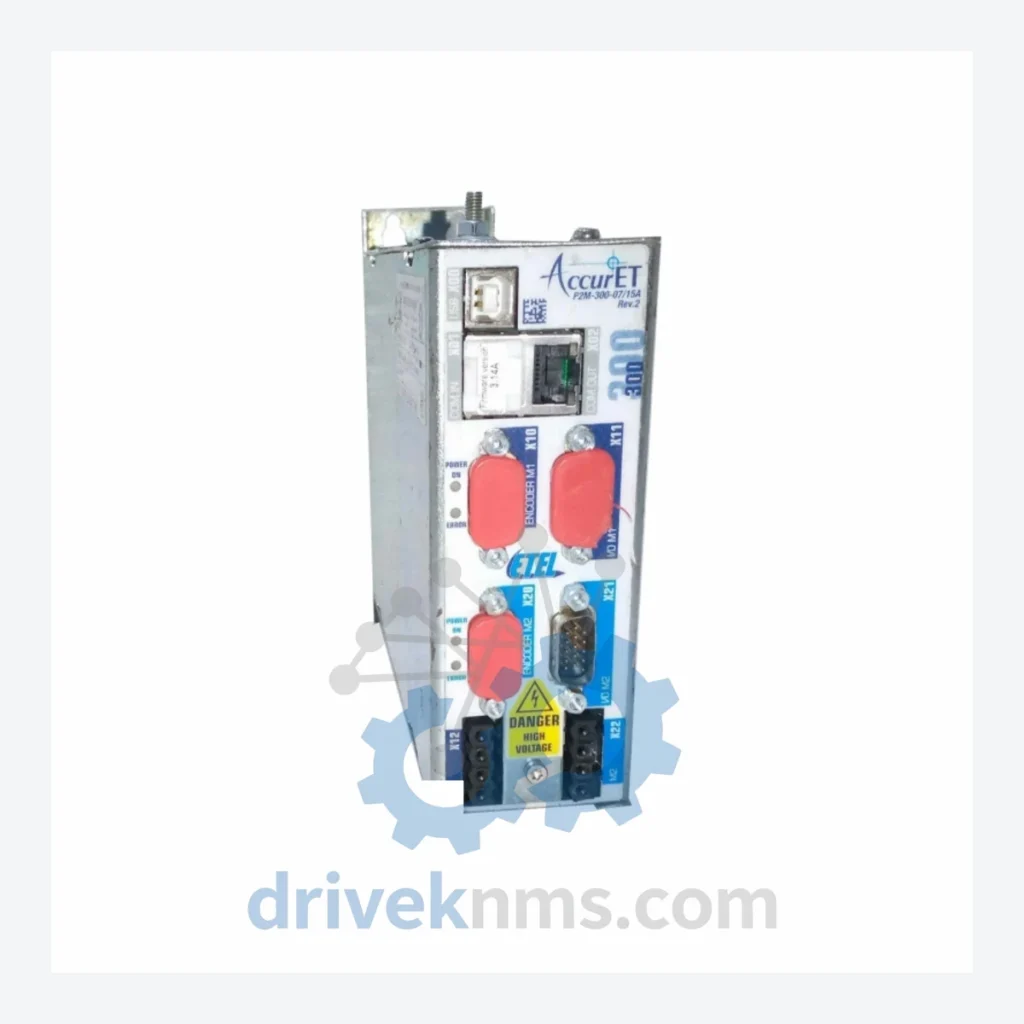
Product Overview
Commercial availability is handled through direct RFQ, model verification and export-oriented follow-up rather than public cart checkout.
Datasheet Preview
Use attached product manuals when available. If the manual is not public yet, request the full file directly through RFQ.
Commercial Path
Product pages on DRIVEKNMS are designed to verify model, brand and series first, then move the buyer into one clean quotation path.
Technical Dossier
The Etel EA-P2M series represents a family of modular position controllers engineered for high-precision motion control in demanding industrial environments. Deployed extensively across semiconductor fabrication, precision machine tool manufacturing, medical imaging equipment, and advanced robotics integration, the EA-P2M platform has established a significant installed base in facilities where sub-micron positioning accuracy is a non-negotiable operational requirement. The architecture is built around Etel's proprietary ETEL Motion Technology (EMT) framework, enabling deterministic real-time control over multi-axis linear and rotary direct-drive systems. In heavy industrial contexts — including chemical processing plants, nuclear facility handling systems, and refinery automation — EA-P2M controllers are deployed as embedded motion nodes within larger DCS and SCADA architectures, interfacing with supervisory PLCs via standardized fieldbus protocols.
The EA-P2M series emerged from Etel's earlier EA-P1 single-axis controller platform, which established the foundational firmware and hardware topology later scaled into the multi-axis EA-P2M modular format. The original EA-P2M hardware generation utilized a VME-compatible backplane with parallel DSP processing, targeting high-bandwidth servo loops for linear motor stages. Subsequent hardware revisions introduced EtherCAT and SERCOS III fieldbus support, replacing legacy RS-422 and CAN-based communication layers. The transition from 15A to 30A current-rated variants (e.g., EA-P2M-300-07/30A-0000-01) addressed higher-force linear motor applications without requiring a platform change. Later firmware generations introduced advanced notch filtering, adaptive feed-forward compensation, and multi-encoder input fusion — features backported to earlier hardware via firmware upgrade paths where compatible. Compatibility constraints exist between early-generation EA-P2M backplanes and later high-current output modules; mixed-generation installations require careful revision-level verification. As of 2026, the EA-P2M series is in a mature/end-of-active-production lifecycle phase. Etel's current generation IUC (Intelligent Universal Controller) and DUET platforms represent the strategic replacement path. However, the EA-P2M installed base remains substantial, and long-term maintenance support — including spare module sourcing — remains a critical operational requirement for facilities with 10–20 year equipment lifecycles.
The following SKUs represent verified models within the Etel EA-P2M series, classified by functional category:
Modular Position Controllers (Core CPU / Axis Controller)
I/O and Interface Modules
Communication and Fieldbus Adapter Modules
Power Supply Modules
EA-P2M modules present specific quality verification challenges due to their integrated DSP-based servo control architecture and multi-layer backplane communication bus. DriveKNMS applies the following test protocol to all EA-P2M units processed through its facility: (1) Visual and mechanical inspection — connector pin integrity, PCB surface condition, capacitor health assessment, and revision label verification. (2) Power-on functional test — DC bus energization at rated voltage (300V or 600V as applicable), logic supply verification, and firmware boot confirmation via diagnostic LED sequence. (3) Servo loop functional test — closed-loop position control verification using a reference linear motor stage, confirming current regulation accuracy, encoder feedback processing, and fault detection response. (4) Fieldbus communication test — EtherCAT or SERCOS III node enumeration and cyclic data exchange verification where communication modules are present. (5) Thermal stress test — extended operation at rated current output to verify power stage thermal management integrity. Units failing any stage of this protocol are quarantined, documented, and not released for sale.
Continue The Model Path
Move from this exact model into the matching system hub, brand archive, model-family archive or lifecycle sourcing route before sending a final RFQ list.
Related Paths
Etel DSB2S154-211E-000H is listed for Servo Drives RFQ review. Confirm quantity, condition and destination before quotation.
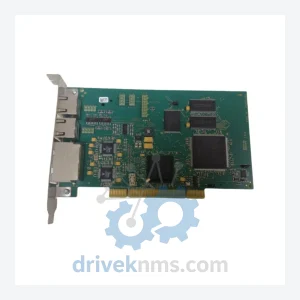
Etel Eu-Lcp-0-0-1000-00 60014500 is listed for Servo Drives RFQ review. Confirm quantity, condition and destination before quotation.
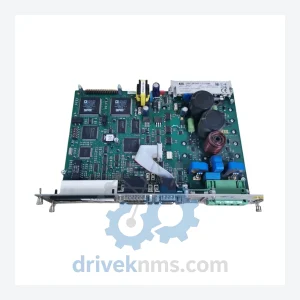
Etel DSC2P142-111-000 is listed for DSC2P Series RFQ review. Confirm quantity, condition and destination before quotation.