
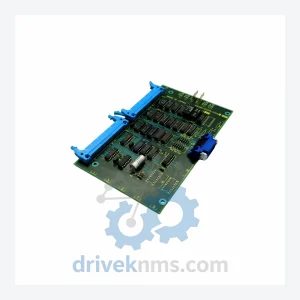
FANUC A20B-0006-0040 Circuit Board – Obsolete Series Spare Part
Fanuc A20B-0006-0040 is listed for Servo Drives RFQ review. Confirm quantity, condition and destination before quotation.
RFQ-ready industrial model
Model: A05B-2518-C204#EMH MDMA152D3U3
Product Overview
Commercial availability is handled through direct RFQ, model verification and export-oriented follow-up rather than public cart checkout.
Datasheet Preview
Use attached product manuals when available. If the manual is not public yet, request the full file directly through RFQ.
Commercial Path
Product pages on DRIVEKNMS are designed to verify model, brand and series first, then move the buyer into one clean quotation path.
Technical Dossier
Note: Electrical parameters specific to your installation should be verified against your original system documentation. DriveKNMS does not publish unverified specifications.
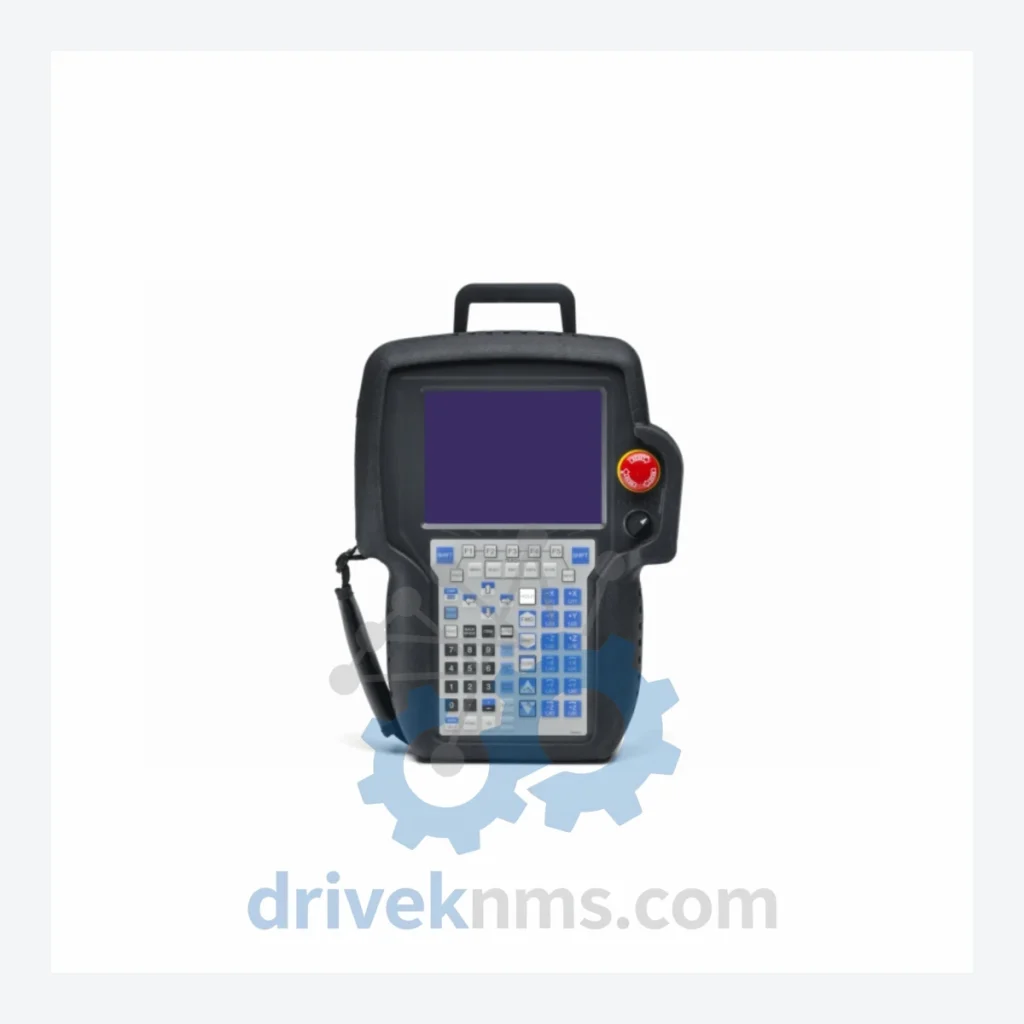
The FANUC A05B-2518-C204#EMH teach pendant was the primary human-machine interface for a generation of FANUC CNC machining centers and articulated robot arms. Its proprietary communication protocol, connector pinout, and firmware handshake are tightly coupled to the controller generation it was designed for. There is no universal modern substitute that installs without engineering intervention.
Facilities running FANUC 16i, 18i, or 21i series controllers — or R-J3iB and R-30iA robot systems — face a specific problem: the newer iPendant and iHMI units introduced with the 30i and R-30iB platforms are not backward-compatible at the hardware level. Attempting to retrofit a current-generation pendant into a legacy controller requires custom cabling, firmware modification, and in many cases, a full controller board swap. The cost and risk of that path frequently exceeds the cost of a complete system replacement.
The only operationally sound strategy for these facilities is to maintain a verified spare of the original unit. A single A05B-2518-C204#EMH held in climate-controlled storage eliminates the single point of failure that could otherwise force an unplanned capital expenditure. DriveKNMS sources, inspects, and holds these units precisely because the open market cannot reliably supply them on short notice.
For plant managers and maintenance directors operating facilities built on FANUC legacy platforms, the pressure to modernize is constant — but the business case for premature system retirement is rarely as clear as vendors suggest. The following framework has been applied successfully across manufacturing facilities in Asia, Europe, and North America to defer capital expenditure while maintaining production reliability.
2. Establish a Tiered Spare Parts Buffer. For Tier 1 components (single point of failure, no substitute), maintain a minimum of one verified spare on-site. For Tier 2 components (redundant or field-repairable), a regional distributor relationship with RFQ-reviewed sourcing status is sufficient. The A05B-2518-C204#EMH falls squarely in Tier 1 for any facility where it is the sole operator interface.
4. Negotiate Long-Term Supply Agreements with Specialist Distributors. Spot-market pricing for discontinued FANUC parts fluctuates significantly. Facilities that establish forward purchase agreements with verified suppliers like DriveKNMS lock in pricing and availability before market scarcity drives costs higher.
5. Document Firmware and Configuration State. Before any teach pendant is removed from service — for repair, replacement, or storage — capture the full system configuration backup. FANUC controllers store parameter sets, macro programs, and PMC ladder logic that may not be recoverable if the controller itself subsequently fails. This documentation is the foundation of any credible legacy system maintenance program.
Executed consistently, this five-point strategy has allowed facilities to operate FANUC legacy systems reliably for 8–12 years beyond the manufacturer's recommended service window, at a fraction of the cost of a greenfield automation upgrade.
Every A05B-2518-C204#EMH unit that leaves DriveKNMS has passed a structured five-stage inspection process developed specifically for discontinued industrial control hardware:
Stage 1 – Electrolytic Capacitor Assessment. Aging electrolytic capacitors are the primary failure mode in legacy control hardware. Each unit undergoes ESR (Equivalent Series Resistance) measurement on all accessible capacitors. Units with out-of-specification readings are either recapped with equivalent-grade components or quarantined.
Stage 2 – Firmware Version Verification. The firmware revision is confirmed and documented. Where multiple firmware versions exist for this part number, the version is disclosed to the buyer prior to shipment to ensure compatibility with the target controller.
Stage 3 – Connector and Pin Inspection. All connector housings, locking mechanisms, and individual pins are inspected under magnification for corrosion, deformation, and contact wear. Corroded contacts are treated or the unit is rejected.
Stage 4 – Display and Keypad Functional Test. The display panel is powered and checked for dead pixels, backlight uniformity, and contrast stability. All keypad zones are tested for actuation force and electrical continuity.
Stage 5 – Cable and Strain Relief Inspection. The pendant cable — a common failure point due to repeated flexing — is inspected along its full length for jacket cracking, internal conductor integrity, and strain relief condition.
Q: How do I confirm the unit is genuine FANUC and not a counterfeit?
A: All units are inspected for FANUC-standard labeling, serial number format, PCB markings, and component sourcing. Provenance documentation is available on request for NOS units. DriveKNMS does not knowingly source or sell counterfeit industrial components.
Q: Should I purchase more than one unit as a long-term reserve?
A: For facilities where this pendant is the sole operator interface on a production-critical system, holding a minimum of two units — one active spare and one long-term reserve — is the standard recommendation. Market availability of discontinued FANUC parts decreases over time. Units purchased today will cost more, or may be unavailable, in 24–36 months.
Q: Can DriveKNMS source other discontinued FANUC components for my system?
A: Yes. DriveKNMS specializes in obsolete and hard-to-find industrial automation components across FANUC, Siemens, ABB, Mitsubishi, and other major control system platforms. Contact us with your full BOM for a sourcing assessment.
Continue The Model Path
Move from this exact model into the matching system hub, brand archive, model-family archive or lifecycle sourcing route before sending a final RFQ list.
Related Paths
Fanuc A20B-0006-0040 is listed for Servo Drives RFQ review. Confirm quantity, condition and destination before quotation.
Fanuc A02B-0076-K001 is listed for Servo Drives RFQ review. Confirm quantity, condition and destination before quotation.
Fanuc A02B-0303-C074 is listed for Series 30i/31i/32i RFQ review. Confirm quantity, condition and destination before quotation.