
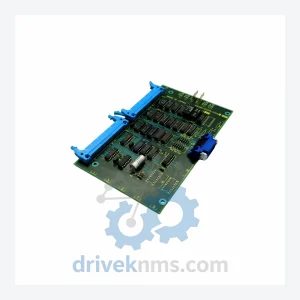
FANUC A20B-0006-0040 Circuit Board – Obsolete Series Spare Part
Fanuc A20B-0006-0040 is listed for Servo Drives RFQ review. Confirm quantity, condition and destination before quotation.
RFQ-ready industrial model
Model: A860-2120-T051
Product Overview
Commercial availability is handled through direct RFQ, model verification and export-oriented follow-up rather than public cart checkout.
Datasheet Preview
Use attached product manuals when available. If the manual is not public yet, request the full file directly through RFQ.
Commercial Path
Product pages on DRIVEKNMS are designed to verify model, brand and series first, then move the buyer into one clean quotation path.
Technical Dossier
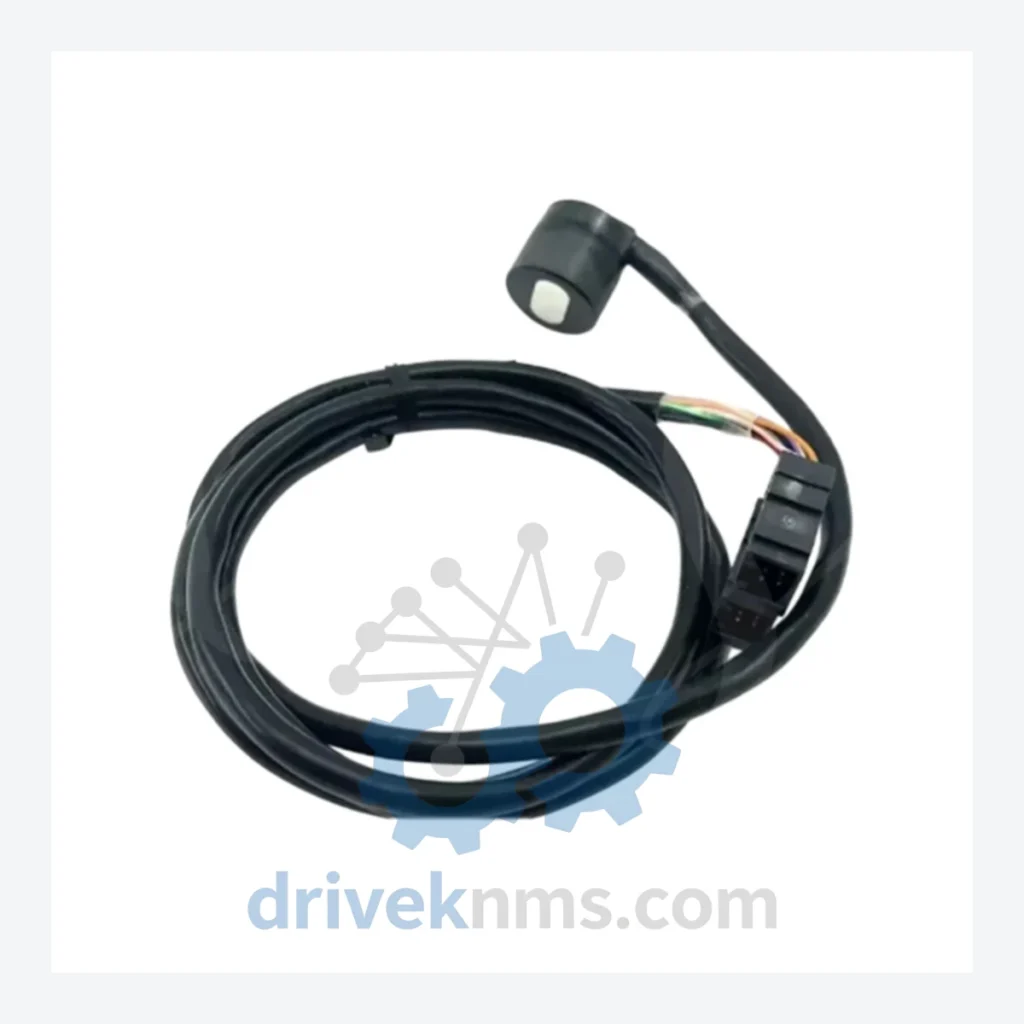
The Fanuc A860-2120 series represents a standardized family of servo encoder cables engineered for use within Fanuc's αi-series, βi-series, and legacy α-series servo drive systems. These cables serve as the signal transmission backbone between servo motors and their corresponding amplifiers or CNC controllers, and are deployed across high-demand industrial environments including petrochemical processing plants, nuclear facility auxiliary systems, automotive body-in-white lines, precision aerospace machining centers, and continuous-process steel rolling mills. The A860-2120 designation identifies the cable's encoder interface specification — specifically, cables designed to carry serial encoder (αiA, αiI, αiCZ) feedback signals at the defined connector pitch and shielding standard required by Fanuc's motion control architecture. Global installed base of Fanuc servo systems exceeds several million axes, and the A860-2120 cable family is among the highest-volume replacement components in the Fanuc spare parts ecosystem, owing to its susceptibility to mechanical wear, oil ingress, and connector fatigue in continuous-duty applications.
The A860-2120 cable series has evolved in parallel with Fanuc's servo amplifier generations. Early Fanuc servo systems (Series 0, Series 10/11/12) used analog resolver-based feedback, with cables under the A660 and A860-0 prefix families. The transition to digital serial encoders in the mid-1990s — introduced with the α-series amplifiers — established the A860-2000 and A860-2100 cable families as the standard for pulse coder feedback. The A860-2120 sub-series was introduced to address the higher-resolution αiA and αiI encoder protocols used in the αi-series amplifiers (αiSV, αiSP, αiPS), which became the dominant platform from the early 2000s onward.
Key architectural transitions within the A860-2120 lineage include: the shift from 14-pin to 17-pin encoder connectors for high-resolution absolute encoders; the introduction of reinforced outer jackets (suffix -T variants) for high-flex and oil-resistant applications; and the development of extended-length variants (suffix -L and numeric length codes) to accommodate large-format machine tools with extended axis travel. Compatibility between A860-2120 variants and specific amplifier generations is determined by the encoder type (αiA64, αiA128, αiI, αiCZ) and the motor series (αiF, αiFF, αiS, βiS). Substitution between suffix variants requires verification of connector pinout, cable length, and shielding continuity — cross-referencing the Fanuc Servo Amplifier Maintenance Manual (B-65285EN) is mandatory before replacement.
The following SKUs represent the core active and legacy models within the A860-2120 series, classified by function and application profile. Each model is a discrete part number with defined connector specifications, cable length, and encoder compatibility.
Encoder Feedback Cables — Standard Duty (αiS / αiF Motor Series)
Encoder Feedback Cables — High-Flex / Oil-Resistant Duty
Encoder Feedback Cables — βiS Motor Series (Compact Servo)
Spindle Encoder Cables (αiCZ / αiI Spindle Feedback)
The A860-2120 series spans production generations from the early 2000s to the present. While current-generation variants (T001 through T311) remain in active Fanuc production, a significant portion of installed machines operate on early-suffix variants that have been superseded or discontinued. Fanuc's standard spare parts support window for discontinued cable variants is typically 7–10 years post-discontinuation, after which OEM sourcing becomes unavailable through standard distribution channels.
Encoder cable failures in Fanuc servo systems manifest as servo alarm codes (SV0445, SV0447, SV0421) and position feedback errors that can cause axis runaway or emergency stop conditions. The consequences of deploying a substandard or incorrectly specified replacement cable range from intermittent position errors to catastrophic axis collision. DriveKNMS applies a structured quality control protocol to all A860-2120 cables processed through our facility.
The inspection protocol covers four stages: (1) Visual and mechanical inspection — outer jacket integrity, connector shell condition, strain relief continuity, and absence of kinking or crush damage along the cable run; (2) Continuity and insulation resistance testing — each signal conductor is tested for continuity and cross-talk isolation using a calibrated LCR meter; shielding continuity is verified end-to-end; (3) Connector pin verification — motor-side and amplifier-side connector pinouts are verified against Fanuc's published wiring diagrams for the specific encoder type (αiA, αiI, αiCZ, βiS); (4) Functional validation (where test bench available) — cables are connected to a live Fanuc αi-series amplifier and motor combination to verify encoder communication, alarm-free operation, and absolute position retention (for αiI absolute encoder variants). All test results are logged against the cable's serial number and retained for customer reference.
Continue The Model Path
Move from this exact model into the matching system hub, brand archive, model-family archive or lifecycle sourcing route before sending a final RFQ list.
Related Paths
Fanuc A20B-0006-0040 is listed for Servo Drives RFQ review. Confirm quantity, condition and destination before quotation.
Fanuc A02B-0076-K001 is listed for Servo Drives RFQ review. Confirm quantity, condition and destination before quotation.
Fanuc A02B-0303-C074 is listed for Series 30i/31i/32i RFQ review. Confirm quantity, condition and destination before quotation.