
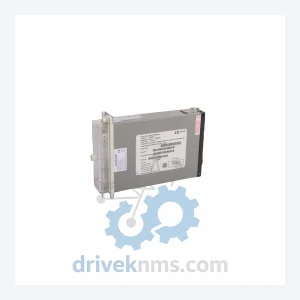
ALSTOM MVAJ105RA0802A Protection Relay – MiCOM Series
Alstom MVAJ105RA0802A is listed for MiCOM Series RFQ review. Confirm quantity, condition and destination before quotation.
RFQ-ready industrial model
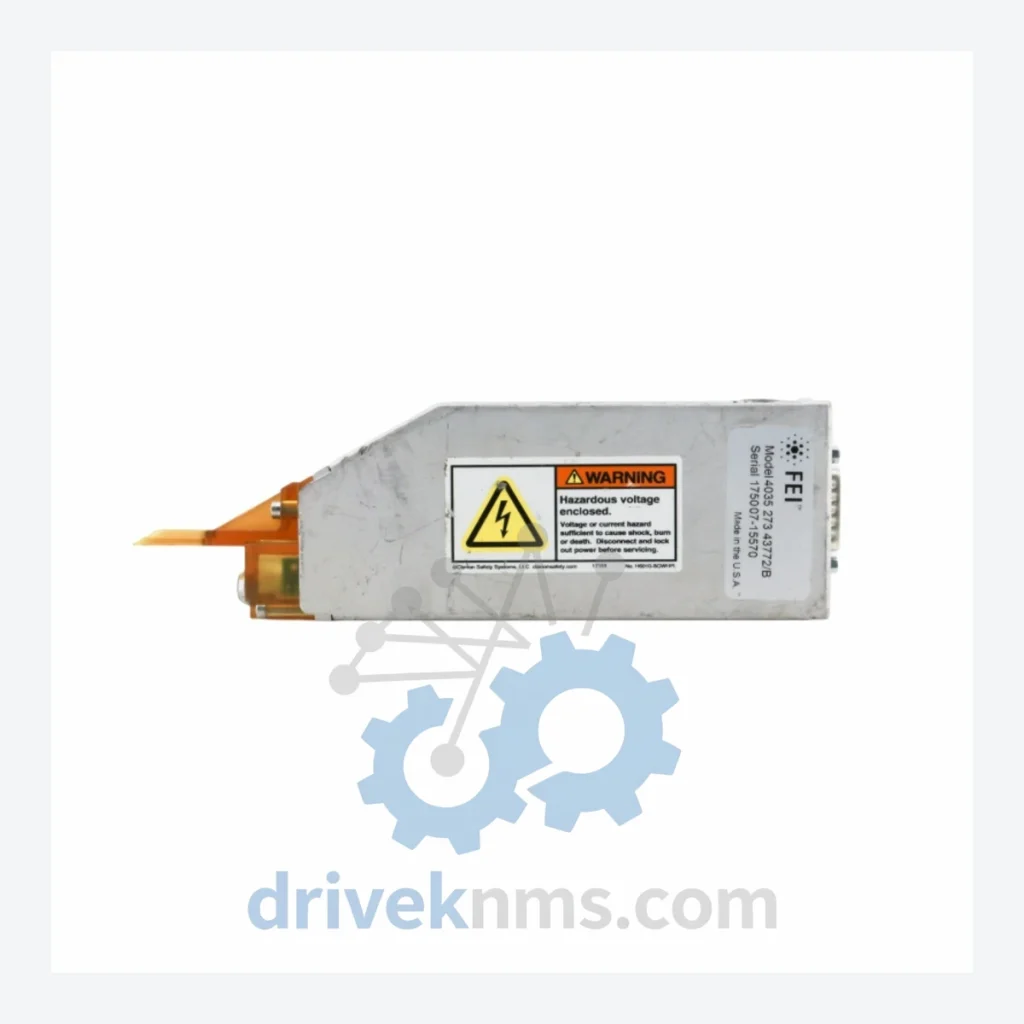
Model: 4035 273 43772 0010-75224 DHL-0710 23 QS IHS 10-D6-A4.5/45-0.37-E319.1
Product Overview
Commercial availability is handled through direct RFQ, model verification and export-oriented follow-up rather than public cart checkout.
Datasheet Preview
Use attached product manuals when available. If the manual is not public yet, request the full file directly through RFQ.
Commercial Path
Product pages on DRIVEKNMS are designed to verify model, brand and series first, then move the buyer into one clean quotation path.
Technical Dossier
The FEI part number 4035 273 43772 (cross-reference: 0010-75224, assembly code DHL-0710 23 QS IHS 10-D6-A4.5/45-0.37-E319.1) is the extractor assembly used in legacy FEI electron and ion beam columns. FEI Company was acquired by Thermo Fisher Scientific in 2016, and support for older platform hardware has progressively narrowed. Sourcing this component through standard OEM channels is no longer reliable. DriveKNMS maintains RFQ-reviewed sourcing status of this assembly — a position that becomes more strategically significant with each passing quarter.
Note: Electrical parameters specific to this assembly are not published here to prevent misapplication. Contact our technical team for configuration verification before ordering.
The extractor assembly is the component responsible for drawing charged particles from the ion or electron source and accelerating them into the column optics. Its geometry, electrode spacing, and surface condition directly determine beam quality, spot size, and source lifetime. There is no generic substitute — the mechanical tolerances and electrical characteristics are matched to the specific column design.
FEI's legacy SEM and FIB platforms — including instruments built on the Nova, Quanta, Strata, and DB series architectures — remain in active production use at facilities worldwide. These systems were capital investments of USD 500,000 to over USD 2,000,000 at time of purchase. Replacing them with current-generation equivalents requires not only the hardware cost but also facility modifications, requalification of analytical methods, retraining of operators, and re-validation of any regulatory or quality system documentation tied to the instrument. The total transition cost routinely exceeds the original purchase price.
Against that backdrop, a single extractor assembly — properly sourced and verified — can restore full instrument function and defer that replacement decision by five to ten years. The economics are not complicated: the cost of this spare part is a rounding error compared to the cost of a forced platform migration.
DriveKNMS applies a five-stage inspection protocol to all extractor assemblies before dispatch review. This process is designed specifically for the failure modes that affect precision vacuum components after extended storage or prior service.
Stage 1 – Visual and Dimensional Inspection: All electrode surfaces, mounting flanges, and insulator bodies are examined under magnification. Any mechanical damage, surface contamination, or dimensional deviation from specification results in rejection.
Stage 2 – Electrolytic Capacitor Assessment: Where the assembly includes associated drive electronics or bias circuitry, electrolytic capacitors are tested for capacitance drift and ESR degradation — the primary aging failure mode in stored assemblies.
Stage 3 – Firmware and Configuration Verification: For assemblies with embedded identification or calibration data, firmware version and stored parameters are confirmed against known-good references.
Stage 4 – Pin and Connector Integrity Check: All electrical connectors, feedthrough pins, and contact surfaces are inspected for oxidation, fretting corrosion, and mechanical deformation. Affected contacts are cleaned or the unit is rejected.
Stage 5 – Functional Pre-shipment Review: Final documentation review confirms part number traceability, inspection records, and packaging integrity before dispatch.
Q: How do I know the unit is new or properly refurbished — not a worn-out pull?
A: Every unit shipped by DriveKNMS is accompanied by an inspection report documenting the five-stage QA process described above. Traceability records are retained. If a unit does not pass all five stages, it is not offered for sale.
Continue The Model Path
Move from this exact model into the matching system hub, brand archive, model-family archive or lifecycle sourcing route before sending a final RFQ list.
Related Paths
Alstom MVAJ105RA0802A is listed for MiCOM Series RFQ review. Confirm quantity, condition and destination before quotation.
Moore 16137-174 is listed for Servo Drives RFQ review. Confirm quantity, condition and destination before quotation.
Fuji Electric EP-3364B-CA-Z2 is listed for FRENIC Series RFQ review. Confirm quantity, condition and destination before quotation.