Products / Fuji Electric / T2MNR Photoelectric Sensor
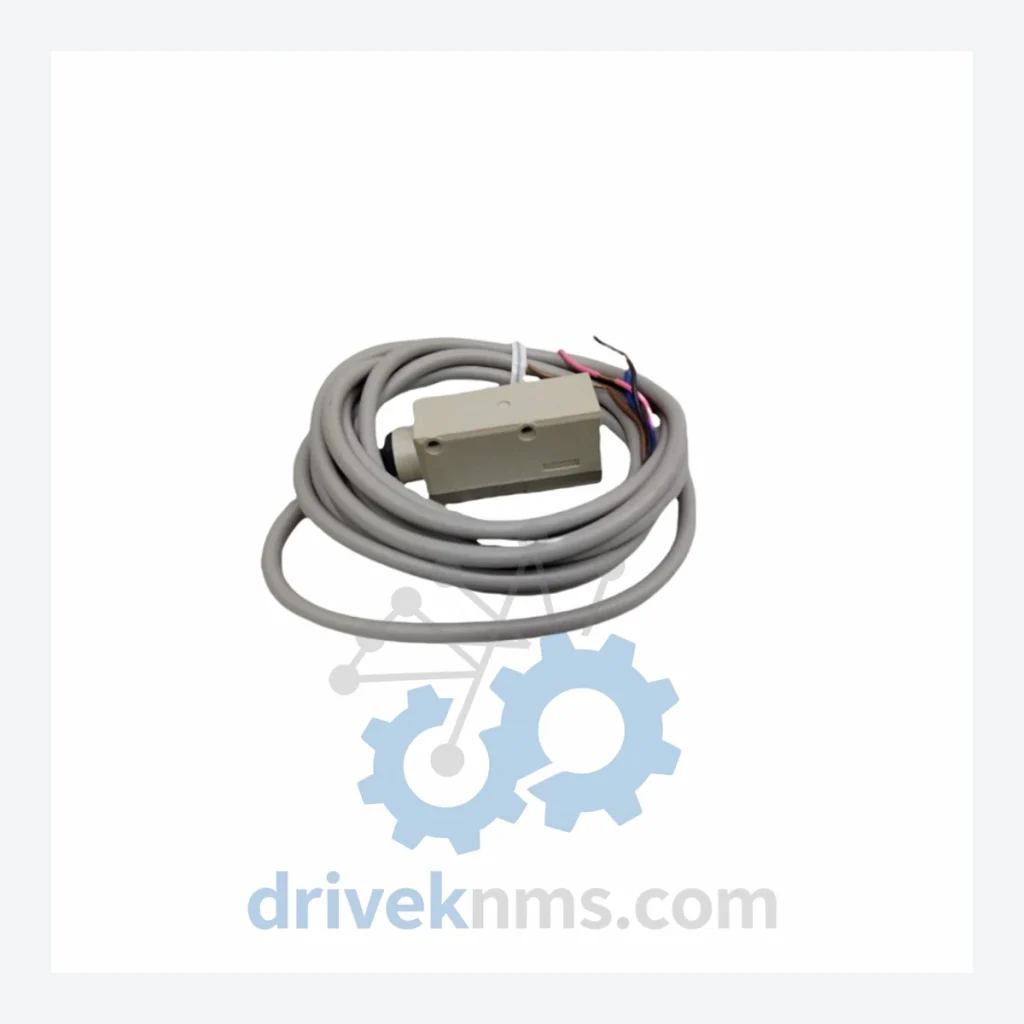
Fuji Electric T2MNR Photoelectric Sensor

FUJI PH2-T2MNR Photoelectric Sensor – Obsolete Fuji Electric Spare Part

Model: PH2-T2MNR

Brand Fuji Electric
Series T2MNR Photoelectric Sensor
Model PH2-T2MNR
RFQ-ready model route Obsolete and surplus sourcing Export follow-up by model list

Product Overview

Commercial availability is handled through direct RFQ, model verification and export-oriented follow-up rather than public cart checkout.

Datasheet Preview

Datasheet Preview

Use attached product manuals when available. If the manual is not public yet, request the full file directly through RFQ.

Request Full Manual

Commercial Path

Use This Page To Confirm The Model, Then Move To RFQ

Product pages on DRIVEKNMS are designed to verify model, brand and series first, then move the buyer into one clean quotation path.

Technical Dossier

Product Details And Specifications

FUJI PH2-T2MNR Photoelectric Sensor – Obsolete Fuji Electric Spare Part

When a photoelectric sensor fails on a production line built around legacy Fuji Electric control architecture, the consequences extend far beyond a single component. A forced system-wide upgrade — driven by one unavailable sensor — routinely costs manufacturers between $500,000 and $3,000,000 USD in engineering, downtime, revalidation, and retraining. The PH2-T2MNR has been discontinued by Fuji Electric. Replacement units are no longer available through standard distribution channels. DriveKNMS maintains verified stock of this sensor specifically to protect facilities from that scenario.

Technical Specifications

Parameter Detail
Manufacturer Fuji Electric
Part Number PH2-T2MNR
Series PH2
Type Photoelectric Sensor
Country of Origin Japan
Discontinuation Status Confirmed Obsolete – No longer in production
Availability Limited stock held by DriveKNMS

Note: Electrical parameters (voltage range, output type, sensing distance, response time) are not published here to avoid inaccuracy. Please contact us directly for verified datasheet confirmation before ordering.

Solving the Discontinued Hardware Crisis

The Fuji Electric PH2 series was widely deployed in discrete manufacturing environments — particularly in assembly lines, packaging machinery, and material handling systems built during the 1990s and 2000s. These systems were engineered around specific sensor geometries, output signal types, and mounting configurations. The PH2-T2MNR is not a generic sensor; it occupies a defined role in a defined system.

When Fuji Electric discontinued the PH2 series, facilities operating this equipment were left with three options: locate remaining stock, retrofit with a cross-reference replacement (which carries integration risk), or decommission the line. For most plant managers, decommissioning is not a financial option. A production line with 15 to 20 years of operational history represents capital investment, institutional knowledge, and validated process parameters that cannot be replicated cheaply.

Sourcing original PH2-T2MNR units eliminates retrofit risk entirely. The sensor installs into the existing bracket, connects to the existing wiring harness, and communicates with the existing controller — no signal conditioning, no PLC reprogramming, no re-qualification of the detection zone. That is the operational case for holding original spare stock rather than accepting a cross-reference.

How to extend your automation asset life by 5–10 years using critical spare parts:

  • Conduct a single-point-of-failure audit. Identify every sensor, relay, and I/O module on your line that is discontinued or approaching end-of-life. The PH2-T2MNR is a representative example — one failed unit can halt an entire conveyor or inspection station.
  • Establish a minimum stock level for each critical component. For a sensor with a 10-year service horizon and a 6-month lead time for cross-reference alternatives, holding 2–4 units on-site is a defensible maintenance budget line, not a luxury.
  • Document firmware and configuration baselines before failure occurs. For sensors integrated with programmable controllers, capture the detection parameters and threshold settings while the system is operational. Recovery after an unplanned failure is significantly slower without this documentation.
  • Negotiate long-term supply agreements with specialist distributors. Spot-market pricing for obsolete components increases sharply as remaining stock depletes. Securing inventory now, at current pricing, is a straightforward cost-containment measure.
  • Separate maintenance stock from production stock. Units held as maintenance spares should not be drawn into production to cover shortages. Mixing the two pools eliminates the buffer the spare was purchased to provide.

A facility that executes this strategy across its critical sensor inventory can realistically defer a full line modernization by 5 to 10 years — at a fraction of the capital cost of early replacement.

Condition & Reliability Assurance

Obsolete components sourced from secondary markets carry inherent condition risk. DriveKNMS applies a 5-step inspection protocol to every PH2-T2MNR unit before it is offered for sale:

  1. Visual and mechanical inspection. Housing integrity, lens condition, and connector pin geometry are checked against original manufacturing tolerances. Units with cracked housings, lens hazing, or deformed connectors are rejected.
  2. Electrolytic capacitor assessment. Internal capacitors are the primary age-related failure point in sensors of this era. Units showing capacitor bulge, electrolyte leakage, or ESR values outside acceptable range are removed from inventory.
  3. Pin and terminal corrosion check. Connector pins are inspected under magnification for oxidation, pitting, and plating degradation. Corroded pins are cleaned to bare metal and assessed for structural integrity; units with base metal damage are rejected.
  4. Firmware and configuration verification. Where applicable, internal configuration states are verified to confirm the unit has not been field-modified in a way that would affect detection behavior in a standard installation.
  5. Functional output test. Each unit is powered and tested for correct output switching behavior across the specified detection range before being cleared for sale.

Key Features for System Maintenance

  • Drop-in replacement: The PH2-T2MNR installs directly into existing PH2-series mounting positions. No bracket modification, no wiring adaptation.
  • No reprogramming required: Output signal characteristics match the original specification. The receiving controller requires no parameter changes.
  • Avoids engineering reconstruction costs: Cross-reference retrofits require signal verification, detection zone re-qualification, and in many cases PLC logic review. Original replacement eliminates all of these steps.
  • Preserves validated process parameters: For regulated manufacturing environments (food, pharmaceutical, automotive), maintaining original component specifications avoids re-validation obligations that a retrofit would trigger.

FAQ

What warranty applies to an obsolete part like the PH2-T2MNR?
DriveKNMS provides a 90-day warranty covering functional failure under normal operating conditions. Given the discontinued status of this component, we recommend purchasing a minimum of two units to maintain a working spare.

How do I confirm the unit is new or quality-refurbished?
Each unit is accompanied by an inspection report documenting the 5-step QA process described above. Condition grade (new surplus, tested refurbished) is stated explicitly on the invoice. We do not sell untested or uninspected units.

Should I buy more than one unit?
For any discontinued component with no confirmed cross-reference alternative, holding at least two units is standard practice. The cost of a second sensor is a fraction of one hour of unplanned downtime on a production line. As remaining global stock of the PH2-T2MNR depletes, reorder availability cannot be guaranteed.

Can you source other Fuji Electric PH2 series variants?
Contact us with your specific part number. DriveKNMS maintains sourcing relationships for a range of discontinued Fuji Electric sensor and control components.

WhatsApp Prefilled Inquiry Email [email protected] Phone +86 18359293191 Top Back To Top