Technical Dossier
Product Details And Specifications
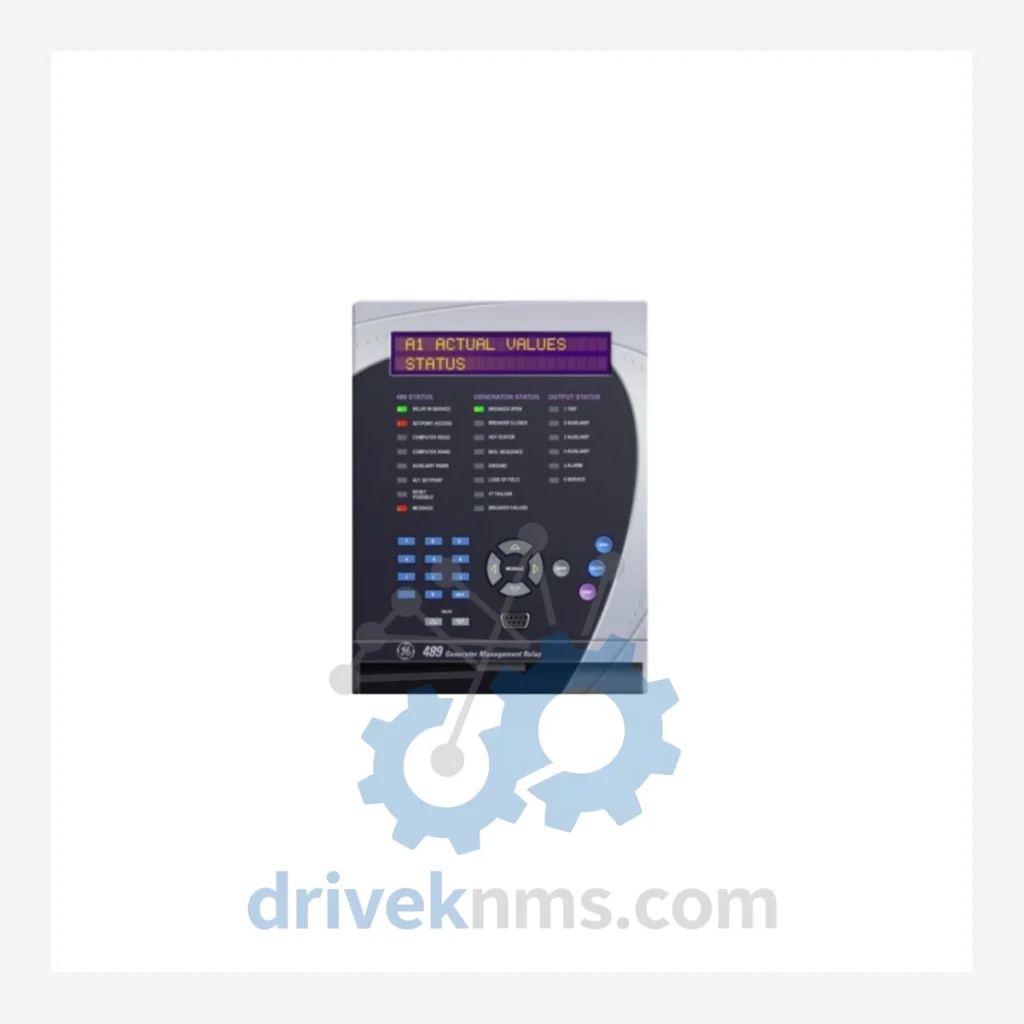
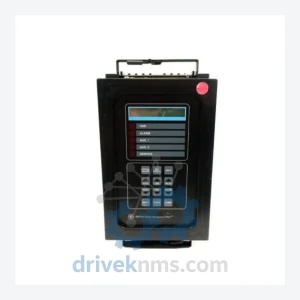
GE 489-P1-HI-A20-E-H Generator Management Relay – Obsolete Multilin Spare Part
RFQ support for obsolete parts: Send the model number, required quantity and destination so DriveKNMS can confirm sourcing options before quotation.
Technical Specifications
| Parameter | Detail |
| Manufacturer | GE Multilin (General Electric) |
| Model Number | 489-P1-HI-A20-E-H |
| Series | Multilin 489 Generator Management Relay |
| Discontinuation Status | Discontinued / Obsolete – No longer manufactured |
| Form Factor | Panel-mount, drawout case |
| Communications | RS-485 (Modbus RTU / DNP3.0) |
| Typical System Compatibility | GE Multilin 489 Series installations; legacy generator protection panels using Modbus-based SCADA integration |
| Country of Origin | Canada |
| Condition Available | New surplus / Tested refurbished (specified at time of order) |
Note: Electrical parameters beyond those encoded in the order code are not published here to prevent misapplication. Confirm full specifications against your original GE Multilin 489 documentation before installation.
Solving the Discontinued Hardware Crisis
The GE Multilin 489 was deployed extensively across industrial power generation facilities, co-generation plants, and utility substations from the 1990s through the 2010s. Its protection functions — differential, overcurrent, undervoltage, reverse power, loss-of-excitation, and RTD-based thermal monitoring — were integrated directly into plant SCADA and DCS architectures. In many installations, the relay communicates via hardwired RS-485 to a Modbus master that has itself been in service for over 15 years.
Replacing the 489 is not a relay swap. It is a protection philosophy review. A modern replacement relay will carry a different register map, different protection curve libraries, and different commissioning software. Every protection setting must be re-entered, verified, and witnessed. In regulated environments, this triggers a formal protection review and potentially a utility notification process. The engineering hours alone — relay engineer, protection testing contractor, commissioning technician — represent a cost that most maintenance budgets cannot absorb on an unplanned basis.
Maintaining a verified spare 489-P1-HI-A20-E-H on the shelf eliminates this exposure. The failed unit is swapped, settings are restored from the existing backup file, and the generator returns to service. The protection review, the re-engineering, and the capital expenditure are deferred to a planned outage window — on the facility's schedule, not the failure's.
Extending Asset Life 5–10 Years: A Maintenance Strategy for Facilities Under Retirement Pressure
Facilities operating GE Multilin 489-based generator protection systems are frequently under pressure from corporate asset management teams to justify continued operation of end-of-life equipment. The standard recommendation from OEM representatives is replacement. That recommendation serves OEM revenue objectives. It does not always serve the facility's financial position.
A structured spare parts strategy can extend the operational life of a 489-based protection system by 5 to 10 years at a fraction of the cost of platform migration. The approach requires three elements: a verified spare relay (the 489-P1-HI-A20-E-H itself), a current backup of the relay's settings file stored off-unit, and a documented restoration procedure that any qualified protection technician can execute without specialist support.
With these three elements in place, a relay failure becomes a maintenance event rather than a capital project. The facility retains control of its upgrade timeline. Budget for the eventual platform migration can be planned, approved, and executed during a scheduled outage — not forced by an emergency. For facilities managing 4 to 20 generator units on legacy protection, the cost avoidance over a 5-year horizon is measurable in the millions.
DriveKNMS sources and holds inventory of discontinued protection relays specifically to support this strategy. We work with maintenance managers, reliability engineers, and procurement teams who understand that the lowest-cost path through an aging asset base is not always the one the OEM recommends.
Condition & Reliability Assurance
Discontinued relays sourced from the secondary market carry risks that new components do not. DriveKNMS applies a 5-step quality process to every unit before it is offered for sale.
Step 1 – Physical Inspection: Full external inspection for case damage, terminal corrosion, and evidence of prior field modification. Units with signs of unauthorized repair are rejected.
Step 2 – Electrolytic Capacitor Assessment: Internal inspection targets electrolytic capacitors on the power supply and analog input boards — the primary age-related failure point in relays of this generation. Capacitors showing visible bulging, electrolyte leakage, or measured ESR outside tolerance are flagged for replacement before the unit is offered.
Step 3 – Firmware Version Verification: The relay firmware version is recorded and disclosed. Firmware version affects available protection functions and Modbus register mapping. Buyers receive this information before purchase to confirm compatibility with their existing SCADA configuration.
Step 4 – Terminal and Connector Inspection: All rear-panel terminals and communication connectors are inspected for pin corrosion, contact oxidation, and mechanical integrity. Corroded contacts are cleaned and re-tested for continuity.
Step 5 – Functional Test: Where test equipment is available, units undergo a basic functional power-up and communication test. Test results are documented and provided with the unit.
Units are shipped with full documentation of condition, firmware version, and test results. No unit is represented as new unless it is confirmed new-in-box with intact factory seals.
Key Features for System Maintenance
The 489-P1-HI-A20-E-H is a direct form-fit-function replacement for any installed GE Multilin 489 unit sharing the same order code. It occupies the same panel cutout, uses the same rear-terminal wiring, and communicates on the same Modbus register map as the original unit. Settings restoration from a backup file requires no hardware modification and no changes to the existing wiring or SCADA configuration.
This means the replacement procedure does not require a protection engineer on-site. A qualified electrical technician with access to the GE EnerVista 489 Setup software and the facility's settings backup file can complete the swap and restore the relay to service. There is no re-engineering cost, no protection review trigger, and no commissioning contractor required for a like-for-like replacement.
For facilities that have not maintained a current settings backup, DriveKNMS can advise on the process for extracting and archiving settings from the installed unit before it fails — a straightforward precaution that eliminates the single largest risk in a relay replacement scenario.
How do I confirm the unit is genuine GE Multilin and not a counterfeit?
All units sourced by DriveKNMS are inspected against known-genuine reference units for label format, PCB markings, and component layout. We do not source from unverified brokers. Provenance documentation is provided where available.
Should I buy one spare or multiple?
For facilities operating a single generator on a 489-based protection scheme, one verified spare is the minimum prudent position. For facilities with multiple generators sharing the same relay model, holding two spares is standard practice. The cost of a second spare relay is a rounding error against the cost of a second emergency sourcing event.