
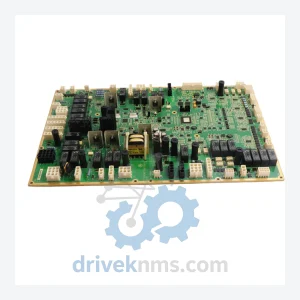
GE IS200WETBH1BAA Elevator Control Board – Obsolete Speedtronic Spare Part
General Electric IS200WETBH1BAA is listed for Controller Cards RFQ review. Confirm quantity, condition and destination before quotation.
RFQ-ready industrial model
Model: 9601-FT-NI
Product Overview
Commercial availability is handled through direct RFQ, model verification and export-oriented follow-up rather than public cart checkout.
Datasheet Preview
Use attached product manuals when available. If the manual is not public yet, request the full file directly through RFQ.
Commercial Path
Product pages on DRIVEKNMS are designed to verify model, brand and series first, then move the buyer into one clean quotation path.
Technical Dossier
The GE Speedtronic 9601 series represents one of the most widely deployed turbine control platforms in heavy industrial operations globally. Installed across gas turbine power generation facilities, petrochemical complexes, offshore platforms, and nuclear auxiliary systems, the 9601 architecture has served as the backbone of GE's Mark IV and Mark V turbine control generations. Facilities running Frame 5, Frame 6, Frame 7, and Frame 9 gas turbines have relied on 9601-series I/O and control modules for decades of continuous operation. The installed base is measured in tens of thousands of units across North America, the Middle East, Southeast Asia, and Europe. Replacing an entire Speedtronic control system on a running turbine train carries capital costs that routinely exceed USD 2–5 million per unit, excluding engineering, commissioning, and lost production. For plant asset managers and reliability engineers, maintaining a qualified spare parts inventory for the 9601 series is not a discretionary budget item — it is a risk mitigation obligation.
GE's Speedtronic turbine control lineage progressed through Mark I, Mark II, Mark IV, and Mark V generations. The 9601 module family was introduced as part of the Mark IV platform in the late 1970s and carried forward into early Mark V configurations through the 1980s and 1990s. The architecture is based on a dedicated backplane bus with proprietary I/O addressing — a design that delivers deterministic scan times critical for turbine protection logic, but which creates a hard dependency on original hardware form factors.
Early 9601 modules used discrete analog signal conditioning with individual channel isolation. Later revisions introduced improved EMI shielding and extended temperature tolerance to accommodate turbine enclosure environments. The transition from Mark IV to Mark V introduced firmware-level changes that affect module interchangeability; not all 9601 variants are cross-compatible across Mark generations without engineering validation. As GE migrated customers toward the Mark VI and Mark VIe platforms (based on VME and Ethernet I/O architectures), the 9601 series entered end-of-life status. GE ceased volume production of most 9601 modules by the mid-2000s. Field replacements now depend entirely on aftermarket inventory, refurbished units, and specialist distributors.
The following SKUs represent confirmed members of the GE Speedtronic 9601 module family, organized by functional category. Each entry reflects the module's primary role within the turbine control architecture.
Turbine I/O Modules
Control & Processor Modules
Power Supply Modules
Signal Conditioning & Interface Modules
DriveKNMS maintains a dedicated inventory of Speedtronic 9601 series modules sourced from decommissioned turbine control panels, controlled plant shutdowns, and verified surplus channels. Each unit entering our inventory is logged with its source history, physical condition grade, and test status before being offered for sale. We do not list modules as available until they have passed our incoming inspection protocol.
The 9601 module family presents specific reliability challenges that require targeted inspection procedures. Modules recovered from long-term storage or decommissioned panels are subject to the following five-stage evaluation before being offered for sale:
Continue The Model Path
Move from this exact model into the matching system hub, brand archive, model-family archive or lifecycle sourcing route before sending a final RFQ list.
Related Paths
General Electric IS200WETBH1BAA is listed for Controller Cards RFQ review. Confirm quantity, condition and destination before quotation.
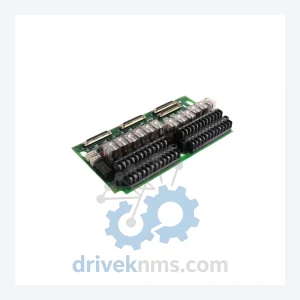
General Electric IS200TRLYH1BED IS200TRLYH1B is listed for Controller Cards RFQ review. Confirm quantity, condition and destination before quotation.
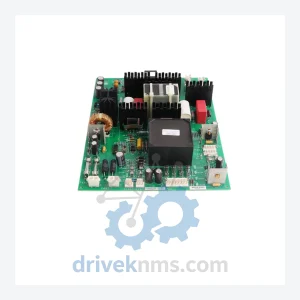
General Electric IS210AEPSG1AFC IS210AEPSG1 is listed for IS210 Series RFQ review. Confirm quantity, condition and destination before quotation.