
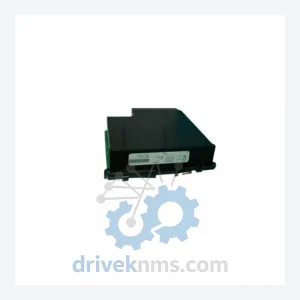
GE URSHB Power Supply Module – Obsolete Speedtronic Mark V Spare Part
General Electric URSHB is listed for Speedtronic Mark V RFQ review. Confirm quantity, condition and destination before quotation.
RFQ-ready industrial model
Model: DS200SDCCGSAHD
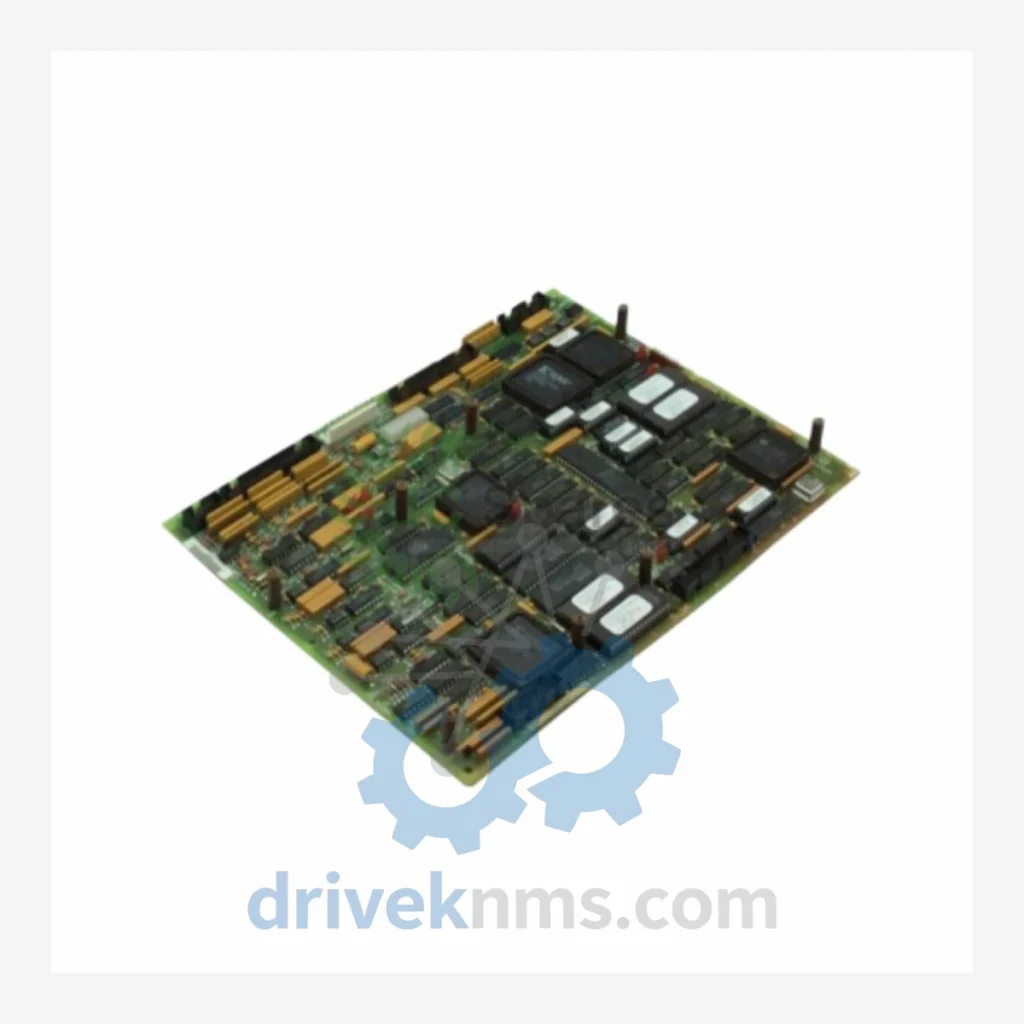
Product Overview
Commercial availability is handled through direct RFQ, model verification and export-oriented follow-up rather than public cart checkout.
Datasheet Preview
Use attached product manuals when available. If the manual is not public yet, request the full file directly through RFQ.
Commercial Path
Product pages on DRIVEKNMS are designed to verify model, brand and series first, then move the buyer into one clean quotation path.
Technical Dossier
DriveKNMS maintains a carefully managed inventory of hard-to-find GE Speedtronic components. The DS200SDCCGSAHD is one of the most requested boards in this series — and one of the most difficult to locate in serviceable condition.
RFQ support for obsolete parts: Send the model number, required quantity and destination so DriveKNMS can confirm sourcing options before quotation.
| Parameter | Detail |
|---|---|
| Part Number | DS200SDCCGSAHD |
| Manufacturer | GE (General Electric) |
| Series | Speedtronic Mark V Turbine Control |
| Board Function | Signal Conditioning / Digital I/O Interface |
| Compatible Systems | GE Speedtronic Mark V (TMR and Simplex configurations) |
| Discontinuation Status | Obsolete – No longer manufactured. End-of-life declared. |
| Country of Origin | United States |
| Typical Applications | Gas turbine control, steam turbine control, combined-cycle plant automation |
Note: Electrical parameters such as voltage ratings and I/O channel counts are board-revision dependent. Confirmed specifications are provided upon request with unit inspection report.
The GE Speedtronic Mark V was engineered for reliability in demanding power generation environments. That same engineering longevity is now the source of a procurement crisis: the platform outlasted its own supply chain. Facilities that invested in Mark V infrastructure in the 1990s now face a market where replacement boards are sourced exclusively from decommissioned plants, controlled surplus channels, and specialist distributors — not from GE directly.
The DS200SDCCGSAHD handles digital signal conditioning and I/O interfacing within the Mark V control rack. Its failure does not produce a graceful degradation — in a TMR (Triple Modular Redundant) configuration, a failed I/O board triggers voting logic anomalies that can force a turbine trip. In simplex configurations, the consequence is an unplanned shutdown. Either scenario carries immediate revenue impact measured in tens of thousands of dollars per hour of lost generation capacity.
Replacing the board with a verified spare is the only path that avoids a forced system migration. There is no modern equivalent that installs into a Mark V rack without significant re-engineering. The DS200SDCCGSAHD is not interchangeable with Mark VI or Mark VIe components.
The strategy is not complicated. Identify the boards with the highest failure probability in your specific turbine configuration. Secure at least one verified spare for each. Store them under controlled conditions. This approach has allowed power plants across Southeast Asia, the Middle East, and Latin America to continue operating Mark V-controlled turbines well into the 2020s — at a fraction of the cost of a control system overhaul.
Every DS200SDCCGSAHD unit processed by DriveKNMS passes a structured 5-step inspection protocol before it is offered for sale. This process was developed specifically for legacy industrial boards where age-related degradation — not physical damage — is the primary failure mode.
Step 1 – Visual and Mechanical Inspection: Full board examination for physical damage, burn marks, cracked solder joints, and connector pin integrity. Boards with compromised connectors are rejected at this stage.
Step 2 – Electrolytic Capacitor Assessment: Aging electrolytic capacitors are the leading cause of latent failure in boards manufactured in the 1990s. Each capacitor is checked for bulging, leakage, and ESR (Equivalent Series Resistance) deviation. Boards with suspect capacitors are flagged for component-level refurbishment before resale.
Step 3 – Pin and Contact Corrosion Check: Edge connectors and backplane pins are inspected under magnification for oxidation and corrosion. Contact surfaces are cleaned and treated where necessary. Corroded pins that cannot be restored to specification result in board rejection.
Step 4 – Firmware and Label Verification: The board's revision markings and any firmware identifiers are documented and cross-referenced against the unit's declared compatibility. Customers receive this documentation with their order.
Step 5 – Functional Bench Test (where applicable): Where test fixtures are available for the DS200SDCCGSAHD, boards undergo powered functional verification. Test results are included in the shipment documentation.
Units are classified as New Surplus (unused, original packaging), Tested Serviceable (inspected and functionally verified), or Refurbished (component-level restoration performed). Classification is stated explicitly on every invoice.
The DS200SDCCGSAHD is a direct drop-in replacement for the same part number within a GE Speedtronic Mark V control rack. No firmware reprogramming is required. No rack reconfiguration is necessary. The board seats into the existing backplane connector and the Mark V system recognizes it without operator intervention beyond standard restart procedures.
Avoiding a forced migration to a modern control platform also means avoiding the associated engineering costs: new HMI development, I/O remapping, loop tuning, factory acceptance testing, and site acceptance testing. These costs, aggregated, routinely exceed the value of the turbine asset itself in older installations. A verified DS200SDCCGSAHD spare eliminates that risk for the duration of its service life.
Q: How are RFQ terms confirmed?
A: Quantity, required condition, documentation needs, destination and sourcing route are confirmed during RFQ review before quotation.
Should I buy more than one unit?
For any Mark V installation where the DS200SDCCGSAHD is a single point of failure, holding at least one verified spare on-site is the minimum prudent position. For facilities with multiple turbines on the same platform, a shared spare pool of two to three units is a defensible maintenance strategy. Given the declining availability of this board in the secondary market, procurement decisions made today will be more favorable than those made after a failure event.
Continue The Model Path
Move from this exact model into the matching system hub, brand archive, model-family archive or lifecycle sourcing route before sending a final RFQ list.
Related Paths
General Electric URSHB is listed for Speedtronic Mark V RFQ review. Confirm quantity, condition and destination before quotation.
General Electric DS200TCEAG28TF is listed for Speedtronic Mark V RFQ review. Confirm quantity, condition and destination before quotation.
General Electric DS200TCEBG1AAB is listed for Speedtronic Mark V RFQ review. Confirm quantity, condition and destination before quotation.