
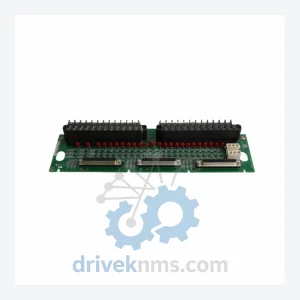
GE Fanuc IS200TBCIS2CCD I/O Terminal Board – Mark VI Redundant Control System
GE Fanuc IS200TBCIS2CCD is listed for Mark VI RFQ review. Confirm quantity, condition and destination before quotation.
RFQ-ready industrial model
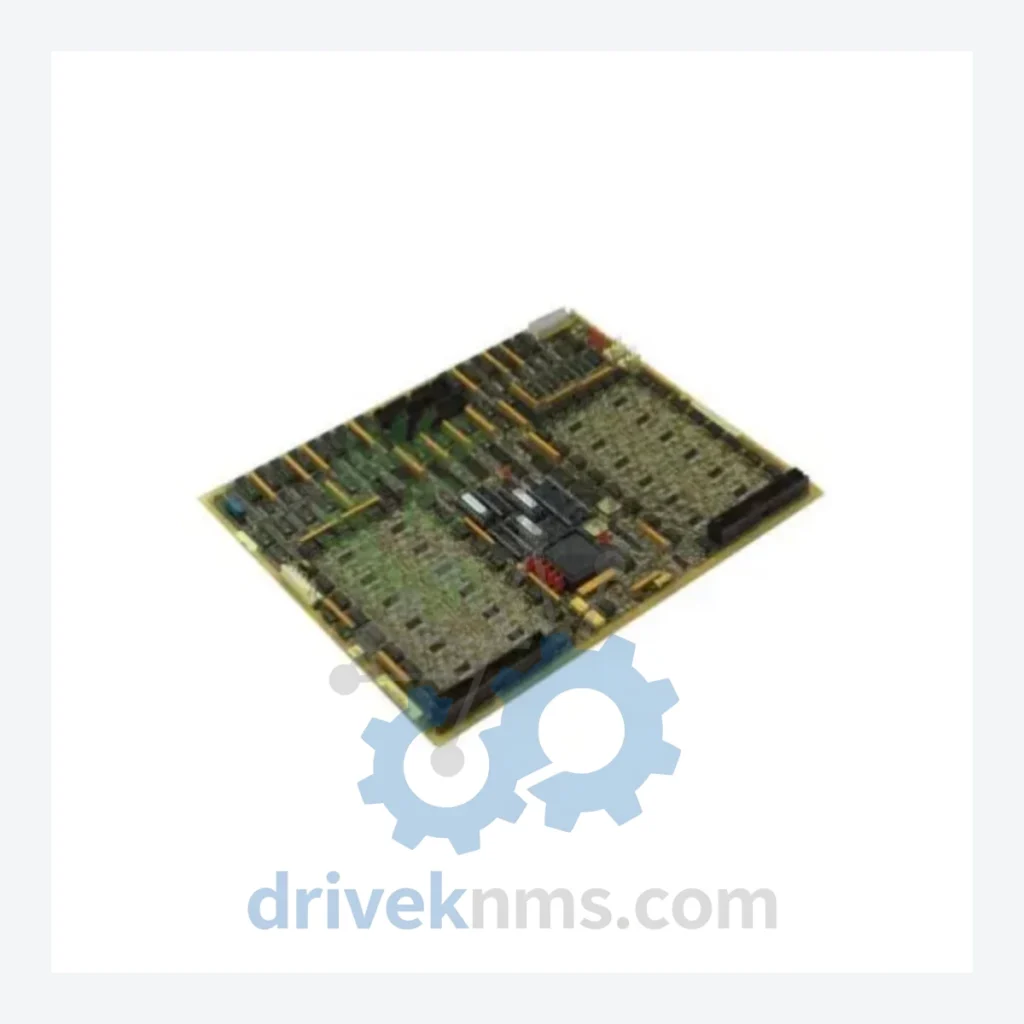
Model: DS200TCDAG1BFD DS215TCDAG1BZZ01A
Product Overview
Commercial availability is handled through direct RFQ, model verification and export-oriented follow-up rather than public cart checkout.
Datasheet Preview
Use attached product manuals when available. If the manual is not public yet, request the full file directly through RFQ.
Commercial Path
Product pages on DRIVEKNMS are designed to verify model, brand and series first, then move the buyer into one clean quotation path.
Technical Dossier
When a Digital I/O board fails inside a GE Mark VI turbine control system, the consequences are not limited to a single machine. The Mark VI is the nerve center of gas turbine operations — coordinating fuel control, flame detection, exhaust temperature monitoring, and protective shutdown logic. A failed DS200TCDAG1BFD does not just halt one turbine; it can force an unplanned outage across an entire power generation or industrial process facility.
DriveKNMS reviews sourcing status and documentation for this model during RFQ handling before quotation.
RFQ support for obsolete parts: Send the model number, required quantity and destination so DriveKNMS can confirm sourcing options before quotation.
| Part Number | DS200TCDAG1BFD |
| Alternate / Equivalent P/N | DS215TCDAG1BZZ01A |
| Manufacturer | GE (General Electric) |
| Series | Mark VI Turbine Control System |
| Board Function | Digital I/O (Input/Output) Board |
| Discontinuation Status | Obsolete – No longer manufactured or supported by GE |
| Compatible Systems | GE Mark VI, Mark VIe (legacy I/O rack configurations) |
| Typical Application | Gas turbine control, steam turbine control, combined-cycle plant automation |
| Country of Origin | United States |
Note: Electrical parameters such as voltage ratings and I/O channel counts vary by board revision. DriveKNMS will confirm exact revision details upon inquiry. No parameters are published here that cannot be verified against physical hardware.
GE's Mark VI platform was deployed extensively throughout the 1990s and 2000s in power generation, oil and gas, and heavy industrial facilities worldwide. GE has since transitioned its turbine control portfolio to the Mark VIe and Mark VIeS architectures, leaving Mark VI operators without a factory support path for boards like the DS200TCDAG1BFD.
The Digital I/O board occupies a non-negotiable position in the Mark VI I/O rack. It handles discrete signal exchange between the turbine's field instrumentation and the control processor — including start/stop commands, valve position feedback, and protective relay outputs. There is no software workaround for a failed I/O board. The slot must be populated with a functioning, compatible board, or the turbine will not operate.
DriveKNMS specializes in exactly this procurement gap. Our inventory is sourced through controlled decommissioning projects and verified against known-good reference units before any board is offered for sale.
The decision to retire a Mark VI system is rarely driven by the control platform's inability to perform its function. It is almost always driven by the inability to source replacement hardware when a board fails. Addressing that single constraint — spare parts availability — is the most cost-effective strategy available to plant management teams facing system retirement pressure.
A structured approach to Mark VI asset life extension typically involves three phases. First, conduct a full I/O board audit across all turbine control cabinets to identify boards showing early signs of capacitor aging, connector wear, or firmware drift. Second, establish a minimum strategic spare holding — typically one spare board per board type per two to three turbines — sourced from verified secondary market suppliers. Third, implement a scheduled board rotation and bench-test program so that spares are confirmed functional before they are needed in an emergency.
The capital cost of this approach — spare boards, storage, and periodic bench testing — is a fraction of the cost of a single unplanned outage, and orders of magnitude less than a full control system migration. For a facility operating four to eight Mark VI-controlled turbines, a well-managed spare parts program can realistically defer system retirement by five to ten years while maintaining full operational reliability.
The DS200TCDAG1BFD is one of the higher-risk boards in the Mark VI I/O rack due to its age and the density of discrete I/O channels it manages. Holding at least one verified spare is a minimum prudent standard for any facility that cannot afford an unplanned turbine outage.
Every DS200TCDAG1BFD unit offered by DriveKNMS passes a structured five-step quality process before it is made available for sale. This process is designed specifically for legacy industrial boards where age-related failure modes differ from those of current-production hardware.
Step one is visual and mechanical inspection — boards are examined under magnification for physical damage, corrosion on edge connectors and through-hole pins, solder joint cracking, and evidence of prior field repairs. Step two is electrolytic capacitor assessment — capacitors on boards of this age are measured for capacitance and equivalent series resistance, as electrolytic capacitor degradation is the leading cause of intermittent failure in legacy I/O boards. Step three is firmware and configuration verification — where applicable, firmware revision is confirmed and documented. Step four is functional I/O testing — discrete input and output channels are exercised against known reference signals to confirm correct operation. Step five is cleaning, anti-static packaging, and documentation — boards are cleaned, packaged in ESD-safe materials, and shipped with a condition report.
Units that do not pass all five steps are not offered for sale. DriveKNMS does not sell boards on an as-is, untested basis.
The DS200TCDAG1BFD is a direct slot-compatible replacement for failed boards within the GE Mark VI I/O rack. Installation does not require reprogramming of the Mark VI controller, re-engineering of the I/O configuration, or modification of field wiring. The board seats into the existing rack position, and the Mark VI controller recognizes it through the existing hardware configuration.
Q: How are RFQ terms confirmed?
A: Quantity, required condition, documentation needs, destination and sourcing route are confirmed during RFQ review before quotation.
Avoiding the engineering overhead of a control system migration also means avoiding the associated risks: revalidation of control logic, retraining of operations staff, and the integration testing required when a new control platform interfaces with existing field instrumentation and plant DCS infrastructure.
How do I confirm the board is new or quality-refurbished?
Each board shipped by DriveKNMS is accompanied by a condition report documenting its QA status — new surplus, tested serviceable, or quality-refurbished — along with the specific test results from our five-step process. We do not ship boards without documentation.
Should I hold long-term spares for the Mark VI?
Yes. For any facility where the Mark VI will remain in service for more than two years, holding a minimum strategic spare inventory is a standard risk management practice. The secondary market for Mark VI I/O boards is finite. Boards that are available today may not be available when a failure occurs. DriveKNMS can advise on appropriate spare holding quantities based on your fleet size and operational risk tolerance.
Can DriveKNMS source other Mark VI boards?
Yes. DriveKNMS maintains inventory across a range of GE Mark VI and Mark VIe legacy boards. Contact us with your full bill of materials for a consolidated sourcing assessment.
Continue The Model Path
Move from this exact model into the matching system hub, brand archive, model-family archive or lifecycle sourcing route before sending a final RFQ list.
Related Paths
GE Fanuc IS200TBCIS2CCD is listed for Mark VI RFQ review. Confirm quantity, condition and destination before quotation.
General Electric DS200TCDA-HBHE is listed for Mark VI RFQ review. Confirm quantity, condition and destination before quotation.
General Electric IS200DSPXH1DBD is listed for Mark VI RFQ review. Confirm quantity, condition and destination before quotation.