
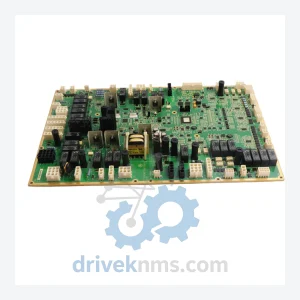
GE IS200WETBH1BAA Elevator Control Board – Obsolete Speedtronic Spare Part
General Electric IS200WETBH1BAA is listed for Controller Cards RFQ review. Confirm quantity, condition and destination before quotation.
RFQ-ready industrial model
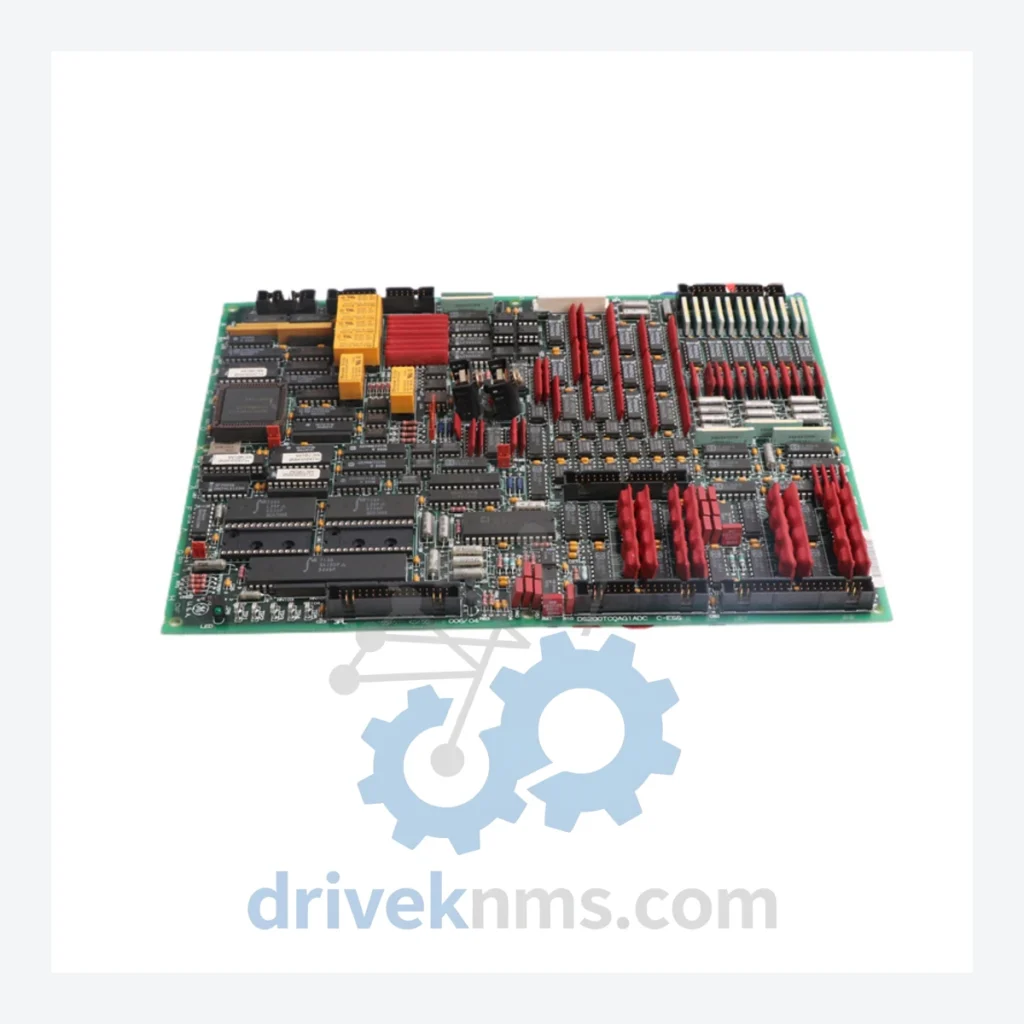
Model: DS200TCEBG1BAA
Product Overview
Commercial availability is handled through direct RFQ, model verification and export-oriented follow-up rather than public cart checkout.
Datasheet Preview
Use attached product manuals when available. If the manual is not public yet, request the full file directly through RFQ.
Commercial Path
Product pages on DRIVEKNMS are designed to verify model, brand and series first, then move the buyer into one clean quotation path.
Technical Dossier
The GE DS200 series — commercially designated as the Speedtronic Mark V turbine control system — represents one of the most widely deployed distributed control architectures in heavy industrial applications globally. Installed across gas turbine power plants, combined-cycle facilities, petrochemical refineries, offshore platforms, and nuclear auxiliary systems, the Mark V platform has accumulated a multi-decade installed base that continues to require active spare parts support. The DS200 prefix identifies the printed circuit board assemblies (PCBAs) that form the functional backbone of the Mark V control cabinet, including processor cards, I/O termination boards, communication adapters, relay output modules, and power conditioning assemblies. DriveKNMS maintains a dedicated inventory of DS200-series modules to support operators whose systems remain in service beyond GE's standard product lifecycle.
The Speedtronic Mark V was introduced by GE in the early 1990s as the successor to the Mark IV, incorporating a triple-redundant TMR (Triple Modular Redundancy) processor architecture for critical turbine protection. The system is organized around three independent control processors — designated R, S, and T — each running identical control logic and voting on outputs to ensure fault tolerance. The DS200 board set was designed to interface with this TMR backbone via a proprietary backplane bus, making board-level interchangeability dependent on firmware revision compatibility and hardware revision suffix matching.
Over its production lifecycle, GE issued multiple hardware revisions to individual DS200 boards, reflected in the alphanumeric suffix of each part number (e.g., G1BAA, G1BHF, G1ACC). These suffixes encode PCB revision, component population variant, and firmware compatibility level. Operators performing board-level replacements must verify suffix compatibility against the installed system's software version to avoid control logic mismatches. The Mark V was officially succeeded by the Mark VI (IS200 series) and later the Mark VIe (IS420 series), but a significant portion of the global installed base — particularly in developing markets and long-lifecycle baseload plants — continues to operate on Mark V hardware, creating sustained demand for DS200 spare parts through at least 2035.
The following DS200-series modules are classified by functional category. Each entry represents a verified part number within the GE Speedtronic Mark V ecosystem.
Processor & Control Modules (CPU / TMR Core)
I/O Modules (Analog Input / Digital Input / Digital Output)
Communication & Network Adapters
Relay Output & Protection Modules
DS200-series boards present specific test challenges due to their proprietary backplane bus protocol and TMR voting architecture. Standard bench power-up is insufficient to validate board functionality; each module must be exercised within a compatible Mark V backplane environment or via a dedicated functional test fixture that emulates the backplane bus signals.
DriveKNMS applies the following test protocol to all DS200 modules prior to shipment: (1) Visual inspection for component damage, corrosion, and PCB delamination. (2) In-circuit test (ICT) for passive component values and solder joint integrity. (3) Functional test in a live Mark V backplane fixture, verifying communication handshake, I/O channel response, and self-diagnostic pass status. (4) Burn-in cycle at elevated temperature (55°C, 48 hours) to screen for early-life component failures. (5) Final revision suffix verification and serialization against shipping documentation. Boards that do not pass all five stages are quarantined and not offered for sale.
Continue The Model Path
Move from this exact model into the matching system hub, brand archive, model-family archive or lifecycle sourcing route before sending a final RFQ list.
Related Paths
General Electric IS200WETBH1BAA is listed for Controller Cards RFQ review. Confirm quantity, condition and destination before quotation.
General Electric IS200TRLYH1BED IS200TRLYH1B is listed for Controller Cards RFQ review. Confirm quantity, condition and destination before quotation.
General Electric IS210AEPSG1AFC IS210AEPSG1 is listed for IS210 Series RFQ review. Confirm quantity, condition and destination before quotation.