
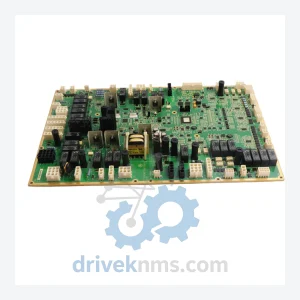
GE IS200WETBH1BAA Elevator Control Board – Obsolete Speedtronic Spare Part
General Electric IS200WETBH1BAA is listed for Controller Cards RFQ review. Confirm quantity, condition and destination before quotation.
RFQ-ready industrial model
Model: DS200TCPDG2BEC
Product Overview
Commercial availability is handled through direct RFQ, model verification and export-oriented follow-up rather than public cart checkout.
Datasheet Preview
Use attached product manuals when available. If the manual is not public yet, request the full file directly through RFQ.
Commercial Path
Product pages on DRIVEKNMS are designed to verify model, brand and series first, then move the buyer into one clean quotation path.
Technical Dossier
The GE DS200 series is a family of printed circuit board assemblies developed by General Electric for use within the Mark V and Mark VI turbine control systems. These systems are deployed across heavy industrial sectors including gas turbine power generation, combined-cycle plants, petrochemical refineries, offshore oil and gas platforms, and nuclear auxiliary systems. The DS200 platform represents one of the most widely installed turbine control architectures globally, with active installations spanning North America, the Middle East, Southeast Asia, and Europe. Due to the long operational lifespan of gas turbines (20–40 years), DS200 boards remain in active service well beyond GE's standard product support window, creating sustained demand for verified spare parts and lifecycle extension services.
The DS200 series was introduced as the board-level hardware layer for GE's Mark V Speedtronic turbine control platform, first commercialized in the late 1980s. Mark V represented a significant architectural shift from the earlier Mark IV, introducing triple-redundant processing (TMR — Triple Modular Redundancy) and dedicated I/O separation between analog, digital, and communication functions. Each DS200 board was assigned a specific functional role within the control rack: processor boards handled core logic execution, I/O boards interfaced with field instrumentation, and communication boards managed inter-panel and HMI data exchange.
In the mid-1990s, GE transitioned to the Mark VI platform, which introduced the IS200 and IS215 board families as the successor hardware. However, the DS200 series was not immediately retired — many operators continued running Mark V systems due to the capital cost of full control system upgrades. GE formally discontinued Mark V support in the early 2010s, but the installed base remains substantial. Compatibility between DS200 and IS200 boards is not direct; cross-platform migration requires engineering assessment of I/O mapping, signal conditioning, and software configuration. For sites maintaining original Mark V architecture, DS200 boards must be sourced as exact replacements.
The following SKUs represent verified members of the GE DS200 series, categorized by functional role. Each entry reflects a distinct board assembly with a defined role within the Mark V control rack.
Processor & Control Boards
Analog I/O Boards
Digital I/O Boards
Communication & Interface Boards
Power Supply Boards
GE's formal discontinuation of Mark V hardware support means that DS200 boards are no longer available through OEM channels. DriveKNMS maintains a dedicated inventory of DS200 series boards sourced from decommissioned turbine control panels, controlled teardowns, and verified surplus channels. All units are cataloged by full part number including revision suffix (e.g., G1BHF, G2BEC), as revision differences can affect firmware compatibility and backplane pinout.
DS200 boards present specific testing challenges due to their backplane-dependent architecture. Functional verification requires replication of the Mark V rack environment, including correct backplane voltages, inter-board communication signals, and firmware handshake sequences. DriveKNMS employs dedicated Mark V test rigs that simulate operational rack conditions, allowing board-level functional testing beyond simple power-on checks.
Each DS200 board processed by DriveKNMS undergoes the following verification steps: visual inspection for component damage, corrosion, and capacitor condition; in-circuit testing of power regulation and signal conditioning circuits; functional test under simulated rack load; and revision code verification against the customer's system configuration requirements. Boards that pass all stages are issued a test certificate and shipped with anti-static packaging and humidity indicators. Boards with identified faults are either repaired to component level or quarantined and documented to prevent re-entry into the supply chain.
Continue The Model Path
Move from this exact model into the matching system hub, brand archive, model-family archive or lifecycle sourcing route before sending a final RFQ list.
Related Paths
General Electric IS200WETBH1BAA is listed for Controller Cards RFQ review. Confirm quantity, condition and destination before quotation.
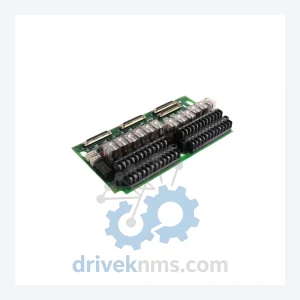
General Electric IS200TRLYH1BED IS200TRLYH1B is listed for Controller Cards RFQ review. Confirm quantity, condition and destination before quotation.
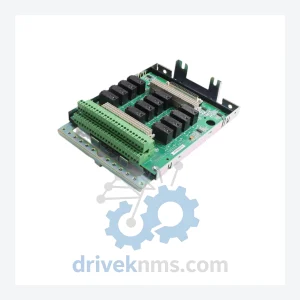
General Electric IS230SNRLH2A IS200SRLYH2AAA is listed for Controller Cards RFQ review. Confirm quantity, condition and destination before quotation.