
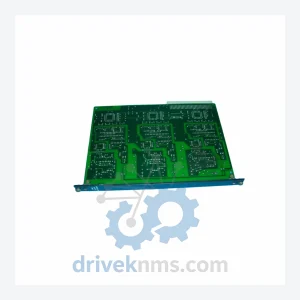
GE IS200BPIBG1AEB Driver Board
General Electric IS200BPIBG1AEB is listed for Monitoring Systems RFQ review. Confirm quantity, condition and destination before quotation.
RFQ-ready industrial model
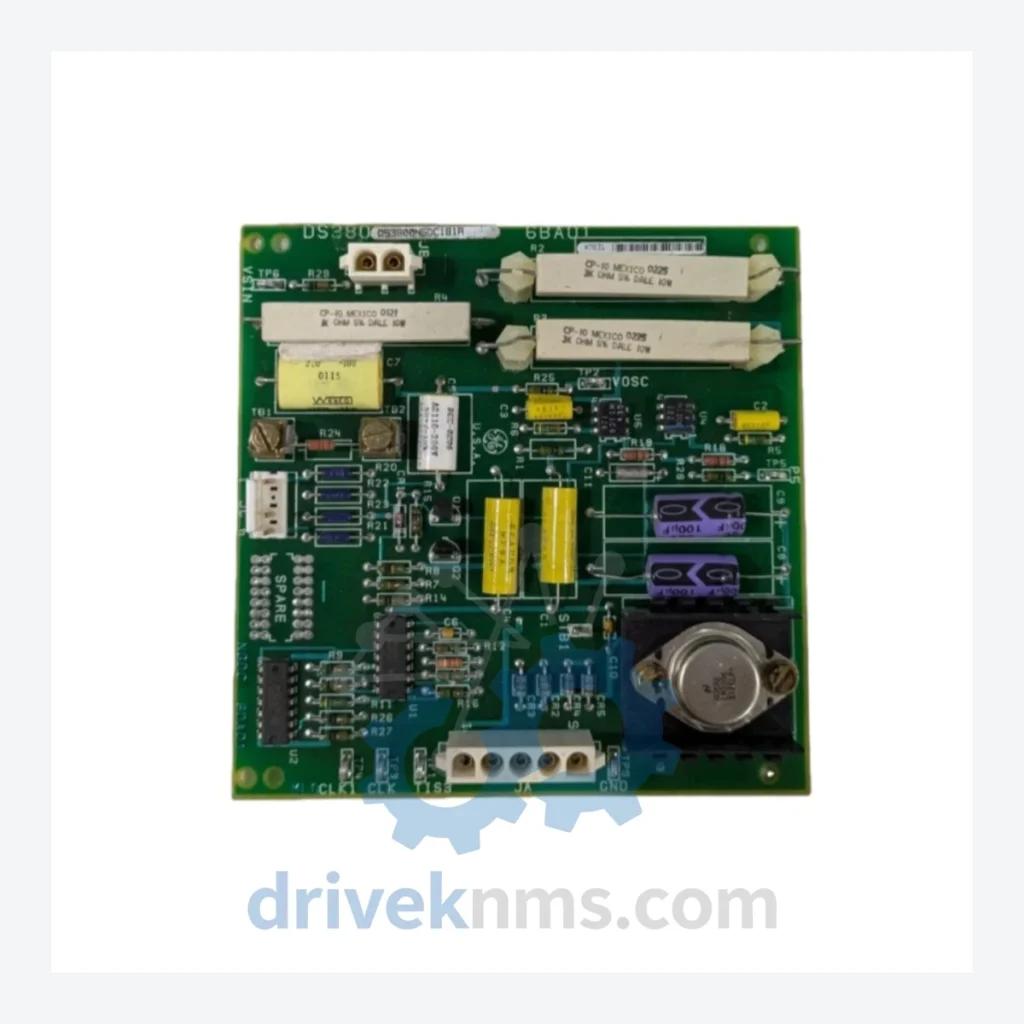
Model: DS3800NGDC1B1A
Product Overview
Commercial availability is handled through direct RFQ, model verification and export-oriented follow-up rather than public cart checkout.
Datasheet Preview
Use attached product manuals when available. If the manual is not public yet, request the full file directly through RFQ.
Commercial Path
Product pages on DRIVEKNMS are designed to verify model, brand and series first, then move the buyer into one clean quotation path.
Technical Dossier
When a DS3800NGDC1B1A ground detector card fails inside a GE Mark IV turbine control system, the consequences are not limited to a single module replacement. The Mark IV platform — and its successor the Mark V — was designed as a tightly integrated architecture. A single failed board can trigger a full turbine trip, halt production, and force plant management into a decision they are not prepared to make: source an obsolete card within days, or commit to a multi-million dollar control system migration that was never budgeted for this fiscal year.
A full Mark IV to Mark VI or Mark VIe migration, including engineering, commissioning, and lost production time, routinely exceeds USD $2,000,000 for a single turbine train. The DS3800NGDC1B1A, sourced from verified legacy inventory, eliminates that decision entirely. DriveKNMS maintains sourcing status of this card for exactly this scenario.
RFQ support for obsolete parts: Send the model number, required quantity and destination so DriveKNMS can confirm sourcing options before quotation.
| Part Number | DS3800NGDC1B1A |
| Manufacturer | GE (General Electric) |
| Series / Platform | Mark IV Turbine Control System |
| Function | Ground Detector Card – monitors AC/DC ground faults in turbine control circuits |
| Compatible Systems | GE Mark IV, Mark V (TCCA/TCCB/TCCC panels) |
| Form Factor | Printed Circuit Board (PCB), plug-in card |
| Discontinuation Status | Obsolete – no longer manufactured by GE. Replacement sourcing required from certified legacy inventory. |
| Country of Origin | United States |
Note: Electrical parameters beyond the above are not published in this listing to prevent misapplication. Contact our technical team for system-specific verification before ordering.
The GE Mark IV turbine control system was deployed extensively across gas turbine, steam turbine, and combined-cycle power plants from the 1980s through the early 2000s. Tens of thousands of units remain in active service globally, particularly in regions where capital expenditure for full DCS migration is constrained by regulatory cycles, budget approval timelines, or simply the operational reality that the turbine itself has decades of mechanical life remaining.
The DS3800NGDC1B1A ground detector card occupies a non-negotiable position in the Mark IV safety architecture. Ground fault detection is not a redundant function — it is a primary protection layer. Without a functioning ground detector card, the control system cannot reliably distinguish between a genuine ground fault and a false alarm, creating either nuisance trips that erode production availability or, more critically, masked faults that represent genuine equipment risk.
GE ceased manufacturing Mark IV boards as the platform transitioned to Mark V and subsequently Mark VI. The DS3800NGDC series has been out of production for over two decades. What remains in circulation exists in three places: original plant spares rooms, specialist legacy parts distributors, and the secondary market. Of these, only a verified distributor with documented sourcing and QA processes can provide the traceability that plant safety requirements demand.
How to extend your Mark IV turbine control system life by 5 to 10 years without a full migration:
Plant managers facing system retirement pressure from OEM end-of-support notices frequently underestimate the practical options available. The following strategy has been applied successfully across multiple power generation facilities operating GE Mark IV and Mark V systems:
1. Conduct a board-level criticality audit. Map every PCB in your Mark IV panels against its failure history and current sourcing status on the secondary market. Cards with no available spares represent your highest retirement risk — not the system as a whole.
2. Build a targeted critical spares buffer. For a Mark IV installation, a strategic buffer of 8 to 12 high-criticality boards — including ground detector, power supply, and I/O interface cards — can absorb the most statistically likely failure modes for a 7 to 10 year horizon. The cost of this buffer is typically less than 2% of a full migration project.
3. Establish a verified supplier relationship before the failure occurs. Emergency sourcing of obsolete parts under production pressure leads to counterfeit risk and inflated pricing. Pre-qualifying a supplier like DriveKNMS — with documented QA processes and traceable inventory — converts a potential crisis into a managed maintenance event.
4. Document firmware and configuration baselines. For Mark IV systems, configuration data stored on EPROMs is as critical as the hardware itself. Ensure all EPROM images are backed up and version-controlled before any board replacement.
5. Negotiate OEM extended support selectively. GE offers extended support contracts for legacy systems, but these are priced for full-system coverage. For plants with strong internal maintenance capability, selective third-party parts sourcing combined with OEM support for software-only issues is a demonstrably lower-cost model.
Every DS3800NGDC1B1A unit shipped by DriveKNMS passes a documented 5-step inspection protocol before dispatch. This process was developed specifically for legacy PCBs where age-related degradation — not mechanical damage — is the primary failure vector.
Step 1 – Electrolytic Capacitor Assessment: All electrolytic capacitors are inspected for bulging, leakage, and ESR drift. Capacitors showing degradation are flagged; units with multiple affected capacitors are not offered for sale as functional spares.
Step 2 – Firmware Version Verification: EPROM markings are cross-referenced against known Mark IV firmware revision records. Boards with unverifiable or mismatched firmware versions are quarantined pending further investigation.
Q: How are RFQ terms confirmed?
A: Quantity, required condition, documentation needs, destination and sourcing route are confirmed during RFQ review before quotation.
The DS3800NGDC1B1A is a direct drop-in replacement for the original card position in GE Mark IV TCCA, TCCB, and TCCC panels. No hardware modification, no firmware reprogramming, and no engineering reconfiguration is required for a like-for-like swap. This is the defining advantage of sourcing an original-series board versus attempting to engineer a modern substitute.
Q: Can this card be used in a Mark V system?
A: The DS3800 series boards were used across both Mark IV and early Mark V configurations. Compatibility depends on your specific panel revision and slot assignment. Contact our technical team with your panel configuration details before ordering.
Continue The Model Path
Move from this exact model into the matching system hub, brand archive, model-family archive or lifecycle sourcing route before sending a final RFQ list.
Related Paths
General Electric IS200BPIBG1AEB is listed for Monitoring Systems RFQ review. Confirm quantity, condition and destination before quotation.
General Electric IS200RCSAG1ABB is listed for Monitoring Systems RFQ review. Confirm quantity, condition and destination before quotation.
General Electric IS215REBFH1A is listed for Monitoring Systems RFQ review. Confirm quantity, condition and destination before quotation.