
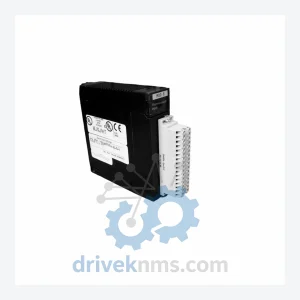
GE HE693THM166E Memory Ethernet Module – Series 90-30
GE Fanuc HE693THM166E is listed for Series 90-30 RFQ review. Confirm quantity, condition and destination before quotation.
RFQ-ready industrial model
Model: IC693CPU341
Product Overview
Commercial availability is handled through direct RFQ, model verification and export-oriented follow-up rather than public cart checkout.
Datasheet Preview
Use attached product manuals when available. If the manual is not public yet, request the full file directly through RFQ.
Commercial Path
Product pages on DRIVEKNMS are designed to verify model, brand and series first, then move the buyer into one clean quotation path.
Technical Dossier
The Series 90-30 was launched as a mid-range successor to the Series Six and Series Five PLC families. Early CPU releases (circa 1989–1993) used the IC693CPU311 and IC693CPU313, which operated at 16 MHz with limited ladder logic capacity (6K–12K steps). The platform transitioned through three distinct architectural generations:
Generation 1 (1989–1995): Single-slot CPUs with serial port only, no Ethernet native support, EPROM-based firmware. Representative models: IC693CPU311, IC693CPU313, IC693CPU321, IC693CPU323.
Generation 2 (1995–2005): Enhanced CPUs with expanded memory, floating-point math coprocessor options, and support for the Ethernet Interface Module (IC693CMM321). The IC693CPU341 belongs to this generation — 32 MHz processor, 240KB user memory, dual serial ports (RS-232/RS-485), supports up to 2,048 discrete I/O points and 512 analog channels. Compatible with all IC693 I/O modules and IC694 expansion baseplates.
Generation 3 (2005–2015): CPU374 and CPU375 class modules with embedded Ethernet, SRTP protocol support, and compatibility with Proficy Machine Edition programming software. These represent the final OEM-supported generation before platform end-of-life designation.
Compatibility note: IC693-series modules are NOT directly interchangeable with IC694-series (Series 90-30 Enhanced) modules at the CPU slot level. Backplane pinouts differ. Verify baseplate revision before substitution.
CPU Modules
IC693CPU311: 6K-step CPU, 16 MHz, single RS-232 port, EPROM firmware, 5/10-slot baseplate.
IC693CPU313: 12K-step CPU, 16 MHz, dual serial ports, expanded discrete I/O capacity.
IC693CPU321: 32K-step CPU, floating-point support, RS-232/RS-485, 240KB user memory.
IC693CPU323: Enhanced 32K-step CPU, increased analog channel support, dual serial.
IC693CPU331: 80K-step CPU, 32 MHz, supports Motion Control modules, 512 analog I/O.
IC693CPU340: 240KB CPU, Ethernet-ready via CMM321, predecessor to CPU341.
IC693CPU341: 240KB single-slot CPU, 32 MHz, RS-232 + RS-485, 2048 discrete / 512 analog I/O, supports IC693CMM321 Ethernet module — primary subject of this listing.
IC693CPU350: 32K-step enhanced CPU, embedded diagnostics, compatible with IC694 expansion.
IC693CPU360: 64K-step CPU, high-speed interrupt inputs, Proficy ME compatible.
IC693CPU374: Embedded 10/100 Ethernet, SRTP, 240KB, final-generation Series 90-30 CPU.
IC693CPU375: 512KB CPU, embedded Ethernet, redundancy-capable, Proficy ME.
Discrete Input Modules
IC693MDL230: 8-point 120VAC discrete input, isolated, DIN rail compatible.
IC693MDL240: 16-point 120VAC discrete input, standard density.
IC693MDL241: 16-point 24VDC discrete input, sink/source configurable.
IC693MDL260: 32-point 24VDC discrete input, high-density, single slot.
Discrete Output Modules
IC693MDL310: 8-point relay output, 2A per point, Form C contacts.
IC693MDL340: 16-point 120VAC triac output, 0.5A per point.
IC693MDL390: 32-point 24VDC transistor output, high-density.
Analog Modules
IC693ALG220: 4-channel analog input, 4–20mA / 0–10V, 12-bit resolution.
IC693ALG390: 8-channel analog input, 13-bit, thermocouple/RTD compatible.
IC693ALG442: 4-channel analog output, 12-bit, 4–20mA / 0–10V.
Communications & Specialty
IC693CMM321: Ethernet TCP/IP interface, 10BaseT, SRTP/Modbus TCP, pairs with CPU341.
IC693CMM311: Serial communications module, RS-232/RS-485, ASCII/RTU Modbus.
IC693PBS301: PROFIBUS-DP slave adapter, 12 Mbps, single slot.
Power Supply Modules
IC693PWR321: 120/240VAC input power supply, 30W, 5VDC / 24VDC output.
IC693PWR330: 24VDC input power supply, 30W, isolated outputs.
Series 90-30 modules use a proprietary backplane bus operating at 5V TTL logic levels. Failure modes specific to this platform include backplane connector oxidation (IC693 5-slot and 10-slot baseplates), SRAM battery depletion on CPU modules (IC693CPU341 uses a 3V lithium coin cell — CR2032 equivalent), and EPROM firmware corruption on Generation 1 CPUs. DriveKNMS applies the following test protocol to all Series 90-30 modules prior to shipment:
1. Visual inspection: PCB trace integrity, capacitor condition, connector pin alignment.
2. Power-on test: Module inserted into a live IC693 baseplate with known-good CPU; power rail voltages verified at ±5V, ±12V, and 24V.
3. Functional test: For CPU modules, a standard ladder logic program (discrete I/O scan, analog read, serial communication handshake) is executed and verified against expected outputs.
4. Communication test: IC693CMM321 Ethernet modules are tested for SRTP session establishment and Modbus TCP register read/write.
5. Burn-in: 4-hour continuous operation at ambient temperature before final packaging.
Continue The Model Path
Move from this exact model into the matching system hub, brand archive, model-family archive or lifecycle sourcing route before sending a final RFQ list.
Related Paths
GE Fanuc HE693THM166E is listed for Series 90-30 RFQ review. Confirm quantity, condition and destination before quotation.
GE Fanuc IC609SJR100C is listed for Series 90-30 RFQ review. Confirm quantity, condition and destination before quotation.
GE Fanuc IC693PCM301 is listed for Series 90-30 RFQ review. Confirm quantity, condition and destination before quotation.