
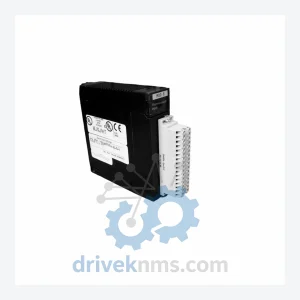
GE HE693THM166E Memory Ethernet Module – Series 90-30
GE Fanuc HE693THM166E is listed for Series 90-30 RFQ review. Confirm quantity, condition and destination before quotation.
RFQ-ready industrial model
Model: IC693MDR390
Product Overview
Commercial availability is handled through direct RFQ, model verification and export-oriented follow-up rather than public cart checkout.
Datasheet Preview
Use attached product manuals when available. If the manual is not public yet, request the full file directly through RFQ.
Commercial Path
Product pages on DRIVEKNMS are designed to verify model, brand and series first, then move the buyer into one clean quotation path.
Technical Dossier
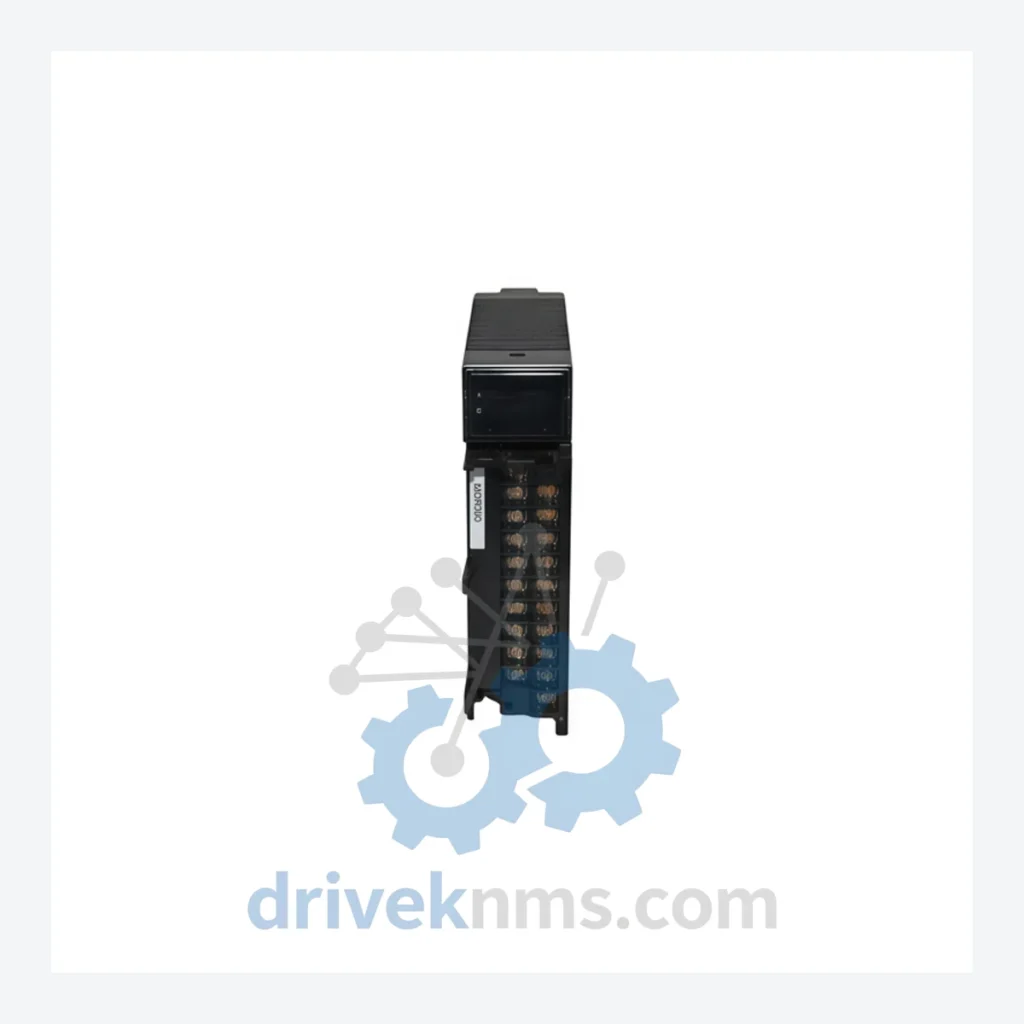
The GE IC693MDR390 is a discontinued relay output module for the GE Series 90-30 programmable logic controller platform. DriveKNMS maintains RFQ-reviewed sourcing status of this module specifically to serve facilities that cannot justify a full system overhaul and need a direct hardware replacement to restore production without architectural changes.
RFQ support for obsolete parts: Send the model number, required quantity and destination so DriveKNMS can confirm sourcing options before quotation.
| Parameter | Detail |
|---|---|
| Part Number | IC693MDR390 |
| Manufacturer | GE Automation (formerly GE Fanuc) |
| Series | Series 90-30 (90/30) PLC |
| Module Type | Relay Output Module |
| Output Points | 12 relay outputs |
| Output Type | Relay (dry contact) |
| Compatible Backplanes | IC693CHS391, IC693CHS392, IC693CHS393, IC693CHS398, IC693CHS399 |
| Compatible CPUs | IC693CPU311, IC693CPU313, IC693CPU321, IC693CPU331, IC693CPU340, IC693CPU341, IC693CPU350, IC693CPU360, IC693CPU363, IC693CPU364, IC693CPU374 |
| Discontinuation Status | Discontinued / End-of-Life by GE Automation. No longer manufactured or supported by OEM. |
| Country of Origin | United States |
| Condition Available | New surplus / Professionally refurbished |
The GE Series 90-30 platform was one of the most widely deployed mid-range PLC architectures in North American and global manufacturing from the late 1980s through the 2000s. It is embedded in food and beverage lines, water treatment facilities, automotive assembly cells, chemical processing units, and discrete manufacturing operations across dozens of industries.
Q: How are RFQ terms confirmed?
A: Quantity, required condition, documentation needs, destination and sourcing route are confirmed during RFQ review before quotation.
During that window, the existing hardware must continue to run. A single verified IC693MDR390 unit held in on-site inventory is the difference between a managed maintenance event and an unplanned production halt. Facilities running Series 90-30 systems should treat this module as a critical consumable, not a one-time purchase.
For discontinued hardware, condition verification is not optional — it is a safety and reliability requirement. DriveKNMS applies a structured 5-step inspection protocol to every IC693MDR390 unit before it is offered for sale:
Step 1 – Electrolytic Capacitor Assessment: Capacitors are the primary failure point in aged relay output modules. Each unit is inspected for capacitor bulging, electrolyte leakage, and ESR deviation. Units with degraded capacitors are either recapped with equivalent-spec components or removed from inventory.
Step 2 – Firmware Version Verification: The module firmware version is confirmed against GE Automation's documented compatibility matrix for Series 90-30 CPUs. Mismatched firmware versions can cause silent communication errors that are difficult to diagnose in the field.
Step 4 – Relay Contact Integrity Test: Each of the 12 relay output contacts is tested for continuity, contact resistance, and switching response. Relay contacts that show excessive resistance or intermittent behavior are flagged and the unit is disqualified from sale.
Step 5 – Functional Burn-In: Units are powered and cycled under load conditions prior to shipment. Only modules that complete the full burn-in sequence without fault are released.
The IC693MDR390 is a direct drop-in replacement for any failed unit of the same part number within a Series 90-30 rack. No PLC reprogramming is required. No I/O address remapping is needed. The replacement module is recognized by the CPU automatically upon rack power-up, provided the hardware configuration in the CPU matches the installed module type — which it will, as this is an identical part number replacement.
This characteristic is operationally significant. It means a maintenance technician with standard PLC familiarity can execute the replacement without specialist engineering support. There is no need to engage a system integrator, no need to modify the application program, and no risk of introducing software errors during the swap. The total replacement time for a trained technician is typically under 30 minutes from power-down to production restart.
The economic case for maintaining a GE Series 90-30 system rather than replacing it is straightforward when the numbers are examined directly. A mid-complexity Series 90-30 installation — 4 to 8 racks, 200 to 600 I/O points, integrated HMI — represents a capital investment that was typically in the range of $150,000 to $600,000 at time of installation. The embedded engineering value — the application program, the process tuning, the operator familiarity — adds further to the real cost of replacement.
A structured spare parts strategy can extend the operational life of this infrastructure by 5 to 10 years at a fraction of the replacement cost. The approach is not complicated:
Identify critical single points of failure. For Series 90-30 systems, CPU modules, power supplies, and relay output modules such as the IC693MDR390 are the components most likely to cause a full line stoppage when they fail. These are the modules that must be held in on-site inventory.
Maintain a minimum of two units per critical module type. One unit in service, one unit on the shelf. When the shelf unit is consumed, it is replaced immediately. This is not over-stocking — it is the minimum viable buffer for a system where the OEM no longer manufactures replacement parts.
Source from verified suppliers, not open marketplaces. The secondary market for discontinued industrial hardware contains a significant volume of untested, misrepresented, and counterfeit components. Purchasing from a supplier that applies documented inspection and testing protocols is not a premium — it is risk management.
Document the installed firmware versions and hardware revisions. Series 90-30 modules were produced across multiple hardware revisions. Maintaining a record of the specific revisions installed in each rack position eliminates compatibility uncertainty when sourcing replacements.
Facilities that implement this approach consistently report that the total cost of maintaining a Series 90-30 system through its extended life is 15% to 25% of the cost of a full migration — while delivering equivalent production continuity.
Q: How do I know the unit is genuine and not counterfeit?
A: Each unit is inspected against GE Automation's documented physical and electrical specifications. We verify part markings, PCB layout, and component population against known-good reference units. Units that do not match are rejected. We do not source from unverified brokers or open auction platforms.
Q: Can this module be used with a different Series 90-30 CPU than what is currently installed?
A: The IC693MDR390 is compatible with all Series 90-30 CPUs listed in GE Automation's hardware compatibility documentation. CPU model does not affect relay output module compatibility within the Series 90-30 backplane architecture.
Continue The Model Path
Move from this exact model into the matching system hub, brand archive, model-family archive or lifecycle sourcing route before sending a final RFQ list.
Related Paths
GE Fanuc HE693THM166E is listed for Series 90-30 RFQ review. Confirm quantity, condition and destination before quotation.
GE Fanuc IC609SJR100C is listed for Series 90-30 RFQ review. Confirm quantity, condition and destination before quotation.
GE Fanuc IC693PCM301 is listed for Series 90-30 RFQ review. Confirm quantity, condition and destination before quotation.