
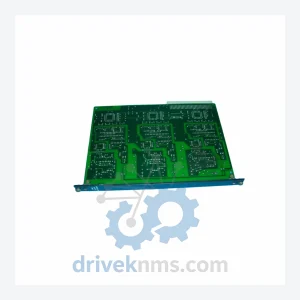
GE IS200 Modules | IS200BPIBG1AEB Driver Board
GE IS200 Series: Comprehensive Module Range and Technical Overview The GE IS200 series constitutes the core I/O, control, and communication…
Model: IS200AEBEG1A
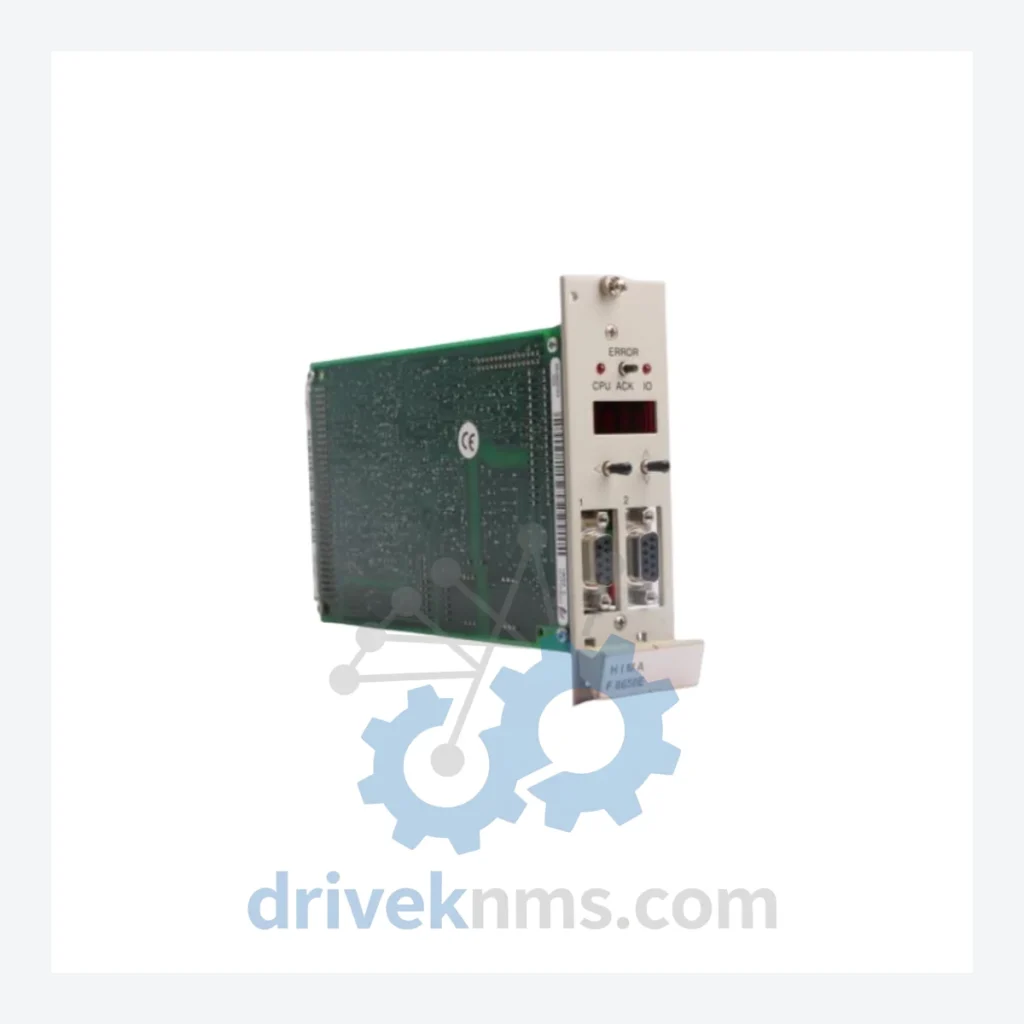
Product Overview
Commercial availability is handled through direct RFQ, model verification and export-oriented follow-up rather than public cart checkout.
Datasheet Preview
Use attached product manuals when available. If the manual is not public yet, request the full file directly through RFQ.
Commercial Path
Product pages on DRIVEKNMS are designed to verify model, brand and series first, then move the buyer into one clean quotation path.
Technical Dossier
The GE IS200 series is the core I/O and control module family deployed within GE's Mark VI and Mark VIe Turbine Control Systems, as well as the EX2100 excitation control platform. These systems govern gas turbines, steam turbines, combined-cycle power plants, compressor trains, and large rotating machinery across refineries, petrochemical complexes, nuclear auxiliary systems, and LNG terminals worldwide. The IS200 platform represents GE's transition from the earlier Mark V architecture to a fully distributed, triple-redundant TMR (Triple Modular Redundancy) control topology. Installed base spans hundreds of facilities across North America, the Middle East, Southeast Asia, and Europe, making IS200 modules among the most widely maintained legacy control hardware in heavy industry.
The IS200 series emerged in the mid-1990s as GE Power Systems standardized turbine control around the Mark VI platform, replacing the Mark V's proprietary backplane with a more modular, VME-compatible bus structure. Early IS200 modules used parallel backplane communication; later revisions introduced the IONet Ethernet-based I/O network, enabling distributed I/O racks separated from the main controller cabinet by up to 100 meters. The Mark VIe generation (introduced circa 2005–2008) retained IS200-form-factor modules but migrated to a fully Ethernet-based architecture (IONET/ARCNET), improving diagnostics and enabling remote monitoring. Compatibility between Mark VI and Mark VIe IS200 modules is revision-dependent: hardware form factor is often identical, but firmware and backplane addressing differ. Engineers sourcing replacement modules must verify the exact revision suffix (e.g., A, B, C, D, E, F, G) to ensure backplane and firmware compatibility. The series is now in a mature/end-of-production lifecycle; GE no longer manufactures most IS200 variants, making third-party MRO suppliers the primary source for spare parts and long-term maintenance support.
The following SKUs represent verified, commonly deployed modules within the GE IS200 series. Each entry includes its functional classification and a concise technical description.
Analog Input (AI) Modules
Digital Input (DI) Modules
Digital Output (DO) Modules
CPU / Controller Modules
Power Supply Modules
Communication / Network Modules
IS200 modules present specific test challenges due to their backplane-dependent architecture: most modules cannot be fully exercised without a live Mark VI backplane providing logic power, IONet communication, and application software context. DriveKNMS employs the following test protocol for IS200 hardware: (1) Visual inspection per IPC-A-610 Class 2 criteria, covering solder joint integrity, connector pin condition, and conformal coating status; (2) Powered bench test using a dedicated Mark VI backplane test fixture, verifying module enumeration, self-diagnostic pass/fail status, and LED indicator behavior; (3) Signal-level verification for I/O modules using calibrated signal sources (4–20 mA loops, thermocouple simulators, discrete 24 VDC inputs) to confirm channel accuracy within OEM specification; (4) Communication integrity test for IONet and ARCNET interface boards using protocol analyzers to verify packet transmission and error rates; (5) Burn-in cycle (minimum 48 hours at operating temperature) for modules destined for critical TMR applications. Test records are retained per unit serial number and are available to customers upon request.
© 2026 DriveKNMS. All trademarks belong to their respective owners. Specifications are for reference only and subject to change without notice. Verify all parameters against official documentation before installation.
Related Paths
GE IS200 Series: Comprehensive Module Range and Technical Overview The GE IS200 series constitutes the core I/O, control, and communication…
GE IS200 Series: Comprehensive Module Range and Technical Overview The GE IS200 series is the core I/O and control module…
GE IS215 Series: Comprehensive Module Range and Technical Overview The GE IS215 series represents a core hardware family within GE's…