
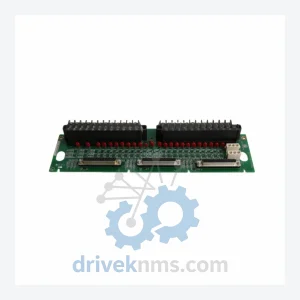
GE Fanuc IS200TBCIS2CCD I/O Terminal Board – Mark VI Redundant Control System
GE Fanuc IS200TBCIS2CCD is listed for Mark VI RFQ review. Confirm quantity, condition and destination before quotation.
RFQ-ready industrial model
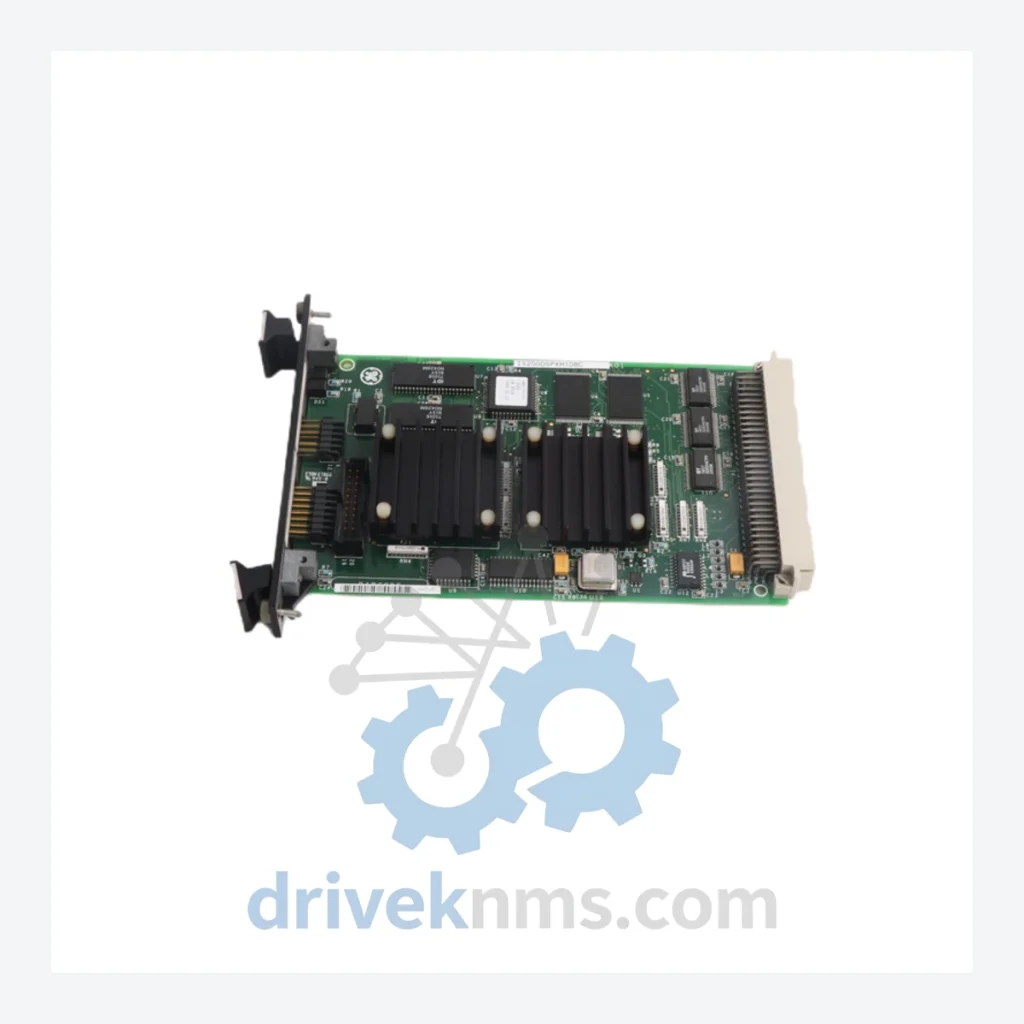
Model: IS200DSPXH1D
Product Overview
Commercial availability is handled through direct RFQ, model verification and export-oriented follow-up rather than public cart checkout.
Datasheet Preview
Use attached product manuals when available. If the manual is not public yet, request the full file directly through RFQ.
Commercial Path
Product pages on DRIVEKNMS are designed to verify model, brand and series first, then move the buyer into one clean quotation path.
Technical Dossier
RFQ support for obsolete parts: Send the model number, required quantity and destination so DriveKNMS can confirm sourcing options before quotation.
| Part Number | IS200DSPXH1D |
|---|---|
| Manufacturer | GE (General Electric) |
| Series | Mark VI Turbine Control System |
| Module Type | Digital Signal Processor (DSP) Board |
| Form Factor | VME-based plug-in board |
| Country of Origin | United States |
| Discontinuation Status | Discontinued / Obsolete – No longer manufactured by GE |
| Compatible Systems | GE Mark VI, Mark VIe (legacy configurations) |
| Typical Application | Gas turbine control, steam turbine control, generator protection |
Q: How are RFQ terms confirmed?
A: Quantity, required condition, documentation needs, destination and sourcing route are confirmed during RFQ review before quotation.
GE introduced the Mark VI platform in the mid-1990s as a successor to the Mark V. Thousands of units were installed across power plants, compressor stations, and petrochemical facilities worldwide. GE ceased active production and support for the Mark VI hardware layer years ago, redirecting its installed base toward the Mark VIe and Mark VIeS architectures. The migration path, however, is neither simple nor inexpensive.
A full Mark VI to Mark VIe migration on a single gas turbine unit typically involves new I/O packs, new communication infrastructure, updated HMI software, re-engineering of application logic, and a mandatory commissioning period during which the unit cannot generate revenue. Industry estimates for such projects range from USD 800,000 to over USD 2,000,000 per turbine, depending on unit complexity and site conditions. For a fleet operator running four to eight legacy units, the capital exposure is substantial.
The IS200DSPXH1D is the central processing element of the Mark VI's , , or controller. It executes the real-time control algorithms, manages the I/O communication bus, and enforces the protection logic that keeps the turbine within safe operating limits. There is no functional substitute within the Mark VI architecture. When this board fails, the controller goes offline. A TMR (Triple Modular Redundant) configuration provides fault tolerance, but only until a second board fails — at which point the unit trips and cannot restart without a replacement.
Maintaining a single IS200DSPXH1D as a cold spare extends the viable service life of a Mark VI installation by five to ten years at a fraction of the cost of migration. For plant managers operating under capital expenditure constraints or facing regulatory timelines that make immediate migration impractical, this is a defensible and well-established asset protection strategy.
Sourcing obsolete control hardware from the secondary market carries real risk. DriveKNMS applies a five-step inspection protocol to every IS200DSPXH1D unit before it is offered for sale:
Step 1 – Visual and Mechanical Inspection: Full board examination for physical damage, burn marks, cracked solder joints, and connector pin integrity. Boards with any structural compromise are rejected at this stage.
Step 2 – Electrolytic Capacitor Assessment: Aged electrolytic capacitors are the primary failure mode in boards of this era. Each capacitor is checked for bulging, leakage, and ESR (Equivalent Series Resistance) deviation. Boards with degraded capacitors are either recapped with equivalent-spec components or removed from inventory.
Step 3 – Firmware Version Verification: The firmware revision on the DSP is documented and disclosed to the buyer. Compatibility between firmware revision and the target Mark VI system version is confirmed prior to shipment where the customer provides system version data.
Step 4 – Pin and Connector Corrosion Check: All edge connectors and backplane pins are inspected under magnification for oxidation and corrosion. Affected contacts are cleaned using approved methods; boards with irreversible corrosion are rejected.
The IS200DSPXH1D is a direct, drop-in replacement for the same part number within the GE Mark VI architecture. No firmware re-flashing is required in most configurations. No re-engineering of the application logic is necessary. The board slots into the existing VME chassis, connects to the existing backplane, and the controller resumes operation after the standard Mark VI restart sequence.
This means maintenance teams can execute a board swap during a planned outage window — typically measured in hours, not days — without involving a controls engineering contractor. The avoidance of engineering labor costs alone often justifies maintaining a spare on the shelf. There is no requirement to retrain operators, update HMI graphics, or modify any upstream or downstream system interface.
For facilities operating under long-term service agreements (LTSAs) that do not cover obsolete hardware replacement, the IS200DSPXH1D represents a self-managed contingency that sits entirely outside the LTSA cost structure.
The decision to extend the life of a legacy control system rather than migrate it is a capital allocation decision, not a technical one. The technical case for extension is straightforward when critical spare parts remain available. The following framework applies directly to Mark VI installations running IS200DSPXH1D-based controllers:
Identify single-point-of-failure components. The IS200DSPXH1D in a simplex or non-redundant configuration is the highest-priority spare to hold. In a TMR configuration, holding one spare per controller type provides adequate coverage for most failure scenarios over a five-year horizon.
Establish a minimum spare holding policy. Industry practice for critical obsolete control hardware is a minimum of one cold spare per installed unit, with a two-spare holding for fleet operators. The cost of holding a spare IS200DSPXH1D is orders of magnitude lower than the cost of an unplanned outage or an emergency migration.
Document firmware and hardware revisions now. As the Mark VI installed base ages, revision-matched spares become progressively harder to source. Recording the exact hardware and firmware revision of every installed board today preserves the ability to source a compatible replacement in the future.
Set a review trigger, not a fixed retirement date. Rather than committing to a migration date driven by vendor pressure, tie the migration decision to a specific technical trigger — such as the inability to source a critical spare within 90 days. This preserves operational flexibility while maintaining a clear exit criterion.
Q: How do I know the unit is genuine GE and not a counterfeit?
A: All units are sourced from decommissioned GE Mark VI installations or verified surplus channels. GE part markings, board silk-screen identifiers, and component date codes are inspected as part of the intake process. Documentation of provenance is available for units where chain-of-custody records exist.
Continue The Model Path
Move from this exact model into the matching system hub, brand archive, model-family archive or lifecycle sourcing route before sending a final RFQ list.
Related Paths
GE Fanuc IS200TBCIS2CCD is listed for Mark VI RFQ review. Confirm quantity, condition and destination before quotation.
General Electric IS200BICLH1AED is listed for Mark VI RFQ review. Confirm quantity, condition and destination before quotation.
General Electric IS200EISBH1A is listed for Mark VI RFQ review. Confirm quantity, condition and destination before quotation.