
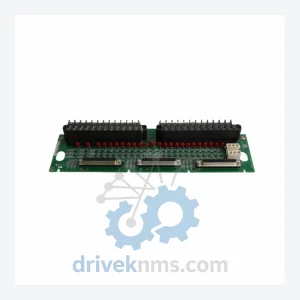
GE Fanuc IS200TBCIS2CCD I/O Terminal Board – Mark VI Redundant Control System
GE Fanuc IS200TBCIS2CCD is listed for Mark VI RFQ review. Confirm quantity, condition and destination before quotation.
RFQ-ready industrial model
Model: IS200EPDMG1A
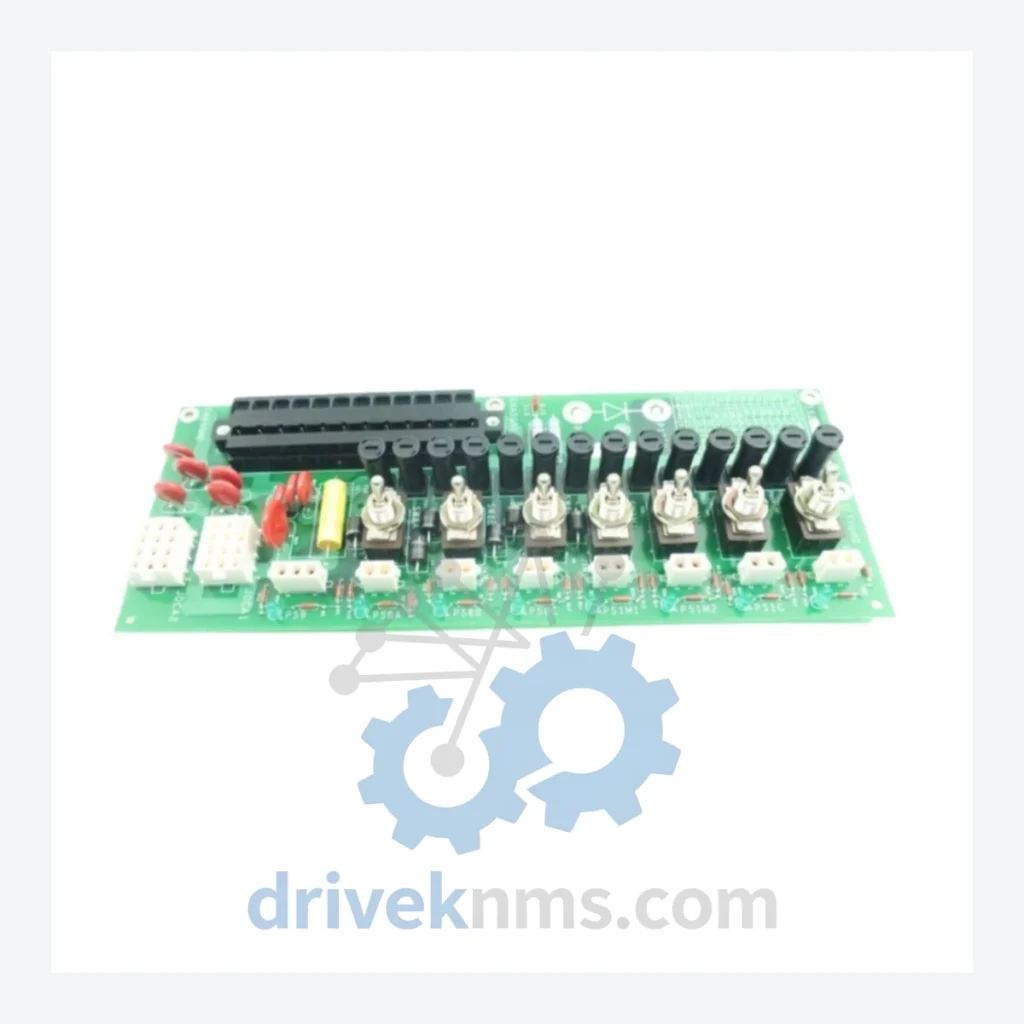
Product Overview
Commercial availability is handled through direct RFQ, model verification and export-oriented follow-up rather than public cart checkout.
Datasheet Preview
Use attached product manuals when available. If the manual is not public yet, request the full file directly through RFQ.
Commercial Path
Product pages on DRIVEKNMS are designed to verify model, brand and series first, then move the buyer into one clean quotation path.
Technical Dossier
When a turbine control system built on GE's Mark VI platform loses its exciter power distribution module, the consequences are not limited to a single machine going offline. In most heavy industrial environments — power generation, oil & gas, petrochemical — the IS200EPDMG1A sits at the intersection of excitation control and power distribution for the generator field circuit. Its failure does not merely interrupt output; it forces plant management into an immediate decision: source a replacement or commit to a full control system migration.
RFQ support for obsolete parts: Send the model number, required quantity and destination so DriveKNMS can confirm sourcing options before quotation.
| Parameter | Detail |
|---|---|
| Part Number | IS200EPDMG1A |
| Manufacturer | GE (General Electric) |
| Series | Mark VI Turbine Control System |
| Module Function | Exciter Power Distribution Module |
| Country of Origin | United States |
| Product Status | Discontinued / Obsolete – No longer manufactured by GE |
| Compatible Systems | GE Mark VI, Mark VI redundant configurations |
| Typical Application | Gas turbine, steam turbine, and combined-cycle generator excitation control |
| Form Factor | VME-based board, rack-mounted |
Note: Electrical parameters such as input voltage range, current ratings, and backplane pinout are not published in this listing to prevent misapplication. Verified specifications are provided upon request with confirmation of the target system configuration.
GE's Mark VI turbine control platform entered service in the mid-1990s and remained the dominant architecture in large-scale power generation through the 2000s. GE has since transitioned its installed base toward the Mark VIe and Mark VIeS platforms, and OEM support for Mark VI hardware — including the IS200EPDMG1A — has been formally discontinued.
The IS200EPDMG1A is not a peripheral component. It manages power distribution within the excitation subsystem, which directly governs generator field voltage and reactive power output. In a redundant Mark VI configuration, the loss of this module without an immediate replacement triggers a forced de-excitation event. Depending on grid interconnection agreements and plant operating licenses, this can result in regulatory reporting obligations, capacity payment penalties, and in some jurisdictions, grid stability liability.
Facilities operating Mark VI systems face a structural challenge: the OEM no longer stocks this hardware, authorized repair centers have reduced their Mark VI competency, and the secondary market is populated with units of uncertain provenance. The practical consequence is that a single failed IS200EPDMG1A can strand a multi-hundred-million-dollar generating asset for weeks or months while procurement teams search for a verified replacement.
Extending the operational life of a Mark VI system by 5 to 10 years through strategic spare parts management is a documented and financially defensible strategy. The approach requires identifying the five to eight modules with the highest failure probability — typically those with electrolytic capacitors, battery-backed memory, or high-cycle relay contacts — and maintaining at least one verified spare of each on-site. The IS200EPDMG1A belongs on that list. Its procurement cost, even at current secondary market pricing, represents a fraction of one day's lost generation revenue for a mid-size combined-cycle plant. Plant managers who have implemented this model consistently report that the capital outlay for a curated spare parts inventory is recovered within the first avoided outage event.
DriveKNMS applies a structured 5-step qualification process to all IS200EPDMG1A units before they are offered for sale. This process is designed specifically for the failure modes common to long-stored or field-returned Mark VI hardware.
Step 1 – Visual and Mechanical Inspection: Full board inspection under magnification. Solder joint integrity, component seating, and connector pin condition are assessed. Units with evidence of arc damage, heat stress, or physical impact are rejected at this stage.
Step 2 – Electrolytic Capacitor Assessment: Capacitors are the primary age-related failure point in Mark VI modules. Each unit is evaluated for capacitor bulging, electrolyte leakage, and ESR deviation. Units with degraded capacitors are either reconditioned with OEM-equivalent components or rejected.
Step 3 – Firmware Version Verification: Where applicable, firmware revision is confirmed and documented. Compatibility with the target Mark VI system revision is verified prior to shipment.
Step 4 – Pin and Connector Corrosion Check: Backplane connectors and I/O pins are inspected for oxidation and corrosion. Affected contacts are treated or the unit is rejected. Connector integrity is critical for reliable backplane communication in VME-based architectures.
The IS200EPDMG1A is a direct drop-in replacement for the same part number within a Mark VI system. No hardware modification, no I/O remapping, and no software re-commissioning are required. The module slots into the existing VME rack, connects to the existing backplane, and the Mark VI controller recognizes it without operator intervention beyond standard module insertion procedures.
How do I know the unit is genuine and not counterfeit?
All units are sourced through documented industrial channels. GE part markings, board revision labels, and serial number formats are verified against known-authentic references. Units that do not pass authentication checks are not offered for sale.
Should I buy more than one unit?
For facilities operating multiple Mark VI turbine trains, or for plants with a single train where an extended outage would have severe financial or contractual consequences, holding two units is a reasonable position. The IS200EPDMG1A is becoming progressively harder to source as installed Mark VI systems age and secondary market inventory depletes. Procurement decisions made today will be more favorable than those made under emergency conditions in 12 to 24 months.
Can this module be repaired if it fails again after installation?
Component-level repair is possible for some failure modes, particularly capacitor degradation and connector corrosion. DriveKNMS can advise on repair feasibility based on the specific failure presentation. Contact us before discarding a failed unit.
Continue The Model Path
Move from this exact model into the matching system hub, brand archive, model-family archive or lifecycle sourcing route before sending a final RFQ list.
Related Paths
GE Fanuc IS200TBCIS2CCD is listed for Mark VI RFQ review. Confirm quantity, condition and destination before quotation.
General Electric DS200TBQDG1AFF is listed for Mark VI RFQ review. Confirm quantity, condition and destination before quotation.
General Electric DS200DTBDG1ABB is listed for Mark VI RFQ review. Confirm quantity, condition and destination before quotation.