
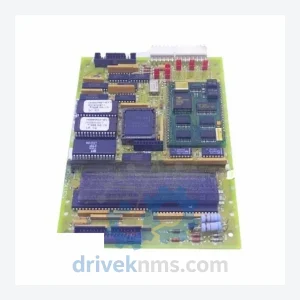
GE 531X306LCCBEG3 LAN Communications Card – Obsolete Mark VI Speedtronic Spare Part
General Electric 531X306LCCBEG3 is listed for Mark VI RFQ review. Confirm quantity, condition and destination before quotation.
RFQ-ready industrial model
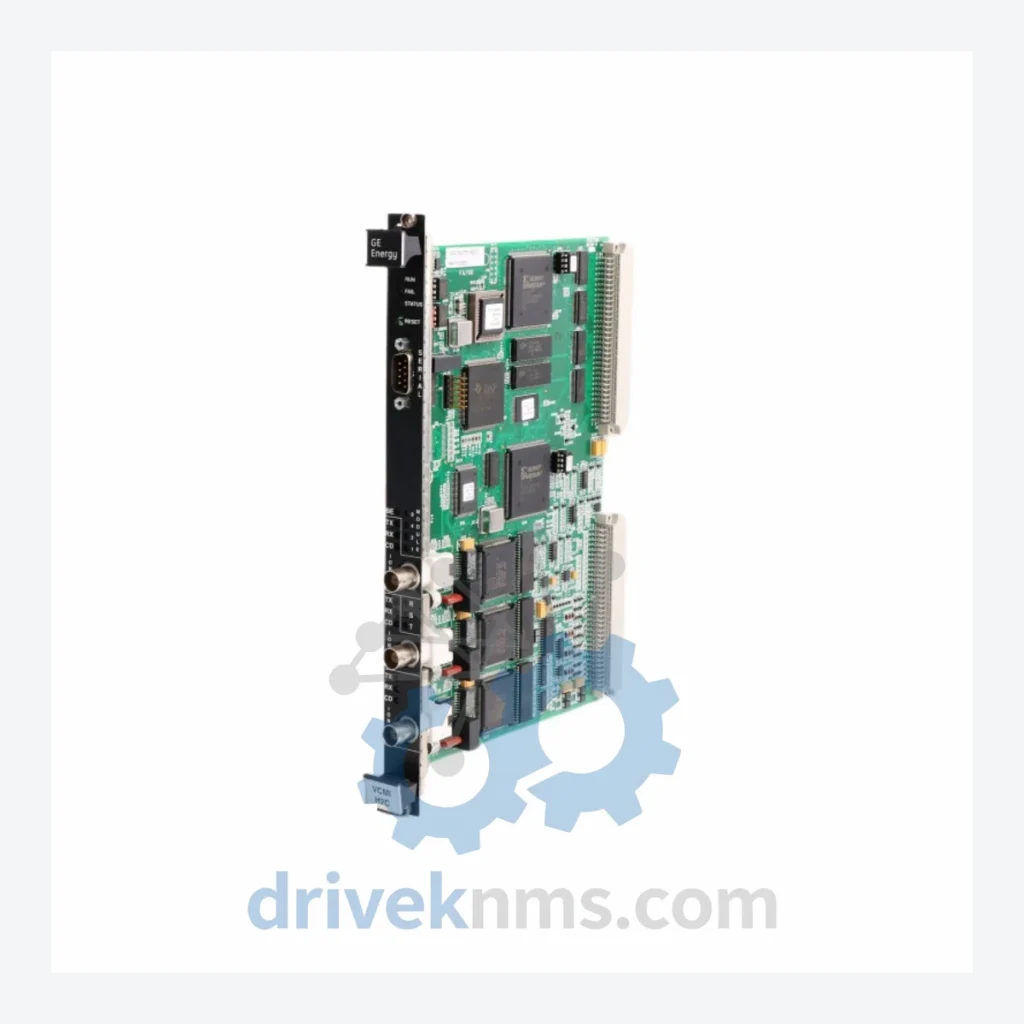
Model: IS215VCMIH2C
Product Overview
Commercial availability is handled through direct RFQ, model verification and export-oriented follow-up rather than public cart checkout.
Datasheet Preview
Use attached product manuals when available. If the manual is not public yet, request the full file directly through RFQ.
Commercial Path
Product pages on DRIVEKNMS are designed to verify model, brand and series first, then move the buyer into one clean quotation path.
Technical Dossier
The GE IS215 series represents the core I/O and communication module family within GE's Mark VI Turbine Control System — one of the most widely deployed Distributed Control Systems (DCS) in global heavy industry. Installed across gas turbine power plants, combined-cycle facilities, nuclear auxiliary systems, petrochemical refineries, and offshore platforms, the IS215 platform has accumulated decades of field-proven reliability in environments demanding continuous uptime and deterministic control response.
The Mark VI system, of which IS215 modules form the backbone, is estimated to be active in thousands of installations worldwide. Its modular VMEbus architecture allows for granular replacement and maintenance without full system shutdown — a critical factor in industries where unplanned outages carry costs measured in millions per hour. The IS215VCMIH2C specifically serves as the VME Communication Interface, managing backplane data routing between the controller and I/O modules.
The IS215 series was introduced alongside the Mark VI platform in the mid-1990s as GE Power's successor to the Mark V control system. The architecture is built on the VMEbus (Versa Module Europa) standard — a robust, backplane-based communication protocol originally developed for military and aerospace applications, later adopted widely in industrial control.
Early Generation (Mark VI, ~1995–2005): Initial IS215 modules used parallel VMEbus communication with dedicated I/O racks. Redundancy was achieved through triple-modular redundancy (TMR) configurations using three independent I/O packs voting on outputs. Modules such as the IS215VCMIH2A and IS215VCMIH2B were the primary communication interfaces in this era.
Mid Generation (Mark VI, ~2005–2015): Revised board revisions (Rev C, Rev D) introduced improved FPGA logic, enhanced EMI shielding, and extended temperature tolerance. The IS215VCMIH2C (this listing) belongs to this generation. Firmware compatibility was maintained across revisions, allowing mixed-revision installations in the same rack.
Modern Transition (Mark VIe, ~2012–present): GE introduced the Mark VIe platform with Ethernet-based I/O (IONET) replacing VMEbus for new installations. IS215 modules are not directly compatible with Mark VIe racks, creating a permanent installed base of legacy IS215 hardware requiring long-term spare parts support. GE has formally classified many IS215 modules as Last Time Buy (LTB) or End of Life (EOL), making third-party sourcing essential for continued operations.
The following SKUs represent the primary module types within the IS215 series, organized by functional category. All models listed are confirmed components of the GE Mark VI / IS215 platform.
Communication & VME Interface Modules
IS215VCMIH2C: VME communication interface, Rev C, primary backplane data routing module for Mark VI racks.
IS215VCMIH2B: VME communication interface, Rev B, predecessor to H2C with identical form factor.
IS215VCMIH2A: VME communication interface, Rev A, earliest production revision, limited firmware support.
IS215VCMIH1B: Single-slot VME comm interface variant, used in compact Mark VI configurations.
Analog Input (AI) Modules
IS215AEPAH1A: Analog input module, 16-channel, 4–20 mA / 0–10 V, used for process variable monitoring.
IS215AEPAH1B: Analog input module, Rev B, enhanced noise rejection for high-EMI environments.
IS215AEAAH1A: Analog input module, thermocouple/RTD inputs, temperature measurement in turbine exhaust systems.
Digital Input (DI) Modules
IS215DTURH2A: Digital turbine control I/O module, handles discrete inputs from proximity probes and limit switches.
IS215DTURH2B: Digital turbine I/O, Rev B, expanded diagnostic LED indicators.
IS215DTBCH1A: Digital input terminal board interface, bridges field wiring to VME backplane.
Digital Output (DO) Modules
IS215UCVEH2A: Universal controller/output module, manages relay and discrete output signals to actuators.
IS215UCVEH2B: Universal controller/output, Rev B, improved output driver protection circuitry.
Power Supply Modules
IS215PSVIH1A: Power supply interface module, conditions and distributes 28 VDC to IS215 rack modules.
IS215PSVIH1B: Power supply interface, Rev B, added over-voltage protection relay.
CPU / Controller Modules
IS215UCVGH2A: Mark VI main controller module, executes turbine control logic and coordinates I/O voting.
IS215UCVGH2B: Main controller, Rev B, increased onboard RAM and faster scan cycle support.
As GE has transitioned its installed base toward the Mark VIe platform, IS215 series modules have progressively moved through Last Time Buy (LTB) status into full End of Life (EOL) classification. OEM channel availability is effectively closed for most IS215 SKUs. Plants operating Mark VI systems — particularly those with 15–30 year operational horizons common in nuclear auxiliary, refinery, and baseload power applications — require a reliable third-party supply chain for these components.
For obsolete revisions (Rev A, Rev B) where firmware compatibility with existing systems is required, DriveKNMS provides revision-specific sourcing to prevent incompatibility issues during hot-swap replacements. All modules are supplied with full traceability documentation.
IS215 modules present specific testing challenges due to their VMEbus backplane communication architecture and multi-board assembly construction. Standard bench power-up testing is insufficient to validate communication interface modules such as the IS215VCMIH2C — functional verification requires active backplane communication simulation.
DriveKNMS applies the following test protocol to all IS215 modules prior to shipment:
Continue The Model Path
Move from this exact model into the matching system hub, brand archive, model-family archive or lifecycle sourcing route before sending a final RFQ list.
Related Paths
General Electric 531X306LCCBEG3 is listed for Mark VI RFQ review. Confirm quantity, condition and destination before quotation.
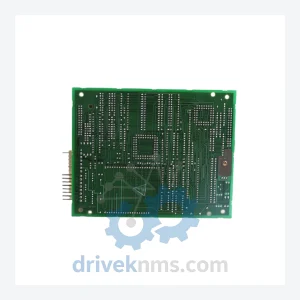
General Electric DS200SLCCG3RGH is listed for Mark VI RFQ review. Confirm quantity, condition and destination before quotation.
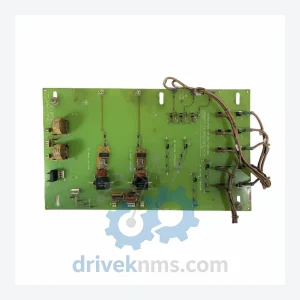
General Electric DS200SHVIG1BGD is listed for Mark VI RFQ review. Confirm quantity, condition and destination before quotation.