
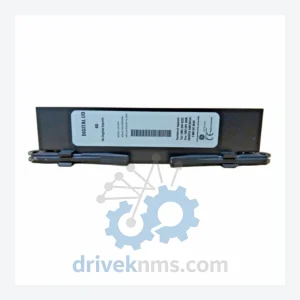
GE UR6DH Digital I/O Module – Critical Spare UR Series Part
GE Grid Solutions UR6DH is listed for Critical Spare UR Series Part RFQ review. Confirm quantity, condition and destination before quotation.
RFQ-ready industrial model
Model: UR6AH
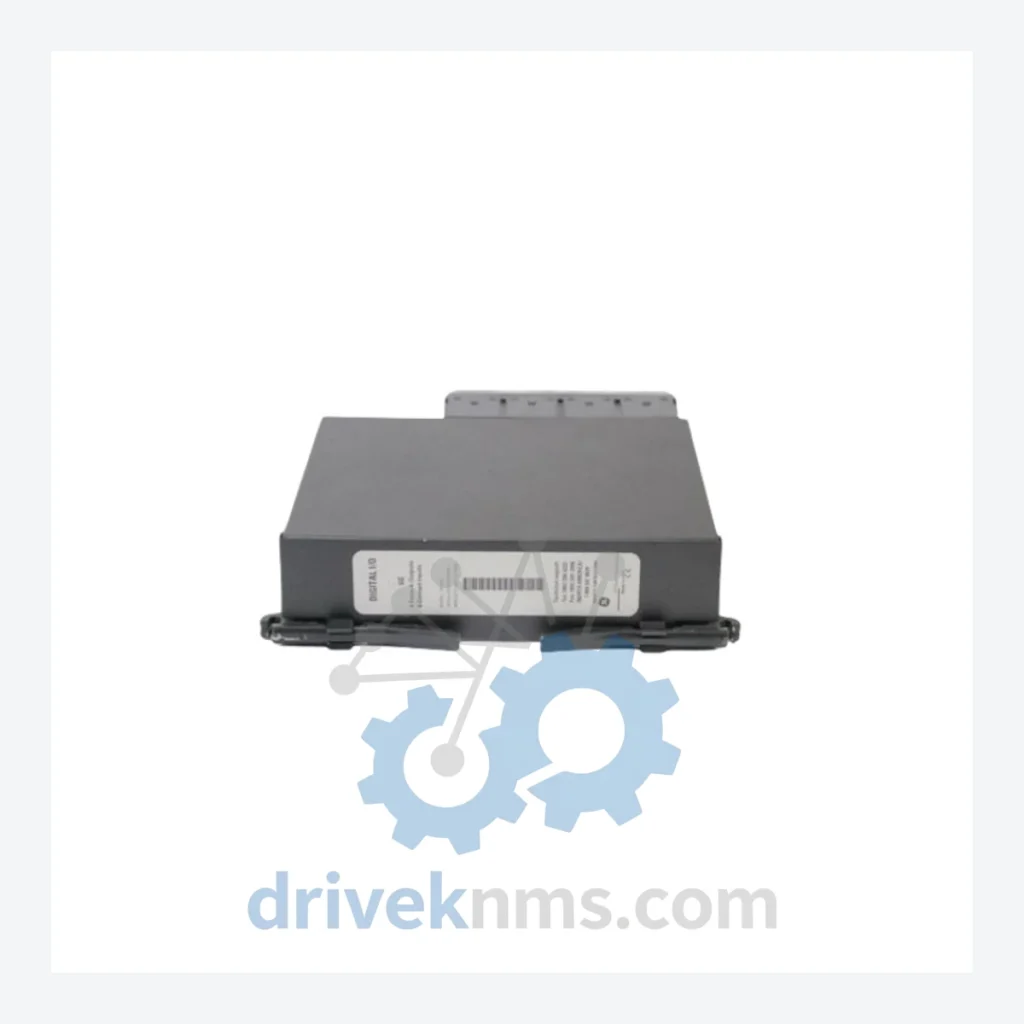
Product Overview
Commercial availability is handled through direct RFQ, model verification and export-oriented follow-up rather than public cart checkout.
Datasheet Preview
Use attached product manuals when available. If the manual is not public yet, request the full file directly through RFQ.
Commercial Path
Product pages on DRIVEKNMS are designed to verify model, brand and series first, then move the buyer into one clean quotation path.
Technical Dossier
The GE UR (Universal Relay) Series, developed by GE Grid Solutions (formerly GE Multilin), is one of the most widely deployed protection relay platforms in global heavy industry. Installed across chemical processing plants, nuclear power stations, oil refineries, offshore platforms, and high-voltage transmission substations, the UR Series provides a standardized, modular chassis architecture that supports a broad range of protection, control, and monitoring functions. Its scalability — from single-function feeder protection to complex multi-function bay controllers — has made it the reference platform for utility-grade protection engineering across North America, Europe, and Asia-Pacific for over two decades.
The UR platform was introduced in the late 1990s as GE Multilin's answer to the demand for a unified, IED-based protection relay that could replace discrete electromechanical and solid-state relays across multiple bay types. The first-generation UR chassis used a passive backplane with a proprietary inter-module communication bus, allowing CPU, I/O, power supply, and communications modules to be mixed and matched within a standard 19-inch rack form factor.
Early UR firmware (pre-v4.0x) supported MODBUS RTU and DNP3 as primary SCADA protocols. With the release of the UR firmware v5.x and v6.x generations, IEC 61850 GOOSE messaging and MMS became standard, enabling peer-to-peer tripping and station bus integration without hardwired intertripping. The UR platform also evolved to support IEEE 1588 Precision Time Protocol (PTP) for sub-microsecond time synchronization, critical for differential protection schemes.
Compatibility note: UR modules are chassis-slot specific. CPU modules (e.g., UR6DH, UR6EH) are not interchangeable with I/O modules (UR6AH, UR6BH) without reconfiguring the chassis slot assignments. Firmware versions must be matched across CPU and DSP modules to avoid boot failures. Older UR1xx-chassis modules are not backward compatible with UR6xx-chassis hardware.
Digital I/O Modules
CPU / DSP Modules
Power Supply Modules
Communications Modules
CT/VT Input Modules
Specialty / Application Modules
UR Series modules present specific test challenges due to their backplane-dependent initialization sequence and firmware-locked configuration binding. DriveKNMS applies the following test protocol to all UR Series modules prior to dispatch:
Continue The Model Path
Move from this exact model into the matching system hub, brand archive, model-family archive or lifecycle sourcing route before sending a final RFQ list.
Related Paths
GE Grid Solutions UR6DH is listed for Critical Spare UR Series Part RFQ review. Confirm quantity, condition and destination before quotation.
GE Grid Solutions UR6AV is listed for UR Series RFQ review. Confirm quantity, condition and destination before quotation.
GE Grid Solutions UR8LV is listed for Controller Cards RFQ review. Confirm quantity, condition and destination before quotation.