
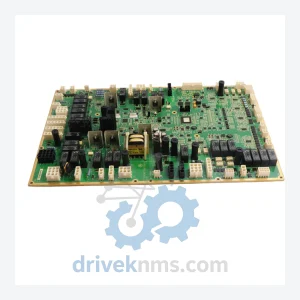
GE IS200WETBH1BAA Elevator Control Board – Obsolete Speedtronic Spare Part
General Electric IS200WETBH1BAA is listed for Controller Cards RFQ review. Confirm quantity, condition and destination before quotation.
RFQ-ready industrial model
Model: URRHH
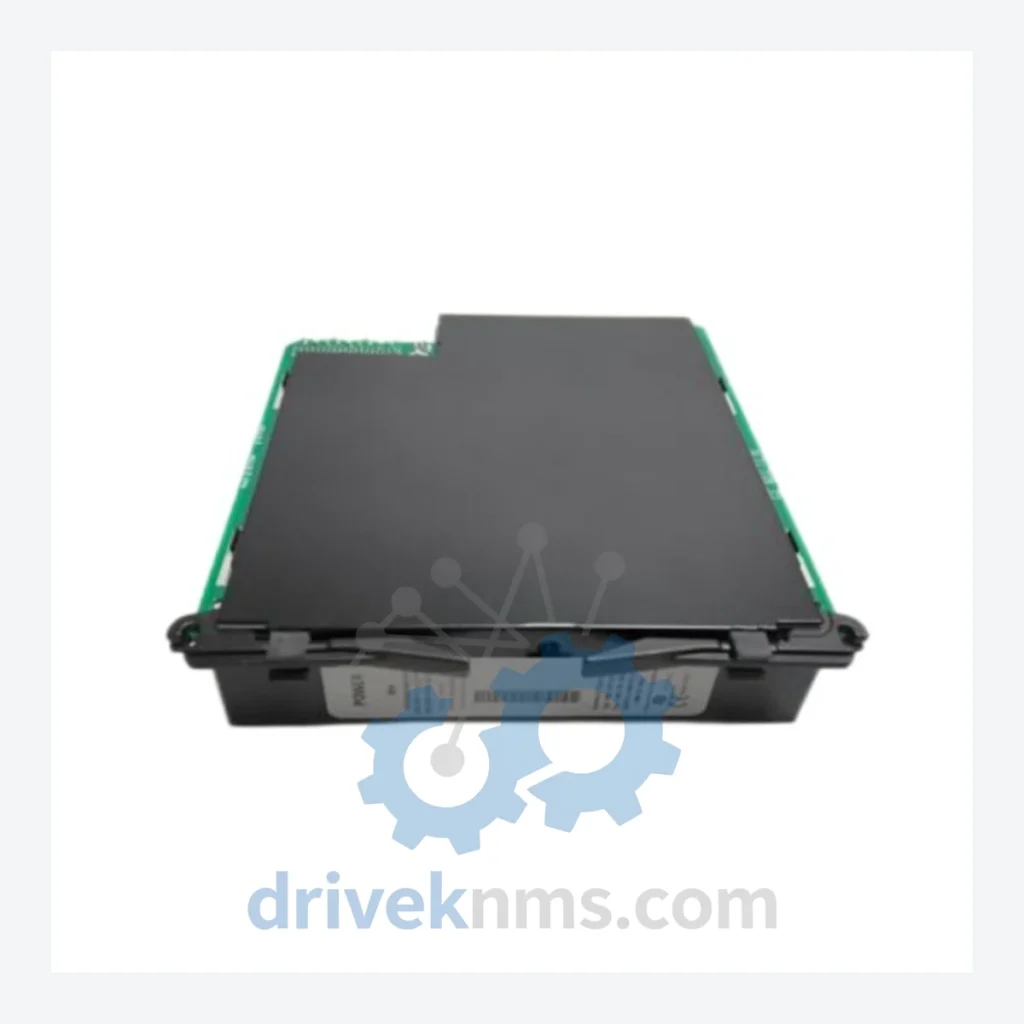
Product Overview
Commercial availability is handled through direct RFQ, model verification and export-oriented follow-up rather than public cart checkout.
Datasheet Preview
Use attached product manuals when available. If the manual is not public yet, request the full file directly through RFQ.
Commercial Path
Product pages on DRIVEKNMS are designed to verify model, brand and series first, then move the buyer into one clean quotation path.
Technical Dossier
The URRHH module traces its lineage to GE's Speedtronic Mark I and Mark II turbine control systems introduced in the 1960s and 1970s, which used discrete relay logic and analog signal conditioning. The Mark IV generation, introduced in the early 1980s, transitioned to digital microprocessor-based control and established the modular rack architecture that the URRHH power supply was designed to serve. The Mark V, released in the late 1980s and widely deployed through the 1990s, retained backward-compatible power distribution topology, allowing URRHH modules to operate across both generations with minimal hardware modification.
By the mid-2000s, GE introduced the Mark VI and Mark VIe platforms, which adopted a fundamentally different I/O and power architecture based on distributed I/O packs (IONet) and eliminated the centralized backplane power model used by URRHH. This architectural break means URRHH modules are not forward-compatible with Mark VI or VIe systems. Operators running Mark IV or Mark V installations face a binary choice: maintain the existing power supply infrastructure using genuine or equivalent URRHH spares, or undertake a full control system upgrade to Mark VI/VIe — a capital-intensive project typically deferred until a major outage window. As a result, demand for URRHH and its associated power module family remains stable in the MRO (maintenance, repair, and operations) market despite the series being formally discontinued by GE.
The following SKUs represent the core power supply and associated module range compatible with GE Speedtronic Mark IV and Mark V control systems. Each entry reflects a verified part number within the GE Speedtronic ecosystem:
URRHH: Primary DC power supply module for Mark IV/V control racks; regulated output for logic and I/O buses.
URRHI: Redundant power supply module; hot-standby configuration for continuous-duty turbine control panels.
URRHG: Power conditioning module; filters and regulates incoming AC supply before conversion to DC logic voltage.
URRHE: Auxiliary power module; dedicated supply rail for communication and interface subsystems.
URRHD: Low-voltage DC distribution module; routes regulated power to individual I/O module slots in the Mark V rack.
URRHC: Power monitor module; supervises voltage rail integrity and triggers fault relay on out-of-tolerance conditions.
URRHB: Backup power interface module; manages transition between primary supply and UPS input during grid disturbances.
URRHF: Field power supply module; provides isolated 24 VDC output for field transmitter and sensor loops.
DS200URRHH1A: Full assembly part number for URRHH module with revision A PCB; standard replacement unit for Mark V R-type racks.
DS200URRHH1B: Revision B variant of the URRHH assembly; incorporates updated capacitor specification for extended thermal tolerance.
DS200URRHI1A: Full assembly for URRHI redundant supply; paired with URRHH in dual-supply rack configurations.
DS200URRHG1A: Full assembly for URRHG power conditioning module; required upstream of URRHH in high-harmonic-distortion environments.
DS200URRHD1A: Full assembly for URRHD distribution module; direct slot replacement in Mark V R-rack power bay.
DS200URRHF1A: Full assembly for URRHF field supply; UL-listed isolated output for hazardous-area transmitter loops.
DS200URRHC1A: Full assembly for URRHC power monitor; includes relay output for integration with plant DCS alarm system.
IS200URRHH1A: IS200-series variant of URRHH; used in Mark VI transitional rack configurations requiring backward power compatibility.
IS200URRHI1A: IS200-series redundant supply variant; supports dual-supply architecture in mixed Mark V / Mark VI migration racks.
Power supply modules in the URRHH family present specific test challenges due to their role in supplying regulated voltage to active backplane buses. A failed or marginal URRHH unit that passes basic bench continuity checks may still introduce voltage ripple, transient spikes, or load-regulation errors that cause intermittent faults in downstream I/O and CPU modules — failure modes that are difficult to diagnose without rack-level load simulation.
Continue The Model Path
Move from this exact model into the matching system hub, brand archive, model-family archive or lifecycle sourcing route before sending a final RFQ list.
Related Paths
General Electric IS200WETBH1BAA is listed for Controller Cards RFQ review. Confirm quantity, condition and destination before quotation.
General Electric IS200TRLYH1BED IS200TRLYH1B is listed for Controller Cards RFQ review. Confirm quantity, condition and destination before quotation.
General Electric IS230SNRLH2A IS200SRLYH2AAA is listed for Controller Cards RFQ review. Confirm quantity, condition and destination before quotation.