Products / General Electric / GE Series
General Electric GE Series

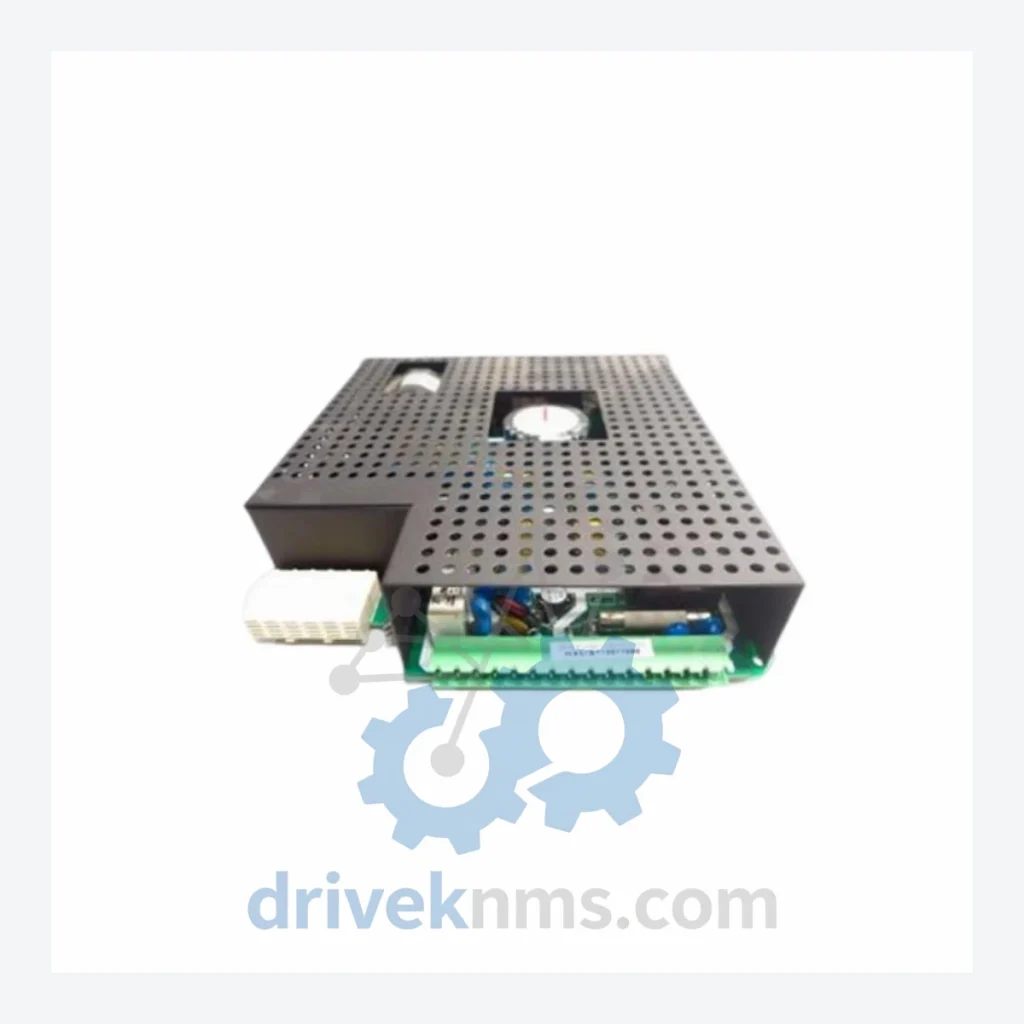
GE URRHV Power Supply – Obsolete GE Series Spare Part

Model: URRHV

Brand General Electric
Series GE Series
Model URRHV
RFQ-ready model route Obsolete and surplus sourcing Export follow-up by model list

Product Overview

Commercial availability is handled through direct RFQ, model verification and export-oriented follow-up rather than public cart checkout.

Datasheet Preview

Datasheet Preview

Use attached product manuals when available. If the manual is not public yet, request the full file directly through RFQ.

Request Full Manual

Commercial Path

Use This Page To Confirm The Model, Then Move To RFQ

Product pages on DRIVEKNMS are designed to verify model, brand and series first, then move the buyer into one clean quotation path.

Technical Dossier

Product Details And Specifications

GE URRHV Power Supply – Obsolete GE Series Spare Part

When a power supply module fails inside an aging GE-based control architecture, the consequences extend far beyond a single line stoppage. Facilities running legacy GE automation platforms — including systems integrated with GE Series 90 PLCs, GE Fanuc controllers, and related distributed control infrastructure — face a stark choice: locate the exact replacement part, or commit to a full system migration that routinely costs seven figures in engineering, commissioning, and lost production time. The GE URRHV Power Supply is one such component where no modern substitute exists without architectural redesign. DriveKNMS maintains verified stock of this unit specifically to protect facilities from that forced-upgrade scenario.

Technical Specifications

Manufacturer GE (General Electric)
Part Number / SKU URRHV
Product Category Power Supply Module
Discontinuation Status Obsolete – No longer in active production
Compatible Platform GE Series 90 / GE Fanuc legacy control systems
Country of Origin United States
Condition Available New Old Stock (NOS) / Professionally Refurbished

Note: Specific electrical parameters (voltage input/output, current rating, wattage) are verified against physical unit at time of order. We do not publish unverified specifications — accuracy of electrical data is a safety matter, not a marketing exercise.

Solving the Discontinued Hardware Crisis

GE's legacy automation portfolio served heavy industry for decades. The URRHV power supply was engineered to deliver stable, conditioned power to control backplanes in environments where voltage transients, harmonic distortion, and thermal cycling are daily realities. These are not conditions that generic or cross-brand substitutes are rated for.

When this module is no longer available through standard distribution channels, plant engineers face a compounding problem: the OEM no longer supports the part, third-party manufacturers have not reverse-engineered a certified replacement, and the control system itself cannot accept a different form-factor power supply without a full rack redesign. The cost of that redesign — including new hardware, software migration, I/O remapping, safety recertification, and production downtime — routinely exceeds USD $500,000 for a single control node. For multi-node facilities, the figure scales accordingly.

Sourcing a verified URRHV from DriveKNMS's existing inventory eliminates that cost entirely. The existing control architecture remains intact. No revalidation. No retraining. No production gap.

How to extend your automation asset life by 5–10 years through strategic spare parts management:

  • Conduct a criticality audit now, not after failure. Identify every single-point-of-failure module in your legacy GE system. Power supplies, communication cards, and CPU modules are the highest-risk categories. A failure in any one of these halts the entire node.
  • Establish a minimum buffer stock policy. For obsolete modules with no active production, a minimum of two units per critical node is a defensible maintenance standard. One in service, one on the shelf.
  • Negotiate long-term storage agreements with verified distributors. Spot-buying obsolete parts at the moment of failure is the most expensive procurement strategy possible. Pre-positioned inventory purchased at today's price protects against both scarcity and price escalation.
  • Document firmware and configuration baselines. Before any module swap, capture the full configuration state of the existing system. This is not optional for legacy GE platforms — configuration drift between firmware versions can cause unexpected behavior on replacement units.
  • Schedule proactive replacement cycles. Electrolytic capacitors in power supply modules have a finite service life, typically 10–15 years under rated conditions. Modules that have been in continuous service for over a decade should be treated as pre-failure, not as functional.

Condition & Reliability Assurance

Sourcing an obsolete power supply from an unverified channel is a documented risk. A module that appears functional on arrival may carry latent failures that manifest under load within weeks. DriveKNMS applies a structured 5-step inspection protocol to every obsolete power supply unit before it leaves our facility:

  • Step 1 – Electrolytic Capacitor Assessment: Capacitors are the primary failure mode in aged power supply modules. Each unit is inspected for bulging, leakage, and ESR (Equivalent Series Resistance) deviation. Units with degraded capacitors are either recapped with rated components or removed from inventory.
  • Step 2 – Firmware Version Verification: Where applicable, the firmware revision of the module is documented and cross-referenced against the target system's compatibility matrix. Mismatched firmware is a known cause of intermittent faults in GE legacy platforms.
  • Step 3 – Pin and Connector Inspection: All edge connectors and backplane pins are inspected under magnification for oxidation, corrosion, and mechanical deformation. Affected contacts are treated or the unit is rejected.
  • Step 4 – Functional Load Test: Units are powered under controlled conditions and output stability is measured across the operating range. Ripple, regulation, and transient response are recorded.
  • Step 5 – Packaging and ESD Protection: Cleared units are packaged in anti-static materials with desiccant. Long-term storage units receive additional moisture barrier packaging.

Key Features for System Maintenance

  • Drop-in replacement: The URRHV installs directly into the existing GE control rack with no mechanical modification. Connector pinout and form factor are identical to the original production unit.
  • No reprogramming required: The power supply module does not carry application logic. Replacement does not require PLC reprogramming, I/O reconfiguration, or HMI updates.
  • No engineering redesign costs: Unlike a platform migration, a like-for-like module replacement carries zero engineering overhead. Maintenance technicians familiar with the existing system can execute the swap without specialist contractor involvement.
  • Preserves existing safety certifications: Replacing a module with an identical part number does not trigger re-certification requirements in most jurisdictions. A platform change does. This distinction has direct regulatory and insurance implications.

FAQ

Q: What warranty applies to an obsolete part like the URRHV?
A: DriveKNMS provides a 90-day functional warranty on all inspected and tested units. New Old Stock units carry a 180-day warranty. Warranty terms are confirmed in writing at time of purchase.

Q: How do I know the unit is genuine GE and not a counterfeit?
A: All units in our inventory are sourced through documented supply chains. Physical markings, date codes, and board construction are verified against known-good reference units. We do not source from anonymous brokers or unverified liquidation channels.

Q: Should I buy more than one unit?
A: For any obsolete module that is a single point of failure in a production-critical system, purchasing a minimum of one additional unit as a cold spare is a standard risk management practice. Given that URRHV production has ceased, current inventory represents a finite and diminishing supply. Price and availability will not improve over time.

Q: Can you hold stock for future delivery?
A: Yes. DriveKNMS offers reserved inventory arrangements for customers with documented maintenance programs. Contact us to discuss terms.

© 2026 DriveKNMS. Status: DRAFT

WhatsApp Prefilled Inquiry Email [email protected] Phone +86 18359293191 Top Back To Top