
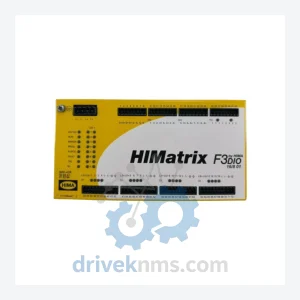
HIMA HIMatrix F35 011 Safety Controller – Obsolete HIMatrix Series Spare Part
HIMA HIMatrix F35 011 is listed for HIMatrix RFQ review. Confirm quantity, condition and destination before quotation.
RFQ-ready industrial model
Model: F3430
Product Overview
Commercial availability is handled through direct RFQ, model verification and export-oriented follow-up rather than public cart checkout.
Datasheet Preview
Use attached product manuals when available. If the manual is not public yet, request the full file directly through RFQ.
Commercial Path
Product pages on DRIVEKNMS are designed to verify model, brand and series first, then move the buyer into one clean quotation path.
Technical Dossier
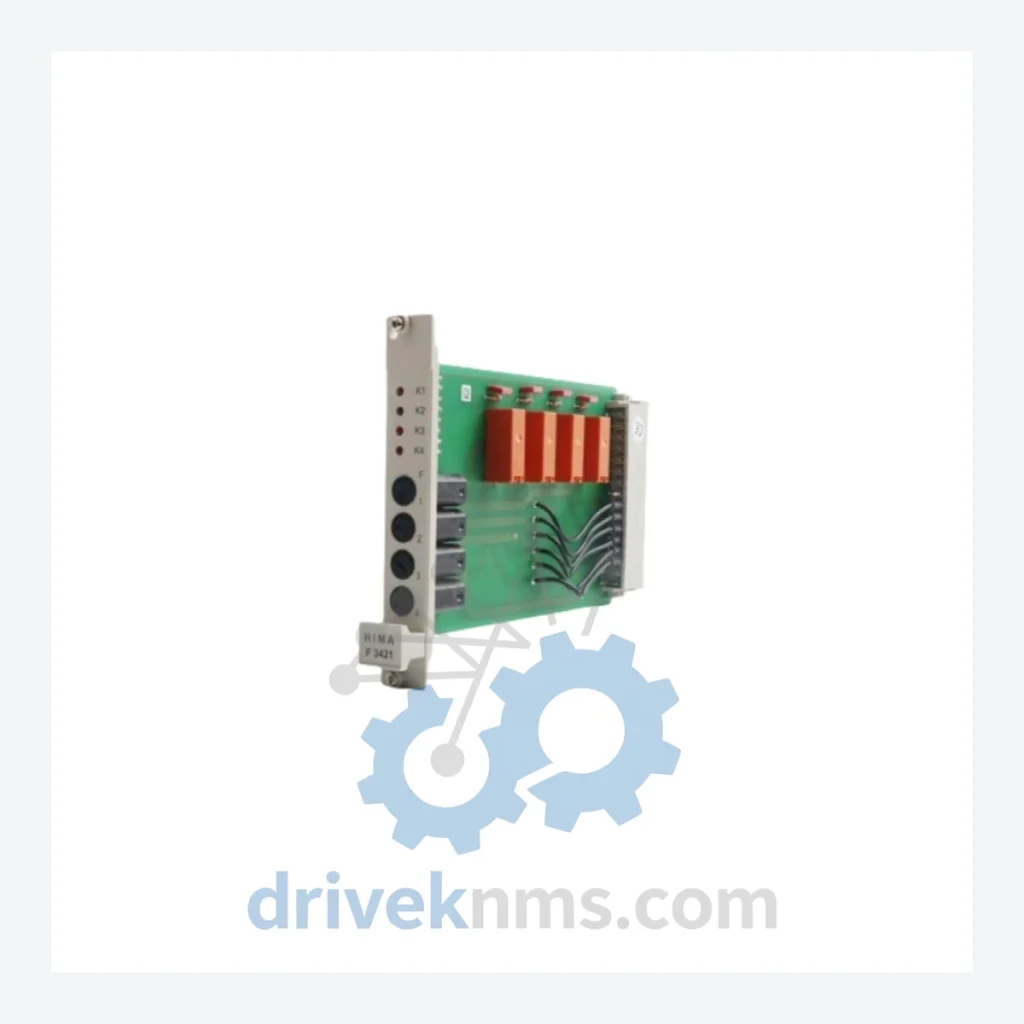
The HIMA F3430 is a 4-channel relay output module designed for use within the HIMA HIMatrix family of programmable safety controllers. As HIMA has progressively transitioned its portfolio toward newer platforms, field-replacement units for the F3430 have become increasingly scarce through standard distribution channels. DriveKNMS maintains RFQ-reviewed sourcing status of this module, sourced through controlled industrial asset recovery channels, to support facilities that cannot — or choose not to — abandon their existing validated safety architecture.
| Parameter | Detail |
|---|---|
| Part Number | F3430 |
| Manufacturer | HIMA Paul Hildebrandt GmbH |
| Product Family | HIMatrix Safety Controller Series |
| Module Type | 4-Channel Relay Output Module |
| Country of Origin | Germany |
| Lifecycle Status | Discontinued / Obsolete – No longer available through standard HIMA distribution |
| Typical Application | Safety Instrumented Systems (SIS), Emergency Shutdown (ESD), Fire & Gas (F&G) systems |
| Compatible Platform | HIMA HIMatrix Safety Controller family |
Note: Electrical parameters (voltage ratings, contact ratings, response times) are not published here to avoid inaccuracy. Please contact us for datasheet access and cross-reference verification prior to ordering.
The HIMA HIMatrix platform was widely deployed across oil & gas, chemical processing, and power generation facilities throughout the 1990s and 2000s as a certified IEC 61508 SIL-capable safety controller. Its modular architecture — of which the F3430 relay output module is a core output element — allowed facilities to build compact, validated safety loops without the overhead of larger DCS-integrated SIS platforms.
The discontinuation of individual HIMatrix I/O modules does not render the entire safety system obsolete overnight. However, it does create a critical vulnerability: a single failed output module with no available replacement forces a binary choice between operating with a degraded safety margin (a regulatory and liability exposure) or initiating a full system replacement program. Neither option is acceptable for a facility with an active safety case.
Maintaining a controlled inventory of F3430 modules — even a single verified spare — eliminates this forced decision. It preserves the integrity of the validated safety loop, maintains SIL certification continuity, and defers a capital-intensive system migration until it can be planned, budgeted, and executed on the facility's own schedule rather than under emergency conditions.
Facilities operating HIMA HIMatrix-based SIS architectures that have extended asset life beyond original design horizons should treat the F3430 as a strategic procurement item, not a reactive purchase. The cost differential between a proactively sourced spare and an emergency replacement — factoring in expedited logistics, engineering mobilization, and production loss — is substantial.
Plant managers facing pressure to retire aging safety systems often encounter a straightforward financial reality: the capital expenditure required for a full SIS replacement — including new hardware, engineering, validation, and commissioning — frequently exceeds the cost of a structured legacy maintenance program by a factor of five to ten over a comparable timeframe.
The following approach has been applied successfully in facilities operating legacy HIMA, Triconex, and similar SIS platforms well beyond their original design life:
2. Establish a Minimum Viable Spare Inventory. For high-criticality obsolete modules, a minimum of one verified spare per installed unit is a defensible baseline. For facilities with multiple HIMatrix nodes, a pooled spare strategy — one spare per module type across the site — reduces inventory cost while maintaining coverage.
3. Implement Periodic Functional Verification. Obsolete modules in storage are subject to electrolytic capacitor degradation, contact oxidation, and firmware drift. A structured annual bench-test protocol — verifying relay contact integrity, output response, and communication handshake — identifies latent failures before they occur in service.
4. Document the Validated Configuration. Maintain a controlled record of the exact firmware version, hardware revision, and configuration parameters of every installed module. When a replacement is sourced, this record enables direct verification that the replacement unit matches the validated configuration, avoiding re-validation costs.
This approach does not eliminate the eventual need for system modernization. It does, however, convert an uncontrolled emergency into a planned capital project, with the timeline and budget determined by the facility rather than by component failure.
All HIMA F3430 units supplied by DriveKNMS undergo a structured 5-step inspection and verification process before dispatch. This protocol is specifically designed to address the failure modes most commonly observed in long-stored or field-recovered relay output modules:
Step 1 – Visual and Mechanical Inspection: Full examination of the module housing, connector pins, and PCB surface for physical damage, corrosion, or evidence of prior repair. Units with pin corrosion, burn marks, or non-original components are rejected at this stage.
Step 2 – Electrolytic Capacitor Assessment: Electrolytic capacitors are the primary age-related failure point in modules of this generation. Each unit is assessed for capacitor bulging, leakage, and ESR (equivalent series resistance) deviation. Units with degraded capacitors are either reconditioned by qualified technicians or rejected.
Step 3 – Firmware and Hardware Revision Verification: The firmware version and hardware revision of each unit are documented and disclosed to the customer prior to shipment. This enables the customer to verify compatibility with their installed base before the unit is integrated into the safety system.
Step 4 – Relay Contact Integrity Test: Each relay channel is functionally tested for contact closure, contact resistance, and release response. This directly verifies the core output function of the module.
Step 5 – Final Documentation and Traceability: Each unit is shipped with a condition report documenting the inspection results, the unit's serial number (where legible), and the firmware/hardware revision. This documentation supports the customer's change management and safety case records.
The F3430 is a direct hardware replacement for the installed module. No changes to the HIMatrix controller configuration, safety application program, or field wiring are required when replacing a failed F3430 with a unit of matching hardware and firmware revision. This drop-in replacement characteristic is the primary operational advantage of sourcing a like-for-like spare rather than pursuing a system redesign.
Avoiding engineering redesign eliminates the associated costs: no modification to the validated safety application, no re-FAT, no re-SAT, and no re-submission to the relevant safety authority or insurer. The maintenance event is classified as a like-for-like replacement, not a system modification — a distinction with significant implications for both cost and schedule.
For facilities operating under a functional safety management system (FSMS) aligned to IEC 61511, the ability to document a like-for-like replacement — with full traceability of the replacement unit's condition and configuration — is a compliance requirement, not merely a convenience. The documentation package provided with each DriveKNMS unit is structured to support this requirement directly.
Q: How do I confirm the unit supplied will match my installed hardware revision?
A: Prior to shipment, we disclose the hardware revision and firmware version of the specific unit. If you provide us with the revision details of your installed module, we will confirm compatibility before the order is confirmed. We do not ship units where revision compatibility cannot be verified.
Q: Is the unit new or refurbished?
A: Units are sourced from controlled industrial asset recovery channels and are supplied as inspected and tested used units unless explicitly stated otherwise. Condition is fully disclosed prior to sale. We do not represent used units as new.
Q: Should I purchase more than one unit?
A: For any HIMatrix installation where the F3430 is a critical output module, holding a minimum of one spare per installed unit is a defensible maintenance position. Given the declining availability of this component, facilities with multiple installed units should consider consolidating their spare procurement now rather than sourcing reactively at the point of failure.
Continue The Model Path
Move from this exact model into the matching system hub, brand archive, model-family archive or lifecycle sourcing route before sending a final RFQ list.
Related Paths
HIMA HIMatrix F35 011 is listed for HIMatrix RFQ review. Confirm quantity, condition and destination before quotation.
HIMA F3417A is listed for HIMatrix RFQ review. Confirm quantity, condition and destination before quotation.
HIMA F2201 is listed for HIMatrix RFQ review. Confirm quantity, condition and destination before quotation.