
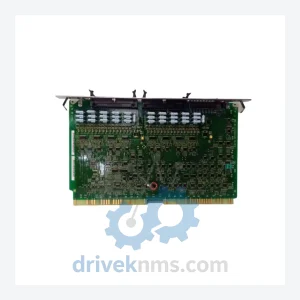
Hitachi LCE250B Communication Board – Obsolete Elevator Control Spare Part
Hitachi LCE250B is listed for Elevator Control RFQ review. Confirm quantity, condition and destination before quotation.
RFQ-ready industrial model
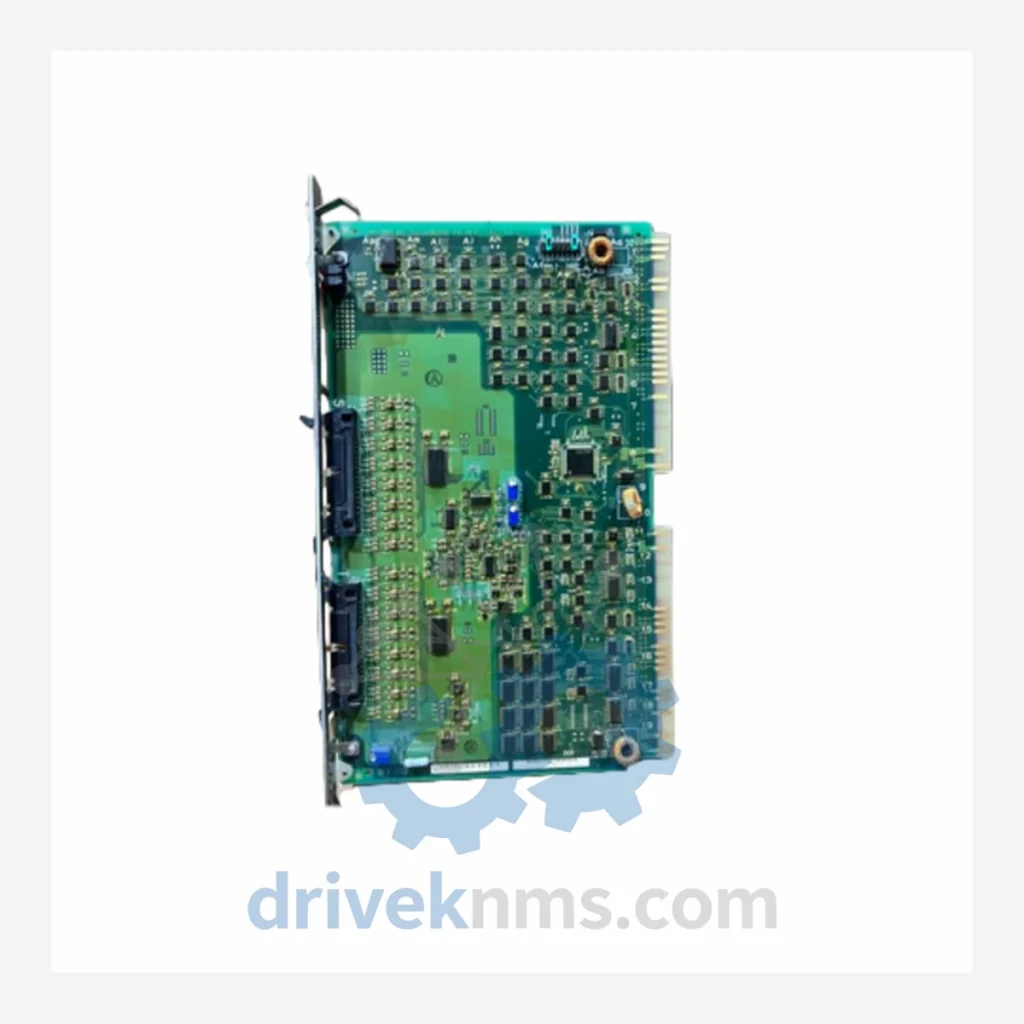
Model: LYA220A AI
Product Overview
Commercial availability is handled through direct RFQ, model verification and export-oriented follow-up rather than public cart checkout.
Datasheet Preview
Use attached product manuals when available. If the manual is not public yet, request the full file directly through RFQ.
Commercial Path
Product pages on DRIVEKNMS are designed to verify model, brand and series first, then move the buyer into one clean quotation path.
Technical Dossier
The Hitachi LYA Series represents a core component family within Hitachi's distributed control system (DCS) architecture, deployed extensively across global heavy industry sectors including petrochemical refineries, nuclear power generation facilities, chemical processing plants, and steel manufacturing complexes. The LYA Series occupies a critical position in Hitachi's HISEC and HIACS control system platforms, providing the analog input, digital I/O, and inter-module communication infrastructure that underpins continuous process control in high-availability environments. Installations of LYA Series hardware are documented across facilities in Japan, Southeast Asia, the Middle East, and Europe, where long equipment lifecycles of 15–25 years make spare parts availability a persistent operational requirement.
The LYA Series was introduced as part of Hitachi's second-generation DCS backplane architecture, succeeding earlier relay-logic and discrete analog control panels. Early LYA modules operated on a proprietary parallel bus structure with TTL-level signaling, designed for deterministic scan-cycle performance in process control loops. As industrial communication standards evolved through the 1990s and 2000s, Hitachi progressively integrated fieldbus compatibility — including PROFIBUS-DP and Modbus RTU interfaces — into the LYA communication board variants, of which the LYA220A is a primary example.
The LYA220A AI Communication Board functions as the analog input acquisition and signal conditioning interface within the LYA backplane, converting 4–20 mA and 1–5 V field signals into digitized process values for the CPU module. Its architecture reflects the design philosophy of the mid-generation HIACS-3000 and HIACS-5000 platforms: modular slot-based installation, hardware-configurable channel addressing, and passive-fail-safe signal isolation. Compatibility constraints are significant: LYA Series modules are not hot-swap capable in all firmware revisions, and backplane slot addressing must be configured via DIP switch prior to installation. Mixing early-revision and late-revision LYA modules on the same backplane requires firmware version verification to avoid bus arbitration conflicts.
As the HIACS platform transitioned toward the HISEC-V and subsequent Ethernet-based control architectures in the 2010s, the LYA Series entered a maintenance-phase lifecycle. Hitachi ceased active production of most LYA variants by approximately 2015–2018, making third-party inventory sourcing the primary procurement channel for ongoing maintenance and emergency replacement.
The following catalog covers verified SKUs within the Hitachi LYA Series, classified by functional category. Each entry reflects the module's primary role within the HIACS/HISEC backplane architecture.
Analog Input (AI) Modules
Digital Input (DI) Modules
Digital Output (DO) Modules
Communication & Adapter Modules
CPU & Power Supply Modules
LYA Series modules present specific test challenges due to their proprietary backplane bus protocol and the absence of publicly available Hitachi test fixtures for end-of-life hardware. DriveKNMS has developed an in-house functional test bench that replicates the HIACS backplane electrical environment, enabling full operational verification of LYA modules without requiring a live plant system.
Continue The Model Path
Move from this exact model into the matching system hub, brand archive, model-family archive or lifecycle sourcing route before sending a final RFQ list.
Related Paths
Hitachi LCE250B is listed for Elevator Control RFQ review. Confirm quantity, condition and destination before quotation.
Hitachi EH-RMP is listed for EH Series RFQ review. Confirm quantity, condition and destination before quotation.
Hitachi 2B021918-1 is listed for Servo Drives RFQ review. Confirm quantity, condition and destination before quotation.