
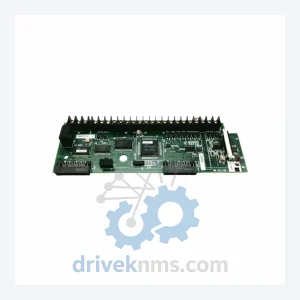
Hitachi 2B021918-1 Circuit Board – Obsolete Hitachi Series Spare Part
Hitachi 2B021918-1 Circuit Board – Obsolete Hitachi Series Spare Part When a circuit board like the Hitachi 2B021918-1 fails in…
Model: PROGRAMMER PGMJ
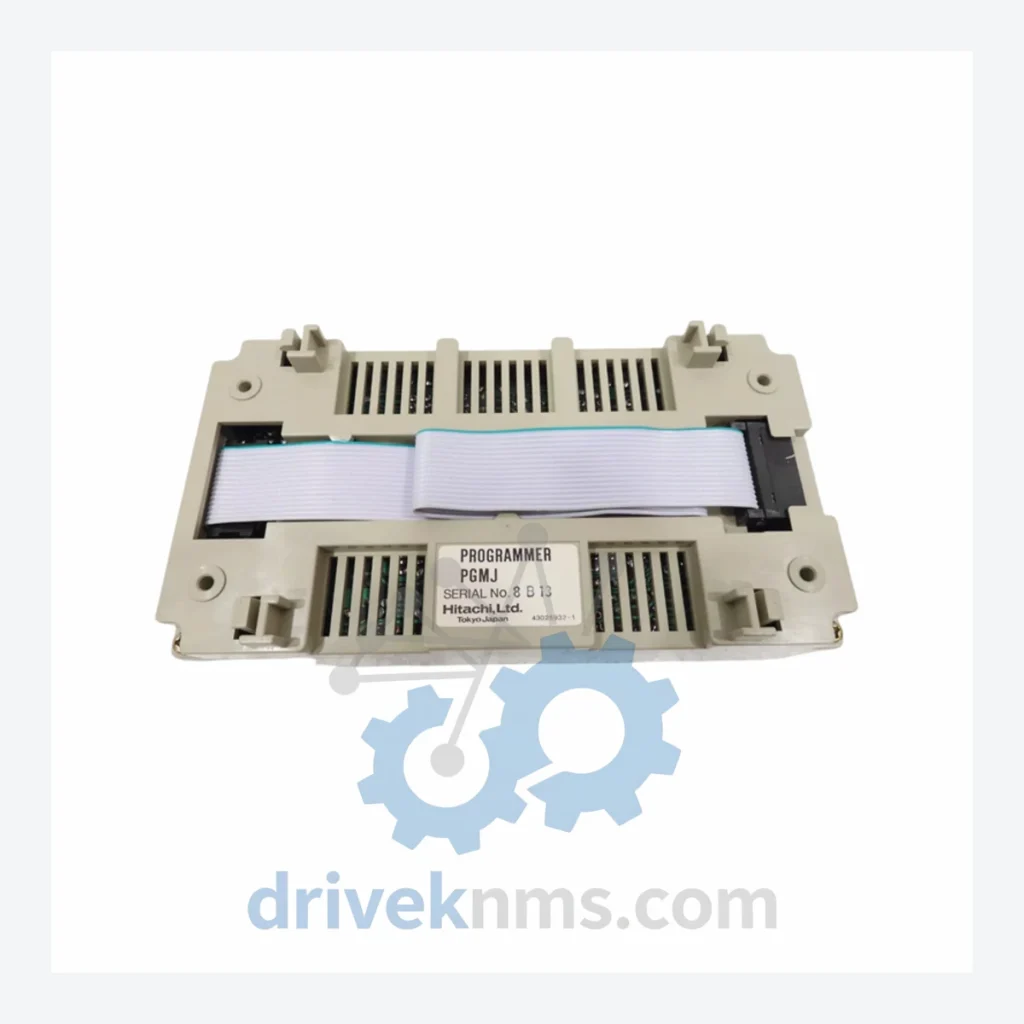
Product Overview
Commercial availability is handled through direct RFQ, model verification and export-oriented follow-up rather than public cart checkout.
Datasheet Preview
Use attached product manuals when available. If the manual is not public yet, request the full file directly through RFQ.
Commercial Path
Product pages on DRIVEKNMS are designed to verify model, brand and series first, then move the buyer into one clean quotation path.
Technical Dossier
When a Hitachi PGMJ programmer fails on an active production line, the consequences extend far beyond the cost of the unit itself. Legacy Hitachi programmable control systems — still running in factories across Asia, the Middle East, and Eastern Europe — cannot be reprogrammed or diagnosed without this specific handheld programmer. A single failed unit can force a plant manager into an impossible choice: halt production indefinitely while sourcing a replacement, or commit to a full control system migration that routinely costs USD $500,000 to $2,000,000 in engineering, downtime, and revalidation. DriveKNMS maintains verified physical stock of the PROGRAMMER PGMJ, sourced through controlled industrial channels. This is not a catalog listing — it is a confirmed inventory position on a unit that has not been manufactured for years.
| Parameter | Detail |
|---|---|
| Part Number | PROGRAMMER PGMJ |
| Brand | Hitachi |
| Series | PGMJ / Hitachi Programmable Control System |
| Device Type | Handheld PLC Programmer / Programming Console |
| Compatible Systems | Hitachi HIDIC H Series, Hitachi EC Series PLC, Hitachi Programmable Controllers (legacy) |
| Country of Origin | Japan |
| OEM Status | Discontinued / Obsolete – No longer in production |
| Availability | Limited – Physical stock held by DriveKNMS |
Note: Electrical parameters such as supply voltage and communication protocol are not published here to avoid inaccuracy. Please contact us for verified technical documentation specific to your system revision.
The Hitachi PGMJ programmer was the sole interface tool for a generation of Hitachi programmable controllers deployed throughout the 1980s and 1990s. These controllers remain embedded in cement plants, textile mills, water treatment facilities, and discrete manufacturing lines where the cost and disruption of a full PLC migration cannot be justified on operational or financial grounds.
Without the PGMJ programmer, maintenance engineers lose the ability to modify ladder logic, diagnose fault codes, or perform any parameter adjustment on the connected controller. The system effectively becomes a black box. Modern USB-based programming software does not support the proprietary communication protocol used by these legacy Hitachi units. There is no software workaround. There is no adapter. The PGMJ is the only path to continued programmatic access.
For plant managers facing pressure to retire aging automation assets, the calculus is straightforward: a verified PGMJ unit at current market price represents a fraction of one day's lost production, and it extends the operational life of the entire control system by years. Facilities that maintain two or three PGMJ units in bonded storage routinely defer system replacement decisions by five to ten years — a deferral that funds other capital priorities and avoids the organizational disruption of a forced migration.
DriveKNMS specializes in locating and verifying exactly this category of hardware: units that are no longer manufactured, rarely appear on the secondary market, and carry disproportionate operational risk when absent.
Every PROGRAMMER PGMJ unit processed by DriveKNMS passes a structured five-stage inspection protocol before it is offered for sale. This protocol was developed specifically for discontinued industrial hardware, where age-related degradation follows predictable failure patterns.
Stage 1 – Electrolytic Capacitor Assessment: Capacitors in units of this age are the primary failure vector. Each unit is inspected for bulging, leakage, and ESR deviation. Units with suspect capacitors are either reconditioned with matched replacements or rejected from inventory.
Stage 2 – Firmware Version Verification: The firmware revision is read and documented. Compatibility with the target controller series is confirmed before dispatch. Mismatched firmware versions are a known source of communication failures in the field.
Stage 3 – Pin and Connector Inspection: All interface connectors are examined under magnification for oxidation, pin deformation, and contact resistance. Corroded contacts are cleaned using controlled abrasive and chemical processes. Connectors that cannot be restored to specification are flagged.
Stage 4 – Functional Communication Test: Where test equipment permits, the unit is connected to a compatible controller and a live communication session is established. Successful ladder logic read-back is the acceptance criterion.
Stage 5 – Packaging and Storage: Units are packed in anti-static enclosures with desiccant. Storage conditions are controlled for temperature and humidity to prevent further degradation prior to shipment.
The PROGRAMMER PGMJ is a direct, drop-in replacement for any failed or damaged unit within the same Hitachi programmable controller family. No firmware re-flashing is required on the controller side. No re-engineering of the existing ladder program is necessary. The replacement unit connects, authenticates, and provides full programming access within minutes of installation.
This matters operationally. A maintenance team that has kept one spare PGMJ on the shelf avoids the scenario where a single hardware failure triggers an emergency procurement process lasting weeks — during which the production line either runs without the ability to make any program changes, or does not run at all. The cost of that downtime, measured against the cost of a spare programmer, is not a close comparison.
For facilities running multiple Hitachi controllers across different production zones, a single PGMJ unit is typically compatible across the range, reducing the number of unique spare parts that must be stocked and managed.
Industrial automation assets — particularly PLC-based control systems installed before 2000 — represent capital investments that were sized for 20 to 30-year operational lives. The hardware frequently outlasts the supply chain that supports it. When a manufacturer discontinues a product line, the installed base does not disappear. It continues operating, and the maintenance burden shifts entirely to the end user.
The most effective strategy for extending the life of a legacy Hitachi control system by five to ten years is not complex. It requires three things: a verified inventory of critical spare parts, documented knowledge of the current program state, and a supplier relationship that can source replacement hardware when the internal stock is consumed.
Critical spare parts for a Hitachi HIDIC or EC Series installation include the programmer unit (PGMJ), the CPU module, and any I/O modules that carry high cycle counts. Of these, the programmer is the most frequently overlooked — because it is not in the control cabinet, it is not monitored by the SCADA system, and it is not replaced on a scheduled maintenance cycle. It fails when it is needed most, and its absence is felt immediately.
Plants that have formalized a legacy spare parts program — typically driven by a maintenance manager who has experienced one unplanned outage caused by an unavailable programmer — report that the program pays for itself within the first incident it prevents. The investment is modest. The protection is substantial.
DriveKNMS works with maintenance teams and procurement departments to build structured spare parts reserves for legacy automation systems. Inquiries about multi-unit pricing, long-term storage arrangements, and technical documentation support are welcome.
Q: What warranty applies to a discontinued part like the PGMJ?
A: DriveKNMS provides a 90-day functional warranty on all units that have passed our full inspection protocol. The warranty covers failure under normal operating conditions. It does not cover damage resulting from incorrect connection or use with incompatible systems.
Q: How do I know the unit is genuine and not a counterfeit?
A: All units are sourced from verifiable industrial channels — decommissioned plant inventories, authorized distributor closeouts, and controlled secondary market sources. We do not purchase from unverified brokers. Physical inspection includes label verification and internal construction review consistent with known genuine units.
Q: Is the unit new or refurbished?
A: Units are offered in one of two conditions: new old stock (NOS), meaning unused units from original industrial inventory, or inspected and reconditioned, meaning used units that have passed our five-stage QA process. Condition is stated explicitly in the order confirmation. We do not sell units that have not been inspected.
Q: Should I buy more than one unit?
A: For any facility running more than one Hitachi programmable controller, holding at least two PGMJ units in reserve is a defensible maintenance position. The secondary market for this unit is not reliable. When current stock is exhausted, the next available unit may not appear for months. Multi-unit inquiries are handled directly and may qualify for adjusted pricing.
Q: Can you source other Hitachi legacy parts?
A: Yes. DriveKNMS maintains sourcing relationships for a range of discontinued Hitachi industrial components. Contact us with your part number and we will confirm availability and lead time.
Related Paths
Hitachi 2B021918-1 Circuit Board – Obsolete Hitachi Series Spare Part When a circuit board like the Hitachi 2B021918-1 fails in…
Hitachi MVL-D64DT PLC Controller – Obsolete H Series Spare Part When a Hitachi MVL-D64DT fails on the production floor, the…
HITACHI MVH-D40DT Basic Module: Supply Continuity Strategy for Procurement Managers The HITACHI MVH-D40DT is a discontinued basic module from HITACHI's…