
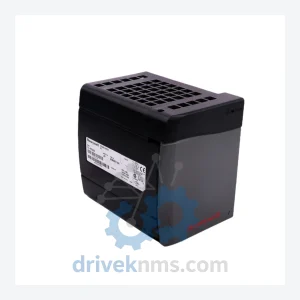
Honeywell TC-FPDXX2 Power Supply Module – Obsolete C300 Spare Part
Honeywell TC-FPDXX2 is listed for Power Supplies RFQ review. Confirm quantity, condition and destination before quotation.
RFQ-ready industrial model
Model: GCP-32AN 1A 2A 3A 4A 5A 7A 10A 15A 20A 25A 30A
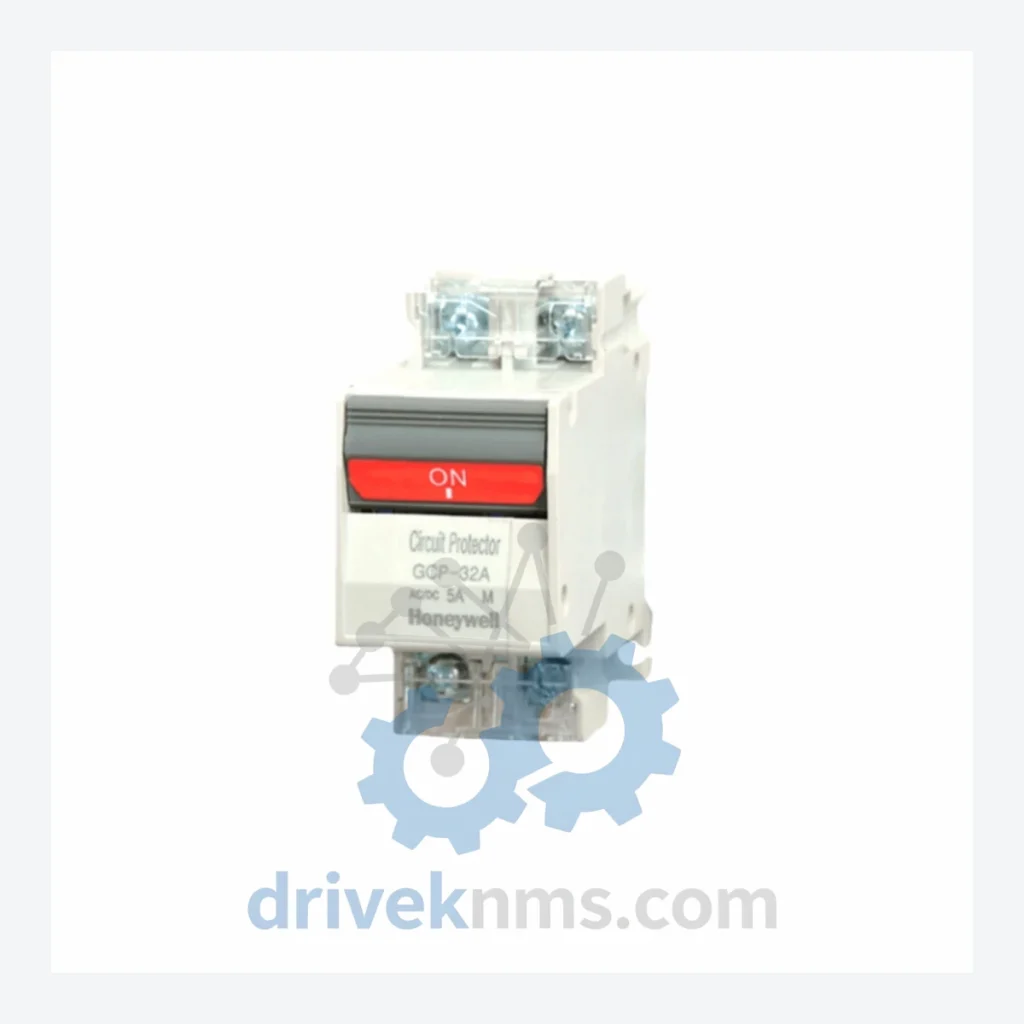
Product Overview
Commercial availability is handled through direct RFQ, model verification and export-oriented follow-up rather than public cart checkout.
Datasheet Preview
Use attached product manuals when available. If the manual is not public yet, request the full file directly through RFQ.
Commercial Path
Product pages on DRIVEKNMS are designed to verify model, brand and series first, then move the buyer into one clean quotation path.
Technical Dossier
DriveKNMS reviews sourcing status and documentation for this model during RFQ handling before quotation.
RFQ support for obsolete parts: Send the model number, required quantity and destination so DriveKNMS can confirm sourcing options before quotation.
| Parameter | Detail |
|---|---|
| Part Number | GCP-32AN |
| Brand | Honeywell |
| Series | TDC3000 / HPM / LCN |
| Module Type | DC Power Supply |
| Available Amperage Ratings | 1A, 2A, 3A, 4A, 5A, 7A, 10A, 15A, 20A, 25A, 30A |
| Country of Origin | United States |
| Lifecycle Status | Discontinued / Obsolete – No longer manufactured by Honeywell |
| Compatible Systems | Honeywell TDC3000, HPM (High-Performance Process Manager), LCN (Local Control Network) |
| Form Factor | Card / Module (rack-mount) |
The Honeywell TDC3000 platform entered service in the early 1980s and remained the backbone of large-scale process control in refining, chemicals, and power generation for decades. Honeywell officially discontinued active hardware support for the TDC3000 product line, leaving thousands of facilities worldwide dependent on the secondary market for critical replacement components.
The GCP-32AN is the power distribution backbone of the TDC3000 cabinet. It conditions and distributes DC power to HPM cards, I/O modules, and the LCN highway interface. A single failed unit does not merely take one loop offline — it can de-energize an entire cabinet, triggering a cascade of process shutdowns across multiple control loops simultaneously.
Facilities that have attempted to bypass this problem by substituting generic power supplies have encountered firmware handshake failures, ground loop interference on the LCN highway, and in several documented cases, corrupted historian data. The GCP-32AN is not a commodity component. Its internal regulation architecture is matched to the TDC3000 backplane voltage tolerance, which is tighter than standard industrial DC specifications.
How to extend your TDC3000 asset life by 5–10 years without a platform migration:
Plant managers facing DCS retirement pressure from corporate engineering teams are often presented with a binary choice: migrate now or accept unacceptable risk. That framing is commercially motivated and technically incomplete. A structured spare parts strategy can defer migration costs by a full capital budget cycle — typically 5 to 10 years — at a fraction of the migration price.
All GCP-32AN units supplied by DriveKNMS pass a five-stage inspection protocol before dispatch review. For obsolete hardware, standard incoming inspection is insufficient — age-related failure modes require targeted evaluation.
Stage 1 – Electrolytic Capacitor Assessment: Capacitor aging is the primary failure mechanism in power supply modules stored or operated beyond 15 years. Each unit is inspected for capacitor bulging, electrolyte leakage, and ESR (equivalent series resistance) deviation. Units with marginal capacitors are either reconditioned with matched replacements or rejected.
Stage 2 – Firmware Version Verification: TDC3000 power management firmware versions must match the HPM revision installed in the target cabinet. We verify and document the firmware revision of each unit and cross-reference against known compatibility matrices.
Q: How are RFQ terms confirmed?
A: Quantity, required condition, documentation needs, destination and sourcing route are confirmed during RFQ review before quotation.
Stage 4 – Functional Load Test: Where test equipment permits, units are powered under representative load conditions and output voltage stability is measured across the rated amperage range.
Stage 5 – Documentation and Traceability: Each unit ships with an inspection record. Condition is classified as New (sealed OEM), Refurbished (inspected and reconditioned), or Tested Used (functional, cosmetic wear). Condition is stated explicitly on the invoice — no ambiguity.
The GCP-32AN is a direct drop-in replacement for the original Honeywell factory unit. Installation requires no firmware changes to the HPM, no re-configuration of the LCN highway, and no modifications to cabinet wiring. Replacement is a physical swap followed by a standard cabinet power-up sequence.
This matters operationally. An engineering change order for a non-standard power supply substitution in a safety-instrumented environment can require weeks of documentation, HAZOP review, and management of change approval. A like-for-like GCP-32AN replacement bypasses that process entirely, reducing mean time to repair from weeks to hours.
For facilities operating under IEC 61511 or ISA-84 functional safety frameworks, maintaining original hardware specifications is not merely convenient — it is often a compliance requirement. Substituting non-OEM power components can invalidate the safety integrity level (SIL) rating of associated safety loops, creating regulatory exposure that far exceeds the cost of sourcing the correct part.
Q: How is condition confirmed before quotation?
A: Available condition, photos, test records and documentation are checked according to the requested model and sourcing channel before a formal RFQ response.
Can you source specific amperage ratings on request?
Yes. Contact us with your required amperage rating and quantity. We will confirm availability and condition before issuing a quotation.
Continue The Model Path
Move from this exact model into the matching system hub, brand archive, model-family archive or lifecycle sourcing route before sending a final RFQ list.
Related Paths
Honeywell TC-FPDXX2 is listed for Power Supplies RFQ review. Confirm quantity, condition and destination before quotation.
Honeywell SPS5710 51198685-100 is listed for Power Supplies RFQ review. Confirm quantity, condition and destination before quotation.
Honeywell SPS5710-2-LF 51198685-100 is listed for Power Supplies RFQ review. Confirm quantity, condition and destination before quotation.