
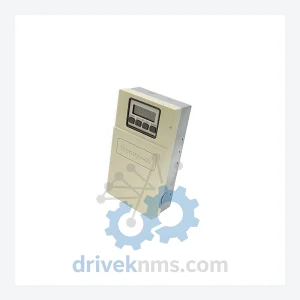
Honeywell T775E1056 Process Controller – T775 Series
Honeywell T775E1056 is listed for T775 Series RFQ review. Confirm quantity, condition and destination before quotation.
RFQ-ready industrial model
Model: MC-PHAO01 MC-PLAM02 MC-PSIM11 MC-PSIM11
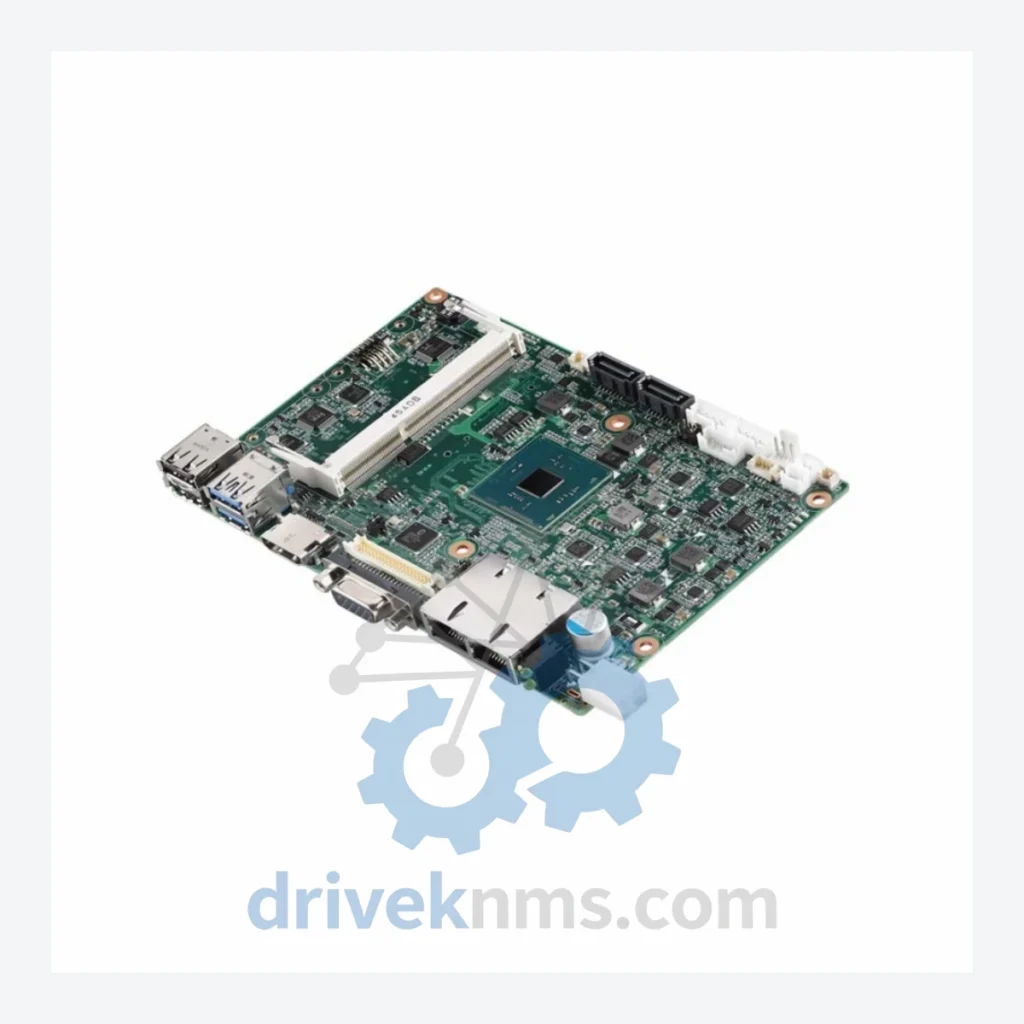
Product Overview
Commercial availability is handled through direct RFQ, model verification and export-oriented follow-up rather than public cart checkout.
Datasheet Preview
Use attached product manuals when available. If the manual is not public yet, request the full file directly through RFQ.
Commercial Path
Product pages on DRIVEKNMS are designed to verify model, brand and series first, then move the buyer into one clean quotation path.
Technical Dossier
The Honeywell MC-Series Process Manager I/O (PMIO) modules are the field I/O backbone of the Honeywell Experion PKS distributed control system (DCS), one of the most widely deployed process automation platforms in global heavy industry. These modules are installed in continuous-process environments including petroleum refineries, petrochemical complexes, LNG terminals, nuclear power stations, pulp and paper mills, and large-scale chemical manufacturing facilities. The MC-Series PMIO family interfaces directly with the C300 Controller via the FIM (Field Interface Module) and IOLINK bus architecture, providing deterministic, high-integrity signal conditioning for analog inputs, analog outputs, digital inputs, digital outputs, and specialized multiplexed analog channels. The installed base of Honeywell Experion PKS systems globally — estimated in the tens of thousands of nodes — ensures sustained demand for MC-Series spare parts well into the 2030s, even as Honeywell transitions customers toward the Experion PKS Highly Integrated Virtual Environment (HIVE) architecture.
The MC-Series PMIO lineage originates from Honeywell's TDC 3000 and PlantScape platforms of the 1990s, where field I/O was managed through dedicated I/O Link modules with limited channel density. With the introduction of Experion PKS in 2002, Honeywell redesigned the I/O subsystem around the PMIO concept: modular, hot-swappable cards housed in Series C I/O Link Termination Assemblies (ITA/FTA). The MC-prefix denotes the Experion-era PMIO generation, distinguishing it from legacy PM I/O (PMIO) cards used in TDC 3000 HPM nodes.
The architecture relies on a two-layer structure: the MC-Series module (active electronics) plugs into a passive Field Termination Assembly (FTA), which provides the physical wiring terminals and signal conditioning passives. This separation allows module replacement without rewiring field cables — a critical feature for live-plant maintenance. The IOLINK bus connecting PMIO modules to the FIM4A/FIM8A operates at a deterministic scan rate, with the C300 controller executing control strategies at configurable periods down to 50 ms. Redundancy is supported at the FIM and controller level; individual PMIO modules are generally non-redundant but can be replaced online (hot-swap) in most configurations. As Honeywell's HIVE architecture decouples I/O from controllers via Universal I/O (UIO) and LEAP technology, legacy MC-Series sites face a long-term migration path — but the installed base ensures a 15–20 year spare parts horizon from 2026.
Analog Input Modules
Analog Output Modules
Digital Input Modules
Digital Output Modules
Communication & Specialty Modules
MC-Series PMIO modules present specific test challenges due to their backplane-dependent communication architecture: a module cannot be fully validated without an active IOLINK bus and a compatible FIM. DriveKNMS operates a dedicated Honeywell Experion PKS test bench comprising a C300 controller, FIM4A field interface module, and a populated Series C I/O chassis. Each MC-Series module under test is inserted into the live chassis and subjected to the following protocol: (1) IOLINK enumeration and module identity verification against Honeywell's module descriptor database; (2) channel-by-channel signal injection using a calibrated Fluke 754 HART communicator and precision current source; (3) HART device variable polling for analog I/O modules to confirm pass-through integrity; (4) SOE timestamp accuracy test for digital input modules rated for sequence-of-events; (5) 72-hour burn-in at 40°C ambient to screen for latent component failures. Modules that pass all stages are issued a DriveKNMS test certificate with channel-level data and are shipped with ESD packaging and humidity indicator cards.
Continue The Model Path
Move from this exact model into the matching system hub, brand archive, model-family archive or lifecycle sourcing route before sending a final RFQ list.
Related Paths
Honeywell T775E1056 is listed for T775 Series RFQ review. Confirm quantity, condition and destination before quotation.
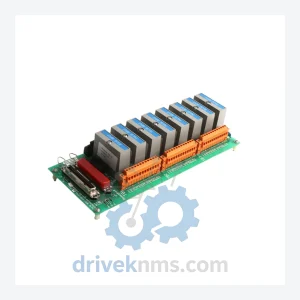
Honeywell MC-TPIX12 51304084-175 is listed for Series TotalPlant RFQ review. Confirm quantity, condition and destination before quotation.
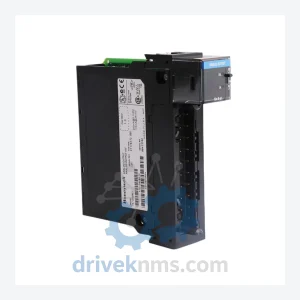
Honeywell TK-OAV061 is listed for PLC Modules RFQ review. Confirm quantity, condition and destination before quotation.