
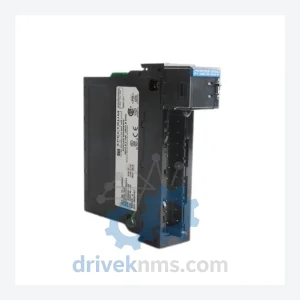
Honeywell TC-PPD011 Extension Battery Module – Obsolete Spare Part
Honeywell TC-PPD011 is listed for Controller Cards RFQ review. Confirm quantity, condition and destination before quotation.
RFQ-ready industrial model
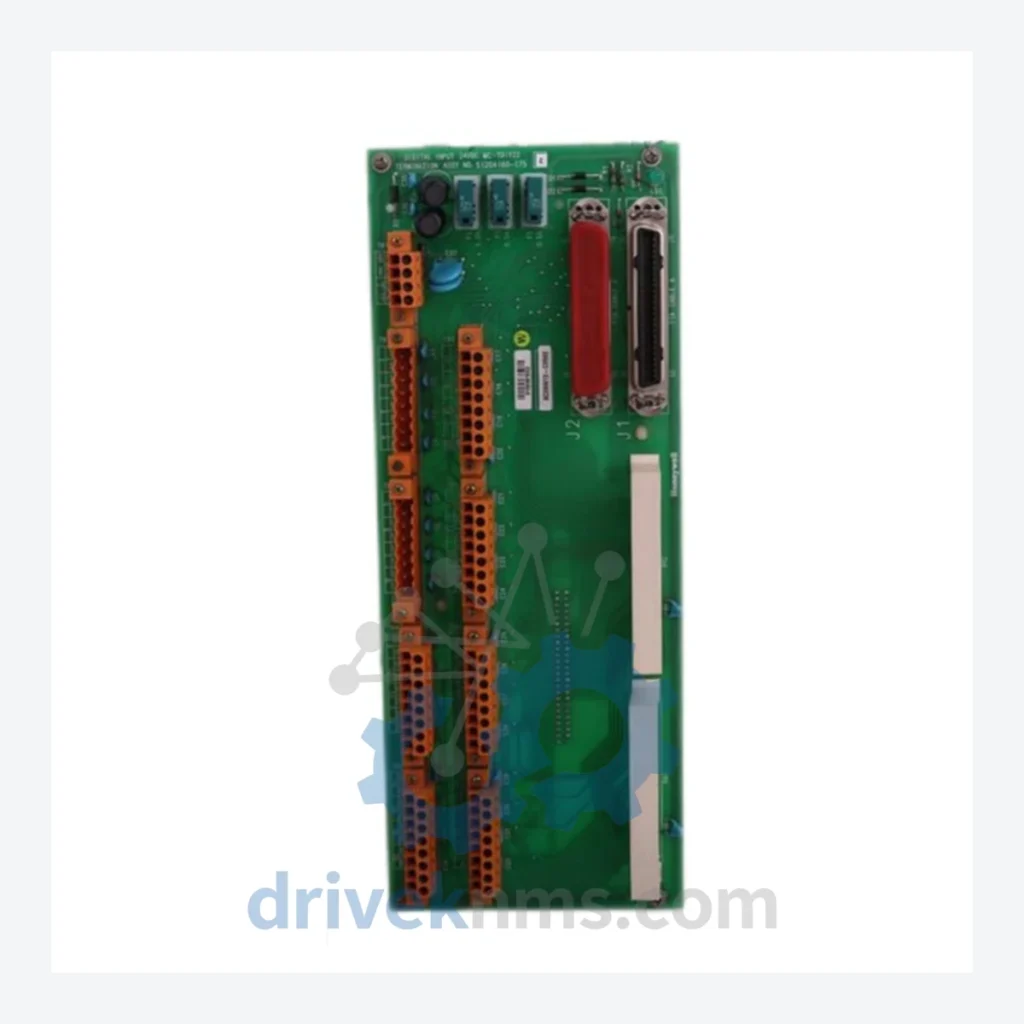
Model: MU-TPIX12 51304084-100
Product Overview
Commercial availability is handled through direct RFQ, model verification and export-oriented follow-up rather than public cart checkout.
Datasheet Preview
Use attached product manuals when available. If the manual is not public yet, request the full file directly through RFQ.
Commercial Path
Product pages on DRIVEKNMS are designed to verify model, brand and series first, then move the buyer into one clean quotation path.
Technical Dossier
When a termination board fails inside a Honeywell TDC 3000 or Experion PKS distributed control system, the consequences extend far beyond a single module. A forced migration to a modern DCS platform — driven by nothing more than one unavailable spare part — routinely carries engineering, commissioning, and production-loss costs measured in the millions of dollars. The MU-TPIX12 (P/N 51304084-100) is a confirmed discontinued component. DriveKNMS maintains RFQ-reviewed sourcing status of this board, sourced through controlled industrial channels, for facilities that cannot afford to treat a hardware failure as a system retirement event.
RFQ support for obsolete parts: Send the model number, required quantity and destination so DriveKNMS can confirm sourcing options before quotation.
| Parameter | Detail |
|---|---|
| Manufacturer | Honeywell Process Solutions |
| Part Number | MU-TPIX12 |
| Reference P/N | 51304084-100 |
| Product Type | Termination Board / I/O Interface Module |
| Compatible Platform | Honeywell TDC 3000, Experion PKS (legacy I/O subsystem) |
| Country of Origin | United States |
| Discontinuation Status | Confirmed Obsolete – No longer manufactured or supported by Honeywell |
| Condition Available | New surplus / Professionally refurbished (see QA section) |
The Honeywell TDC 3000 platform has been the backbone of continuous-process industries — refining, petrochemicals, pulp and paper, power generation — for decades. Its I/O termination architecture, of which the MU-TPIX12 is a core element, was engineered for deterministic signal handling in environments where milliseconds of latency carry safety implications. There is no modern equivalent that installs into the same physical footprint without a full I/O re-engineering project.
Plant managers facing a failed MU-TPIX12 confront a binary choice: locate a verified spare and restore operations within hours, or initiate a capital project that will consume engineering resources for 12 to 36 months. The second path is not a maintenance decision — it is a capital expenditure decision that requires board approval, budget cycles, and production curtailment. Facilities that maintain a strategic inventory of boards like the MU-TPIX12 convert what would be a capital crisis into a routine maintenance event.
For plant management teams facing system retirement pressure, the following strategy has been applied successfully across multiple continuous-process facilities to defer DCS migration costs by five to ten years without compromising process reliability:
1. Conduct a Failure Mode Inventory Audit. Identify every I/O module, termination board, and communication card in your TDC 3000 or legacy DCS that has no available replacement from standard channels. The MU-TPIX12 is a representative example. These are your single points of failure. A single unplanned outage caused by one of these components will cost more than a multi-year spare parts program.
4. Validate Before You Store. A spare part that has not been tested is not a spare part — it is an assumption. Every unit DriveKNMS supplies undergoes functional verification before dispatch review. For parts entering long-term storage, periodic re-testing on a 24-month cycle is recommended to catch capacitor degradation before the part is needed in a live system.
5. Document Configuration and Firmware State. For any board that carries firmware or configuration data, maintain a documented baseline. When a replacement is installed, the ability to restore the exact prior configuration eliminates the risk of process deviation during the changeover.
Applied consistently, this approach has allowed facilities to operate legacy DCS platforms reliably well beyond the OEM's stated end-of-life date, deferring migration costs until a planned capital cycle — rather than an emergency — drives the decision.
Sourcing an obsolete termination board from an unverified channel introduces risk that can exceed the cost of the part itself. DriveKNMS applies a five-step quality assurance process to every MU-TPIX12 unit before it leaves our facility:
Step 1 – Visual and Physical Inspection: Full examination of the PCB surface, connector pins, and housing for corrosion, mechanical damage, or evidence of prior field failure. Units with pin corrosion or burn marks are rejected at this stage.
Step 2 – Electrolytic Capacitor Assessment: Aged electrolytic capacitors are the primary failure mode in boards of this generation. Each unit is assessed for capacitor bulging, leakage, and ESR deviation. Where degradation is confirmed, capacitors are replaced with specification-matched components before the board is offered for sale.
Q: How are RFQ terms confirmed?
A: Quantity, required condition, documentation needs, destination and sourcing route are confirmed during RFQ review before quotation.
Step 4 – Functional Bench Test: The board is powered and tested against its specified I/O behavior. Signal integrity, termination resistance, and communication response are verified under controlled conditions.
Step 5 – Packaging and Documentation: Units are packaged in anti-static materials with full documentation of the QA process, test results, and any component-level work performed. This record accompanies the shipment and supports the customer's maintenance documentation requirements.
The MU-TPIX12 is a direct drop-in replacement for the original installed board. No field wiring changes are required. No controller reconfiguration is required. No engineering contractor is required for the swap. The replacement procedure is within the capability of a qualified instrument technician working from the existing plant documentation.
This matters because the alternative — a modern I/O migration — requires loop-by-loop re-termination, controller database modification, FAT and SAT testing, and a planned production outage. The engineering cost alone for a mid-size I/O cabinet migration routinely exceeds USD 150,000. The MU-TPIX12 eliminates that cost entirely for the specific failure scenario it addresses.
Key maintenance advantages:
Q: How do I know the unit is genuinely new or properly refurbished, not a counterfeit?
A: Every unit is sourced through documented industrial channels — decommissioned plant inventories, verified surplus dealers, and controlled OEM overstock. We do not source from unverified online marketplaces. The QA documentation that ships with each unit includes the source classification, test results, and any component-level work performed. Customers are welcome to request this documentation before purchase.
Q: Should I buy more than one unit?
A: For a board of this type in a TDC 3000 installation, holding a minimum of one hot spare and one cold spare is a defensible maintenance position. If your facility has multiple TDC 3000 cabinets using this board, the calculus shifts further toward a larger reserve. Global inventory of the MU-TPIX12 is finite and decreasing. Units available today will not necessarily be available in 18 months. The cost of a second unit is a fraction of the cost of a single unplanned outage.
Continue The Model Path
Move from this exact model into the matching system hub, brand archive, model-family archive or lifecycle sourcing route before sending a final RFQ list.
Related Paths
Honeywell TC-PPD011 is listed for Controller Cards RFQ review. Confirm quantity, condition and destination before quotation.
Honeywell T2798I-1000 is listed for T2000 Series RFQ review. Confirm quantity, condition and destination before quotation.
Honeywell MC-TDOY22 51204162-175 is listed for Controller Cards RFQ review. Confirm quantity, condition and destination before quotation.