Products / Honeywell / EMD171 Modular Process Controller
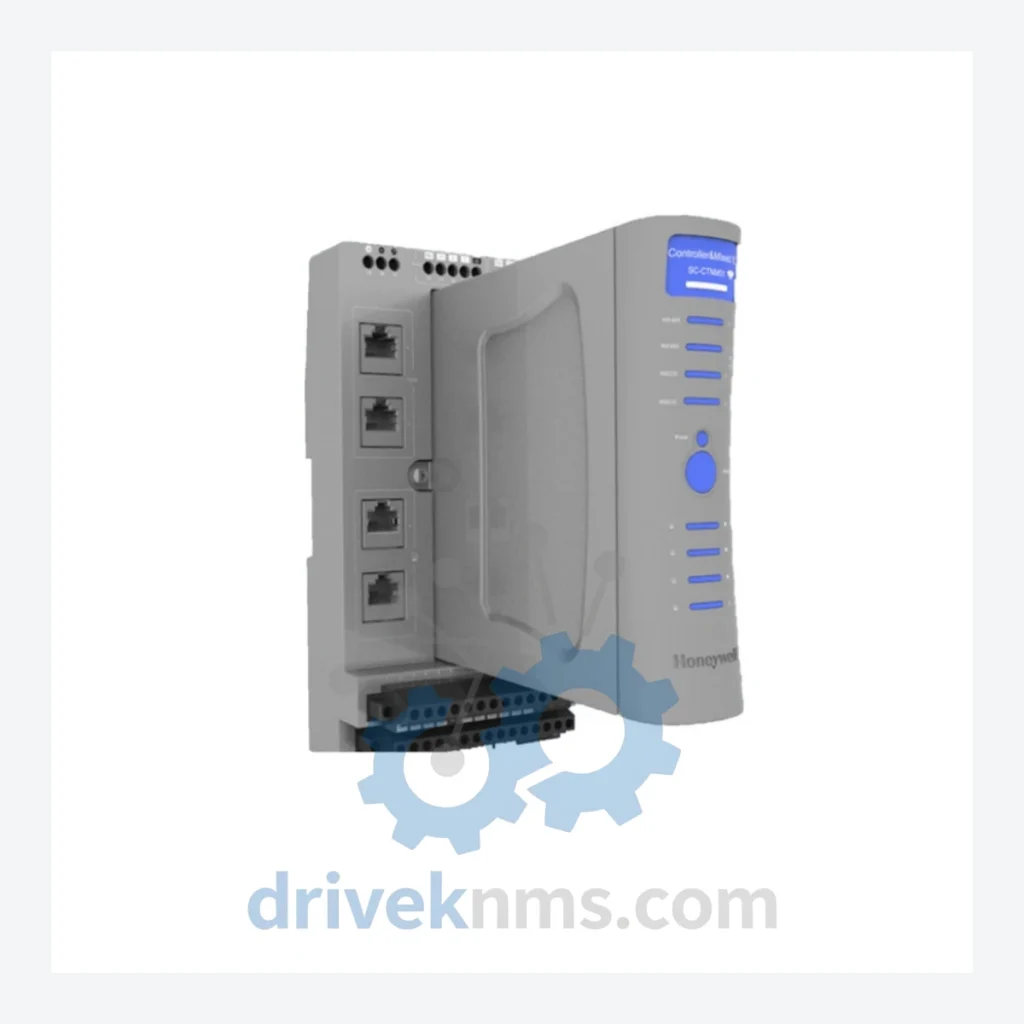
Honeywell EMD171 Modular Process Controller

Honeywell SP-EMD171 Modular Process Controller – Obsolete TDC3000 Spare Part

Model: SP-EMD171

Brand Honeywell
Series EMD171 Modular Process Controller
Model SP-EMD171
RFQ-ready model route Obsolete and surplus sourcing Export follow-up by model list

Product Overview

Commercial availability is handled through direct RFQ, model verification and export-oriented follow-up rather than public cart checkout.

Datasheet Preview

Datasheet Preview

Use attached product manuals when available. If the manual is not public yet, request the full file directly through RFQ.

Request Full Manual

Commercial Path

Use This Page To Confirm The Model, Then Move To RFQ

Product pages on DRIVEKNMS are designed to verify model, brand and series first, then move the buyer into one clean quotation path.

Technical Dossier

Product Details And Specifications

Honeywell SP-EMD171 Modular Process Controller – Obsolete TDC3000 Spare Part

When a process controller module fails inside a Honeywell TDC 3000 or PlantScape distributed control system, the consequences extend far beyond a single line stoppage. A full DCS migration — including engineering, commissioning, operator retraining, and production downtime — routinely costs between $2 million and $8 million USD per unit. The SP-EMD171 is a discontinued module with no direct OEM replacement path. DriveKNMS holds verified physical stock of this component, sourced through controlled industrial asset recovery channels. Securing a spare now is not a procurement decision — it is a risk management decision.

Technical Specifications

Parameter Detail
Part Number SP-EMD171
Manufacturer Honeywell
Product Family Safety Manager / TDC 3000 Series
Module Type Modular Process Controller
OEM Discontinuation Status Discontinued – No longer manufactured or supported by Honeywell OEM
Compatible Systems Honeywell TDC 3000, PlantScape, Experion PKS (legacy configurations)
Country of Origin United States
Condition Available New Old Stock (NOS) / Professionally Refurbished

Note: Electrical parameters not listed here are subject to verification against the original Honeywell engineering documentation for your specific system revision. DriveKNMS does not publish unverified specifications.

Solving the Discontinued Hardware Crisis

The Honeywell TDC 3000 platform was the backbone of continuous process industries — refining, petrochemical, pulp and paper, and power generation — for over two decades. Thousands of facilities worldwide still operate on this architecture because the cost and operational risk of migration outweigh the benefits of modernization on any near-term planning horizon.

The SP-EMD171 sits at a critical node within this architecture. When this module degrades or fails, the affected control loop cannot be handed off to a software workaround or a generic PLC substitute without significant re-engineering. The module's communication protocol, I/O mapping, and firmware handshake are tightly coupled to the TDC 3000 backplane. There is no plug-compatible modern equivalent.

Facilities that have not pre-positioned at least one cold spare of this module are operating with an unquantified liability on their balance sheet. A single unplanned outage event — measured in days of lost production — will cost multiples of what a spare module costs today. The arithmetic is straightforward; the procurement decision is not always made until after the failure occurs.

DriveKNMS specializes in sourcing exactly these components: modules that OEMs stopped producing years ago, that distribution channels no longer stock, and that appear only sporadically on the secondary market. Our inventory of the SP-EMD171 is finite and is not replenishable on demand.

How to Extend Automation Asset Life by 5–10 Years Through Strategic Spare Parts Positioning

For plant managers and reliability engineers operating legacy DCS infrastructure, the following framework has been applied successfully across refinery and chemical plant environments to defer capital expenditure while maintaining system integrity:

  • Criticality mapping: Identify every module in your TDC 3000 or PlantScape system that has no available OEM replacement. The SP-EMD171 belongs in the highest criticality tier. Map mean time between failures (MTBF) data from your maintenance records against current secondary market availability.
  • Minimum spare holding policy: For single-point-of-failure modules in continuous process environments, a minimum of two cold spares per installed unit is the accepted industry standard. One spare covers an immediate failure event; the second covers the procurement lead time for a replacement — which, for obsolete parts, can range from 3 to 18 months.
  • Scheduled preventive swap cycles: Rather than waiting for in-service failure, establish a 5-year swap cycle for high-risk modules. The removed unit is refurbished and returned to the spare pool. This approach eliminates unplanned downtime and extends the effective service life of the overall system by a decade or more.
  • Firmware version control: Legacy DCS modules are sensitive to firmware revision mismatches. Before deploying any spare, verify that the firmware version on the replacement unit matches the version currently running in your system. DriveKNMS performs firmware version documentation as part of our pre-shipment inspection.
  • Vendor-agnostic lifecycle planning: Engage a controls engineer with TDC 3000 experience to audit your full module inventory annually. The goal is to identify which components are approaching end-of-secondary-market availability before a failure event forces an emergency procurement at premium cost — or forces a migration that was not budgeted.

The cost of this strategy — spare parts, storage, and periodic inspection — is typically less than 2% of the capital cost of a DCS migration. For a system that can be kept operational for another 7–10 years, the return on that investment is not difficult to calculate.

Condition & Reliability Assurance

Obsolete modules sourced from the secondary market carry inherent risk if not properly inspected. DriveKNMS applies a 5-stage quality assurance protocol to every SP-EMD171 unit before shipment:

  1. Visual and mechanical inspection: Full examination of the PCB, connector pins, housing, and labeling. Units with physical damage, corrosion, or evidence of field repair are rejected at this stage.
  2. Electrolytic capacitor assessment: Aged electrolytic capacitors are the primary failure mode in modules of this era. Each unit is inspected for capacitor bulging, leakage, and ESR degradation. Units with suspect capacitors are either recapped with specification-matched components or rejected.
  3. Pin and connector integrity check: Backplane connector pins are inspected under magnification for oxidation, bending, and contact resistance. Corroded pins are treated or the unit is rejected.
  4. Firmware version documentation: The firmware revision present on the unit is recorded and provided to the customer with the shipment documentation. This allows the customer's controls engineer to verify compatibility before installation.
  5. Functional burn-in test (where test bench infrastructure permits): Units are powered and monitored for stability. Anomalous behavior during burn-in results in rejection.

Units that pass all five stages are classified as Professionally Refurbished – Ready for Service. New Old Stock (NOS) units that have never been installed are classified separately and documented accordingly.

Key Features for System Maintenance

  • Drop-in replacement: The SP-EMD171 is a direct hardware replacement for the same part number within the TDC 3000 backplane. No rewiring, no I/O remapping, no PLC programming changes are required.
  • No re-engineering cost: Unlike a migration to a modern controller platform, installing a like-for-like spare module does not require a controls engineer to rewrite application logic, reconfigure HMI displays, or revalidate the control loop. The system resumes operation with the existing configuration intact.
  • Avoids forced migration: A single available spare eliminates the scenario where an unplanned module failure forces an emergency migration decision under production pressure — the worst possible conditions under which to execute a capital project.
  • Documented provenance: Each unit shipped by DriveKNMS is accompanied by inspection records, firmware documentation, and sourcing traceability. This documentation supports your internal maintenance records and any regulatory compliance requirements.

FAQ

What warranty is provided on obsolete parts?
DriveKNMS provides a 90-day warranty against defects in workmanship and materials on all professionally refurbished units. New Old Stock units are sold with a 30-day inspection warranty. Warranty terms are confirmed in writing at the time of order.

How do I know the unit is genuine and not counterfeit?
All units are sourced from documented industrial asset recovery channels — decommissioned plant equipment, authorized surplus dealers, and controlled OEM overstock. We do not source from anonymous online marketplaces. Each unit carries its original Honeywell labeling and serial number, which can be cross-referenced against Honeywell's manufacturing records where applicable.

Should I buy more than one unit?
For any facility with more than one SP-EMD171 installed in an active system, holding a minimum of two spares is the operationally sound position. The secondary market supply of this module is not replenishable. Once current stock is exhausted, procurement lead times become unpredictable. Bulk pricing is available — contact us to discuss your specific requirements.

What is the lead time for shipment?
In-stock units are prepared for shipment within 2–3 business days of order confirmation. International shipping timelines vary by destination. Contact us for a specific delivery estimate.

© 2026 DriveKNMS. (Status: DRAFT)

WhatsApp Prefilled Inquiry Email [email protected] Phone +86 18359293191 Top Back To Top