
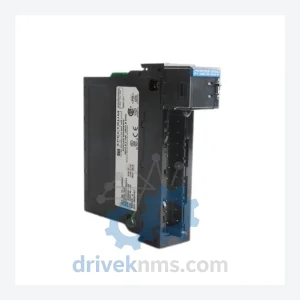
Honeywell TC-PPD011 Extension Battery Module – Obsolete Spare Part
Honeywell TC-PPD011 is listed for Controller Cards RFQ review. Confirm quantity, condition and destination before quotation.
RFQ-ready industrial model
Model: TK-PRS021
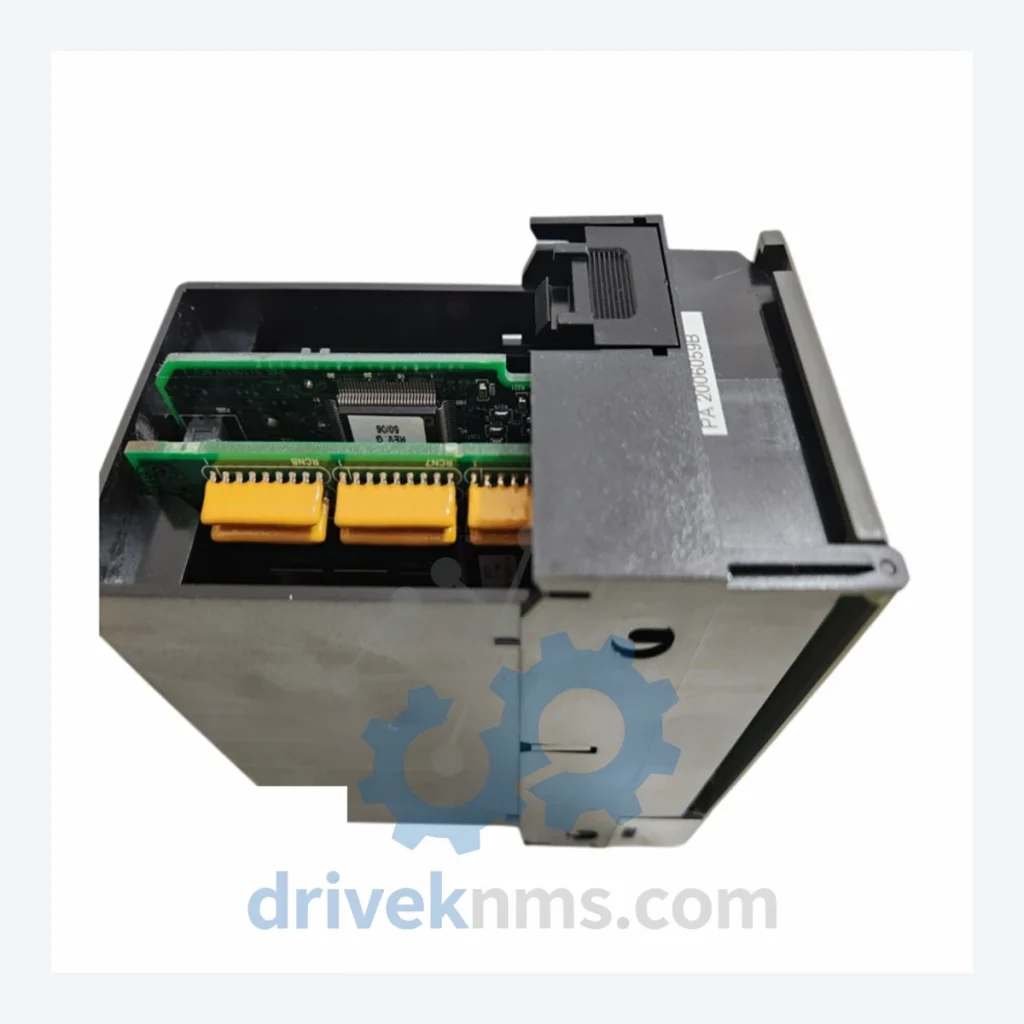
Product Overview
Commercial availability is handled through direct RFQ, model verification and export-oriented follow-up rather than public cart checkout.
Datasheet Preview
Use attached product manuals when available. If the manual is not public yet, request the full file directly through RFQ.
Commercial Path
Product pages on DRIVEKNMS are designed to verify model, brand and series first, then move the buyer into one clean quotation path.
Technical Dossier
The Honeywell TK-series, deployed under the TotalPlant Solution (TPS) and TDC 3000 distributed control system (DCS) platforms, represents one of the most widely installed process automation architectures in global heavy industry. Refineries, petrochemical complexes, nuclear power facilities, and LNG terminals across North America, Europe, and Asia-Pacific have relied on TK-series hardware for continuous process control since the 1980s. The installed base remains substantial: tens of thousands of nodes remain in active service, making spare parts availability a critical operational concern for plant engineers and maintenance managers worldwide.
The TK-PRS021 is a Control Processor Module within this ecosystem, responsible for executing control strategies, managing scan cycles, and coordinating data exchange across the Universal Control Network (UCN) and Local Control Network (LCN). Its role is central to loop execution integrity in TPS-based process units.
The TK-series hardware lineage traces directly to Honeywell's TDC 2000 platform (introduced 1975), which established the foundational concept of distributed process control. TDC 3000 followed in 1983, introducing the Local Control Network (LCN) as a high-speed token-passing data highway operating at 5 Mbps. The Universal Control Network (UCN) was subsequently introduced to connect field-level process managers to the LCN backbone.
Key architectural milestones include: the transition from AM (Application Module) to PM (Process Manager) as the primary controller node; the introduction of HPM (High-Performance Process Manager) for faster scan rates; and the eventual migration path toward Experion PKS (Process Knowledge System), Honeywell's current-generation DCS platform. TK-series modules are not natively compatible with Experion PKS without gateway hardware or full migration projects, creating a long-term dependency on original TK-series spare parts for sites that have not completed platform upgrades.
Compatibility considerations are significant: TK-series backplanes, power supplies, and communication modules are generation-specific. Mixing hardware revisions without firmware validation can cause node failures or scan cycle disruptions. Plants operating mixed TDC 3000 / TPS environments must maintain strict revision control across all replacement modules.
The following SKUs represent commonly sourced modules within the Honeywell TK / TPS / TDC 3000 ecosystem, organized by functional category:
Control Processors & Application Modules
I/O Modules — Analog
I/O Modules — Digital
Communication & Network Modules
Power Supply Modules
Honeywell formally transitioned TDC 3000 and TPS hardware to end-of-life status, with standard support and new manufacture discontinued for the majority of TK-series modules. This creates a structural supply gap for the large installed base that has not yet migrated to Experion PKS.
TK-series modules present specific testing challenges due to their proprietary backplane bus architecture and token-passing network communication protocols. Standard bench power-up procedures are insufficient to validate module functionality in isolation.
DriveKNMS applies the following verification procedures to all TK-series inventory:
All tested modules are issued a DriveKNMS inspection report documenting test date, firmware revision, and pass/fail results by test category.
Continue The Model Path
Move from this exact model into the matching system hub, brand archive, model-family archive or lifecycle sourcing route before sending a final RFQ list.
Related Paths
Honeywell TC-PPD011 is listed for Controller Cards RFQ review. Confirm quantity, condition and destination before quotation.
Honeywell T2798I-1000 is listed for T2000 Series RFQ review. Confirm quantity, condition and destination before quotation.
Honeywell MC-TDOY22 51204162-175 is listed for Controller Cards RFQ review. Confirm quantity, condition and destination before quotation.