
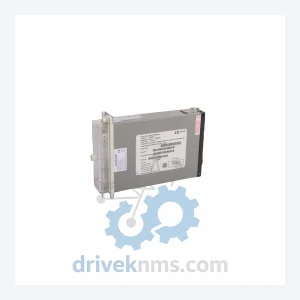
ALSTOM MVAJ105RA0802A Protection Relay – MiCOM Series
ALSTOM MVAJ105RA0802A Protection Relay: Supply Continuity Strategy for a Discontinued Critical Component The ALSTOM MVAJ105RA0802A is a numerical protection relay…
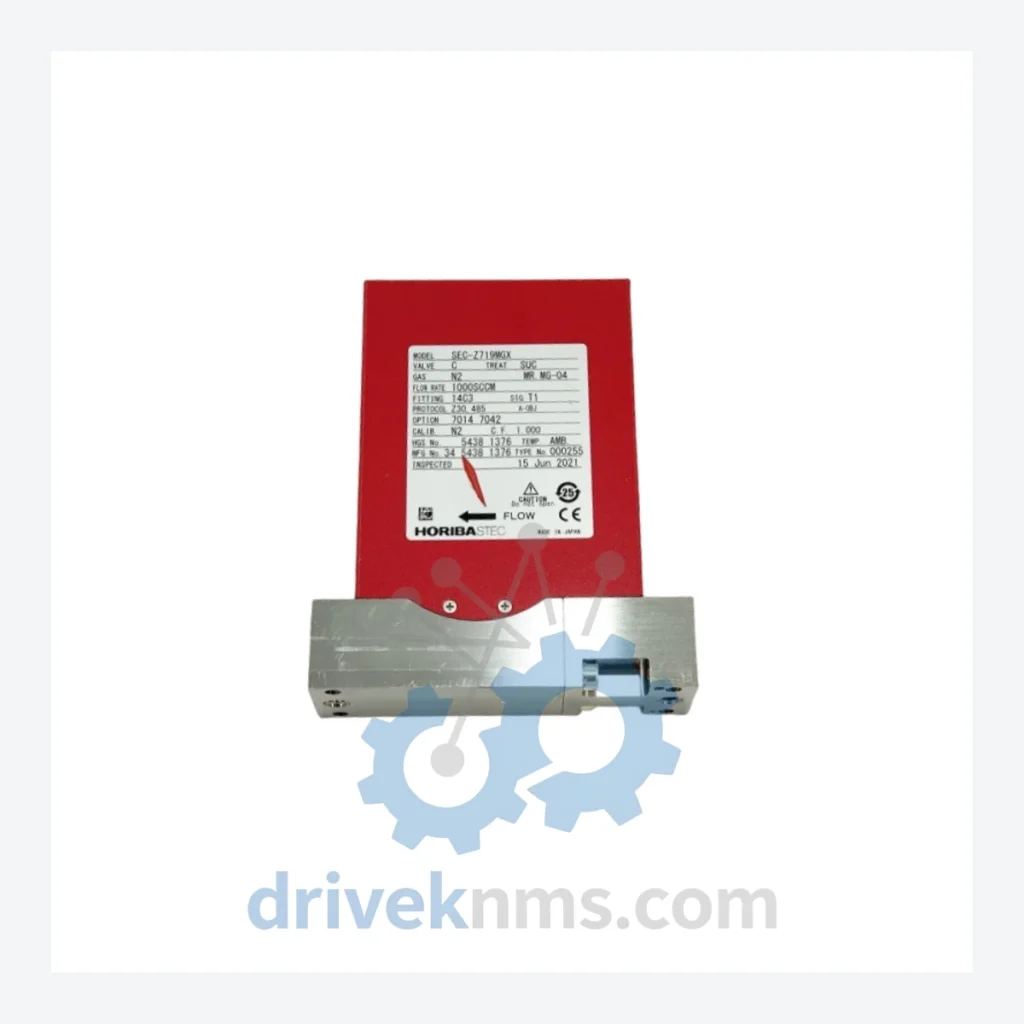
Model: SEC-Z719MGX SUR11HGBFRKG/W/US-100-IPF SU8000 4022.436.4502
Product Overview
Commercial availability is handled through direct RFQ, model verification and export-oriented follow-up rather than public cart checkout.
Datasheet Preview
Use attached product manuals when available. If the manual is not public yet, request the full file directly through RFQ.
Commercial Path
Product pages on DRIVEKNMS are designed to verify model, brand and series first, then move the buyer into one clean quotation path.
Technical Dossier
The HORIBA SEC-Z series represents one of the most widely deployed thermal mass flow controller (MFC) platforms in precision gas delivery applications across global heavy industry. Installed in semiconductor fabrication plants, chemical vapor deposition (CVD) systems, petrochemical processing facilities, nuclear fuel reprocessing plants, and specialty gas distribution networks, the SEC-Z platform has established a reference-grade position in process gas management. Its architecture supports a broad range of process gases — from inert carriers such as N₂ and Ar to corrosive and reactive species including HCl, HF, SiH₄, and NF₃ — making it a universal specification across OEM tool builders and end-user process engineers. The SEC-Z series is manufactured by HORIBA STEC Co., Ltd. (Japan), a subsidiary of HORIBA, Ltd., and is recognized under international metrology standards for flow accuracy and repeatability. Units in this series are found in installed bases dating from the mid-1990s through current production, with many facilities maintaining mixed-generation fleets requiring cross-compatible spare parts and calibration-matched replacements.
The SEC-Z series evolved from HORIBA STEC's earlier SEC-400 and SEC-4400 thermal MFC platforms, which used analog control signals (0–5 VDC, 4–20 mA) and discrete valve-driver circuitry. The SEC-Z generation introduced a modular body architecture with standardized VCR and C-Seal face-seal fittings, enabling direct drop-in replacement across tool generations without process line modification. Early SEC-Z units (circa 1995–2002) used analog setpoint interfaces and required external power supplies in the ±15 VDC range. Mid-generation variants introduced D-SUB 15-pin and later RS-485 digital communication options, allowing integration with distributed control systems (DCS) and programmable logic controllers (PLC) via MODBUS RTU. The SU8000 controller platform — referenced in the current SKU as part number 4022.436.4502 — represents the digital control board generation, providing on-board PID tuning, valve linearization, and gas correction factor (GCF) storage in non-volatile memory. Compatibility across generations is constrained primarily by the communication interface (analog vs. digital), body size (1/4" vs. 1/8" process port), and valve type (normally closed vs. normally open). Facilities migrating from analog SEC-Z units to digital SU8000-based variants must verify signal interface compatibility at the tool MFC driver card level. HORIBA has issued end-of-life (EOL) notices for several early SEC-Z configurations; however, the installed base remains large enough that aftermarket sourcing and refurbishment remain commercially viable through specialized distributors.
The following SKUs represent verified, commonly encountered configurations within the HORIBA SEC-Z series. Units are classified by functional role within a gas delivery system.
Digital Mass Flow Controllers (MFC) — Standard Range
Digital Mass Flow Controllers — Corrosive / Reactive Gas Configurations
Mass Flow Meters (MFM) — Non-Control Measurement
Controller / Interface Boards
DriveKNMS maintains a dedicated inventory program for HORIBA SEC-Z series units, including configurations that have reached end-of-life status with the OEM. The SEC-Z platform's long installed base — spanning semiconductor, chemical, and energy sectors — means that facilities frequently require exact-match replacements for units no longer available through standard distribution channels. DriveKNMS sources SEC-Z units through certified secondary market channels, including decommissioned tool lots, OEM overstock, and controlled refurbishment programs. Each unit is matched to the original part number, gas calibration species, full-scale range, and communication interface specification before dispatch. For SU8000-board variants, firmware version compatibility is verified against the customer's existing tool controller. Customers requiring long-term maintenance agreements (LTMAs) for SEC-Z fleets can contact DriveKNMS for multi-unit blanket sourcing contracts, which provide guaranteed availability windows for critical spare parts over 12–36 month periods. This service is particularly relevant for facilities operating legacy CVD, ALD, or etch tools where OEM support has been discontinued but process qualification prevents tool replacement.
All SEC-Z units processed by DriveKNMS undergo a structured inspection and functional verification protocol prior to shipment. The procedure addresses the specific failure modes common to thermal MFC technology and the SEC-Z body architecture: sensor drift due to contamination of the capillary bypass tube, valve seat wear in normally-closed solenoid assemblies, and communication board degradation in SU8000 digital units exposed to high-humidity environments. The QC sequence includes: (1) visual inspection of body, fittings, and connector for mechanical damage and contamination; (2) leak integrity test at 1.5× rated inlet pressure using inert gas (He or N₂) with mass spectrometer leak detection to <1×10⁻⁹ atm·cc/sec; (3) flow calibration verification at 0%, 25%, 50%, 75%, and 100% of full-scale range against a NIST-traceable primary flow standard; (4) valve response test — step input from 0% to 100% setpoint, rise time and overshoot recorded; (5) for SU8000 units, RS-485 communication handshake verification and GCF parameter read/write test. Units failing any criterion are either repaired to specification or quarantined. Calibration certificates are issued with each unit, documenting as-found and as-left flow accuracy data.
Related Paths
ALSTOM MVAJ105RA0802A Protection Relay: Supply Continuity Strategy for a Discontinued Critical Component The ALSTOM MVAJ105RA0802A is a numerical protection relay…
MOORE 16137 Series: Comprehensive Module Range and Technical Overview The MOORE 16137 Series represents a core component family within Moore…
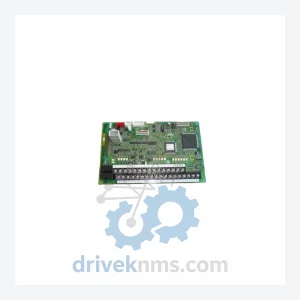
FUJI EP-3364B-CA-Z2 Inverter Control Board: Supply Continuity Strategy for a Discontinued Critical Spare The FUJI EP-3364B-CA-Z2 is a control board…