
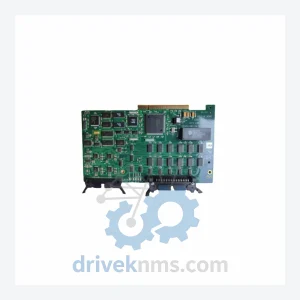
Hypertherm PCBS-0115 PCB Control Board – Powermax Series
Hypertherm PCBS-0115 is listed for Powermax Series RFQ review. Confirm quantity, condition and destination before quotation.
RFQ-ready industrial model
Model: PCBS-0057
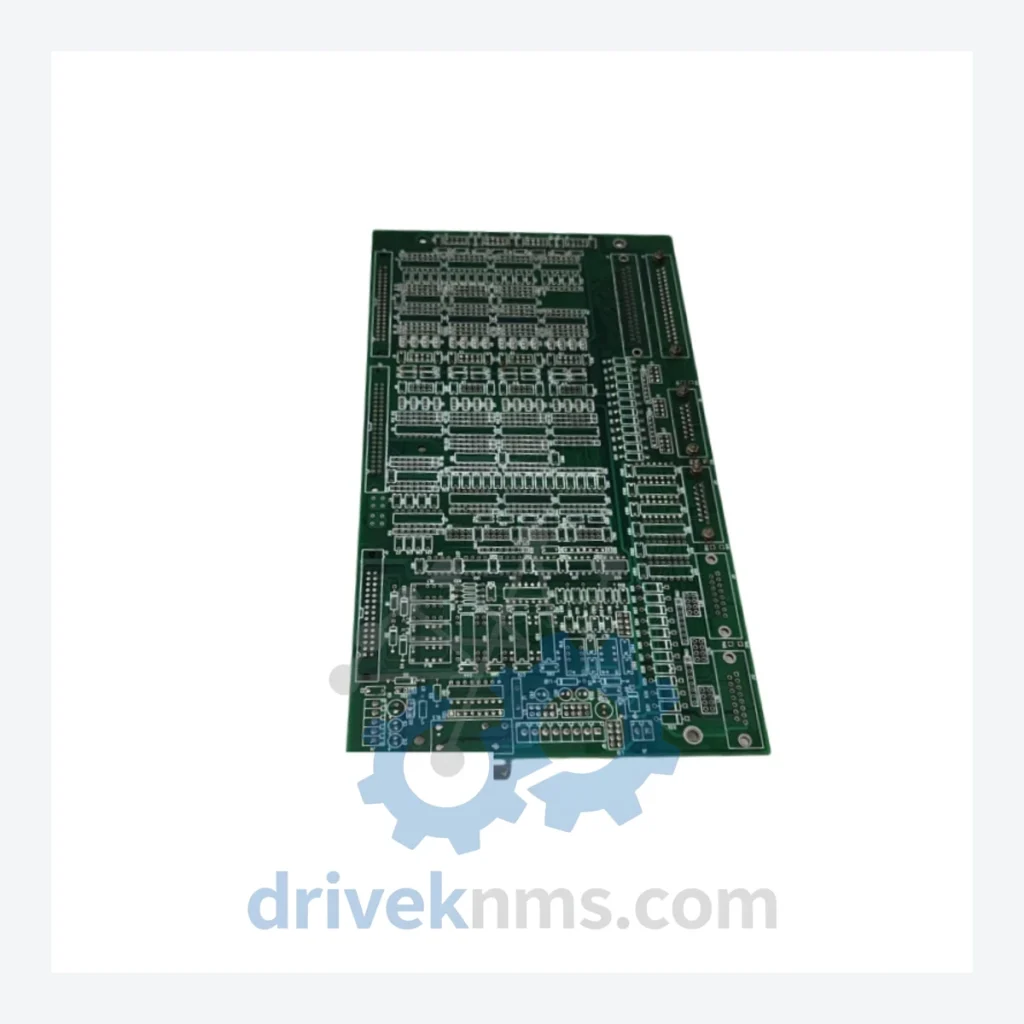
Product Overview
Commercial availability is handled through direct RFQ, model verification and export-oriented follow-up rather than public cart checkout.
Datasheet Preview
Use attached product manuals when available. If the manual is not public yet, request the full file directly through RFQ.
Commercial Path
Product pages on DRIVEKNMS are designed to verify model, brand and series first, then move the buyer into one clean quotation path.
Technical Dossier
RFQ support for obsolete parts: Send the model number, required quantity and destination so DriveKNMS can confirm sourcing options before quotation.
The PCBS-0057 serves as the communication bridge between the motion control processor and the servo drive outputs in Hypertherm's legacy H1-architecture plasma systems. In these machines, the servo I/O interface board is not a peripheral — it is the component through which all axis positioning commands and feedback signals pass. There is no software patch, no firmware workaround, and no field modification that substitutes for a functioning board when this component fails.
Hypertherm's legacy plasma cutting platforms remain in active production use across metal fabrication shops, shipyards, and heavy equipment manufacturers worldwide. Many of these facilities made capital investments in these systems during the 1990s and 2000s, and the machines themselves — frames, drives, gantries, torch assemblies — remain mechanically sound. The control electronics are the limiting factor.
For plant managers facing pressure to justify capital expenditure deferrals, a documented spare parts strategy built around components like the PCBS-0057 provides a concrete, auditable argument: the system can be maintained for a defined period at a fraction of replacement cost, provided critical spares are secured now while supply exists.
Facilities that successfully extend legacy plasma cutting system life by a decade share a common operational discipline: they treat control electronics as a managed consumable, not a fixed asset. The following approach applies to any facility operating Hypertherm legacy H1-architecture systems or comparable legacy CNC plasma platforms.
1. Failure Mode Mapping: Identify the three to five electronic assemblies most likely to cause system-level failure. For H1-architecture Hypertherm systems, the servo I/O interface board, the main CPU board, and the power supply regulation boards represent the highest-risk single points of failure — one failure grounds the machine.
2. Minimum Viable Spare Inventory: For each identified critical board, maintain a minimum of one verified spare on-site. For high-utilization machines running two or three shifts, two spares per critical assembly is the defensible standard. The carrying cost of a spare board is measured in hundreds or low thousands of dollars. The cost of a production stoppage while sourcing a discontinued part on the open market is measured in days of lost output.
3. Condition-Based Monitoring: Implement periodic inspection of control cabinet environments — temperature, humidity, and particulate contamination are the primary accelerants of PCB degradation in plasma cutting environments. Plasma cutting generates significant electromagnetic interference and metallic particulate. Control cabinets that are not properly sealed and filtered will degrade electronics at an accelerated rate.
5. Documentation and Traceability: Maintain a spare parts log that records part numbers, revision levels, acquisition dates, and supplier information. For legacy systems, this documentation becomes part of the asset's maintenance record and supports insurance, audit, and resale valuation processes.
DriveKNMS applies a structured five-step quality process to all obsolete PCB assemblies before dispatch.
Step 1 – Visual and Physical Inspection: Each board is examined under magnification for mechanical damage, solder joint integrity, component seating, and connector pin condition. Boards with corrosion, burn marks, or physical deformation are rejected at this stage.
Step 2 – Electrolytic Capacitor Assessment: Electrolytic capacitors are the component most likely to degrade with age in stored PCB assemblies. Each board is assessed for capacitor bulging, leakage, and ESR (equivalent series resistance) deviation. Boards with suspect capacitors are either recapped with specification-matched components or rejected.
Step 3 – Firmware and Revision Verification: Where applicable, firmware version and board revision markings are verified against known system compatibility records. The PCBS-0057 REV A designation is confirmed and documented.
Step 4 – Connector and Pin Integrity Check: All edge connectors, header pins, and terminal blocks are inspected for oxidation, bending, and contact resistance. Oxidized contacts are treated; boards with structurally compromised connectors are rejected.
Step 5 – Functional Verification: Where test equipment permits, boards undergo powered functional checks. Results are documented and available to the customer on request.
The PCBS-0057 REV A is an original OEM assembly. It is a direct, drop-in replacement for the failed or degraded board in your existing system. No hardware modification, no firmware re-flashing, and no control system reconfiguration is required beyond standard board swap procedures documented in the Hypertherm service manual for your platform.
A non-original or improperly specified replacement board introduces integration risk — potential signal timing mismatches, connector incompatibilities, or firmware conflicts that require engineering intervention to resolve. An original OEM board eliminates that risk. The machine returns to its validated operating state. Production resumes on the same shift.
Q: How do I know the board is genuine and not a counterfeit?
A: All boards supplied by DriveKNMS are sourced through documented supply channels. Physical markings, PCB layer construction, and component population are consistent with genuine Hypertherm OEM production. We do not source from unverified brokers. Documentation of provenance is available on request.
Q: Can this board be used in a different revision of the Hypertherm system?
A: Compatibility depends on your specific system model and control architecture. Contact us with your machine model and serial number and we will confirm compatibility before you commit to a purchase.
Continue The Model Path
Move from this exact model into the matching system hub, brand archive, model-family archive or lifecycle sourcing route before sending a final RFQ list.
Related Paths
Hypertherm PCBS-0115 is listed for Powermax Series RFQ review. Confirm quantity, condition and destination before quotation.
Hypertherm PCBS-0115/B is listed for MAX200 Series RFQ review. Confirm quantity, condition and destination before quotation.
Hypertherm PCI-4 AXIS MCC 3.3V is listed for Controller Cards RFQ review. Confirm quantity, condition and destination before quotation.