
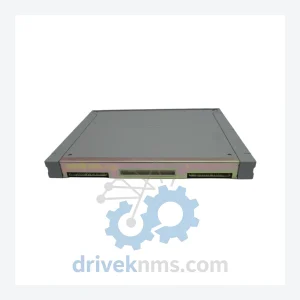
ICS T7411 Pressure Transmitter – Sensing Series
ICS Triplex T7411 is listed for Sensing Series RFQ review. Confirm quantity, condition and destination before quotation.
RFQ-ready industrial model
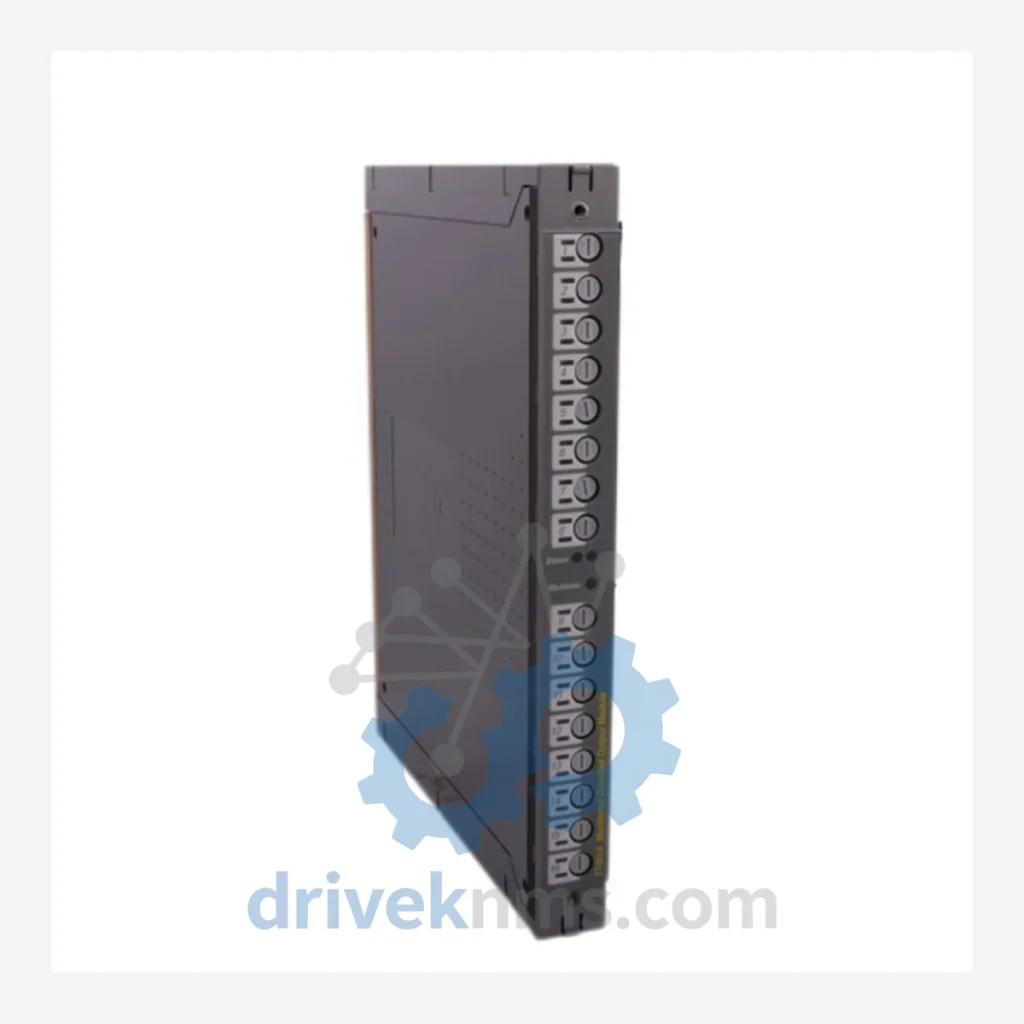
Model: T7481A
Product Overview
Commercial availability is handled through direct RFQ, model verification and export-oriented follow-up rather than public cart checkout.
Datasheet Preview
Use attached product manuals when available. If the manual is not public yet, request the full file directly through RFQ.
Commercial Path
Product pages on DRIVEKNMS are designed to verify model, brand and series first, then move the buyer into one clean quotation path.
Technical Dossier
RFQ support for obsolete parts: Send the model number, required quantity and destination so DriveKNMS can confirm sourcing options before quotation.
| Parameter | Detail |
|---|---|
| Part Number | T7481A |
| Manufacturer | ICS Triplex |
| Module Type | Monitored Guarded Output Module |
| Platform Compatibility | ICS Triplex TMR (Triple Modular Redundant) Safety Systems |
| OEM Discontinuation Status | Discontinued – No direct OEM replacement available |
| Condition Available | New surplus / Professionally refurbished |
| Country of Origin | United Kingdom |
Note: Electrical parameters (voltage ratings, channel count, output current) are not published here to prevent misapplication. Contact our technical team for full datasheet verification prior to ordering.
The ICS Triplex TMR architecture was engineered for high-integrity process safety applications — oil & gas, petrochemical, and power generation facilities where SIL 2 and SIL 3 rated protection is mandatory. The T7481A Monitored Guarded Output Module sits at the execution layer of that architecture: it receives voted logic from the TMR processor and drives final control elements (valves, actuators, shutdown relays) with continuous output monitoring to detect field-side faults before they become safety events.
Because the module performs both output driving and output monitoring in a single guarded circuit, it cannot be substituted with a generic digital output card. The monitoring feedback loop is integral to the SIL rating of the loop. Removing or substituting this module without a full re-validation exercise invalidates the safety case — a process that requires months of engineering effort and regulatory re-approval in most jurisdictions.
Facilities running ICS Triplex TMR systems built between the late 1990s and early 2010s face a specific operational reality: the OEM has been absorbed through multiple acquisition cycles (ICS Triplex → Rockwell Automation), and legacy module support has been progressively withdrawn. Sourcing T7481A units from qualified independent suppliers is the only path to maintaining system integrity without triggering a full platform replacement.
For plant managers and reliability engineers facing SIS retirement pressure, the following strategy has been applied successfully across multiple facilities to defer capital expenditure while maintaining full safety compliance:
2. Establish a minimum two-unit spare holding per critical module type. One unit in active service, one in climate-controlled storage. For facilities with multiple TMR cabinets, scale accordingly. The cost of two T7481A units is a fraction of one day of unplanned shutdown.
Q: How are RFQ terms confirmed?
A: Quantity, required condition, documentation needs, destination and sourcing route are confirmed during RFQ review before quotation.
5. Document your system configuration at the module level. Maintain records of firmware revisions, rack slot assignments, and loop assignments for every T7481A in service. This documentation is essential for rapid replacement and reduces the risk of configuration errors during emergency swap-outs.
Applied together, these measures have allowed facilities to operate legacy ICS Triplex TMR systems reliably for 8–12 years beyond the OEM's stated end-of-support date, at a total cost that is typically less than 5% of a full platform migration.
Every T7481A unit supplied by DriveKNMS passes a structured 5-stage quality process before dispatch:
Stage 1 – Visual and Mechanical Inspection: Full board inspection for physical damage, corrosion, burnt components, and connector pin integrity. Units with compromised backplane connectors are rejected at this stage.
Stage 2 – Electrolytic Capacitor Assessment: Capacitors are tested for ESR (equivalent series resistance) and capacitance drift. Aged capacitors that fall outside tolerance are replaced with specification-matched components. This is the most common failure mode in modules of this age.
Stage 3 – Firmware Version Verification: Where accessible, firmware revision is documented and cross-referenced against known compatible versions for the target TMR system. Mismatched firmware is flagged before dispatch review.
Stage 4 – Pin and Contact Cleaning: All edge connectors and I/O terminals are cleaned using appropriate contact-safe solvents and inspected under magnification for micro-corrosion that would cause intermittent faults in service.
Stage 5 – Functional Verification: Where test equipment permits, modules undergo powered functional checks. Results are documented and accompany the unit.
Drop-in replacement: The T7481A is a direct slot-compatible replacement for existing ICS Triplex TMR chassis. No rack modification, no wiring changes.
No reprogramming required: Safety logic resides in the TMR processor, not the output module. Replacing the T7481A does not require any changes to the safety application program, eliminating the need for re-validation of the application layer.
Avoids engineering reconstruction costs: A platform migration to a current-generation SIS requires full HAZOP review updates, SIL verification recalculation, factory acceptance testing, and site acceptance testing. Maintaining the existing platform with verified spare modules avoids this entire cost structure.
Maintains existing safety certification: Replacing a like-for-like module within a certified SIS does not invalidate the system's functional safety certification, provided the replacement unit meets the original specification — which DriveKNMS verifies through its QA process.
Q: How do I know the unit is genuine and not counterfeit?
A: All units are sourced through traceable supply channels. Physical markings, board revision, and component configuration are cross-referenced against known genuine units. We do not supply units that fail authentication checks.
Q: Can you supply documentation with the unit?
A: Where available, we provide test records, firmware version documentation, and inspection reports. Original OEM documentation (datasheets, installation manuals) can be sourced separately upon request.
Continue The Model Path
Move from this exact model into the matching system hub, brand archive, model-family archive or lifecycle sourcing route before sending a final RFQ list.
Related Paths
ICS Triplex T7411 is listed for Sensing Series RFQ review. Confirm quantity, condition and destination before quotation.
ICS Triplex T8293C is listed for Trusted RFQ review. Confirm quantity, condition and destination before quotation.
ICS Triplex T8314 is listed for Trusted RFQ review. Confirm quantity, condition and destination before quotation.