
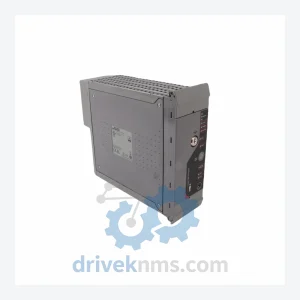
ICS Triplex Trusted TMR T8111C Modules
ICS Triplex T8111C is listed for Trusted RFQ review. Confirm quantity, condition and destination before quotation.
RFQ-ready industrial model
Model: T8293C
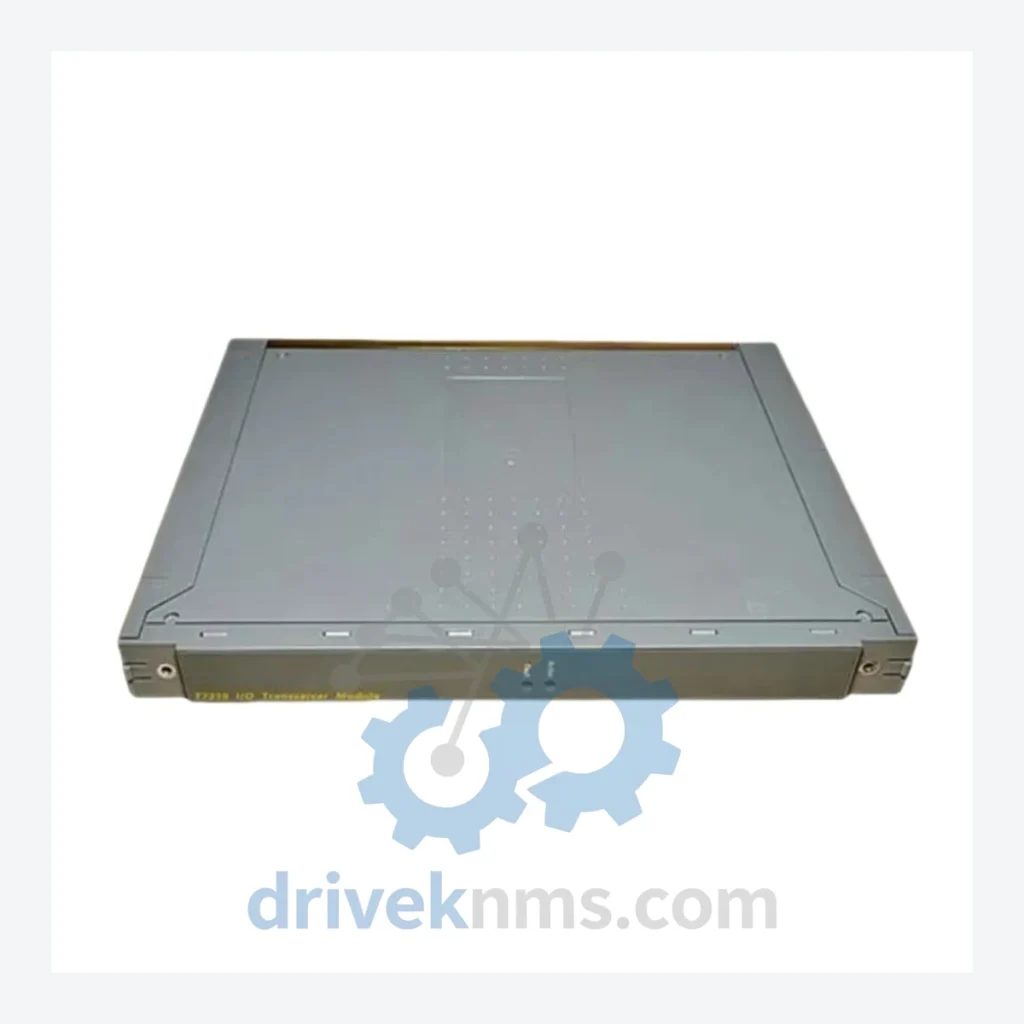
Product Overview
Commercial availability is handled through direct RFQ, model verification and export-oriented follow-up rather than public cart checkout.
Datasheet Preview
Use attached product manuals when available. If the manual is not public yet, request the full file directly through RFQ.
Commercial Path
Product pages on DRIVEKNMS are designed to verify model, brand and series first, then move the buyer into one clean quotation path.
Technical Dossier
The T8000 platform was introduced by ICS Triplex (later acquired by Rockwell Automation) as a successor to the earlier Trusted T3000 and T4000 controller families. The initial T8000 release standardized the backplane bus architecture around a high-speed serial communication fabric, replacing the parallel bus topology of predecessor systems and significantly increasing inter-module bandwidth while reducing susceptibility to common-cause electrical noise failures.
Early T8000 deployments used dedicated point-to-point wiring between I/O modules and field termination assemblies (FTAs). Subsequent revisions introduced marshalled and smart FTA options, reducing panel wiring density and enabling remote I/O marshalling. The communication adapter range expanded over successive generations to support PROFIBUS DP, Modbus RTU/TCP, Foundation Fieldbus H1, and OPC DA/UA gateway interfaces, allowing the T8000 to integrate into heterogeneous plant automation networks without protocol conversion middleware.
As the platform entered its mature lifecycle phase — with ICS Triplex's product roadmap consolidated under Rockwell Automation's Process Systems division — the T8000 transitioned from active development to sustained support status. New greenfield SIS projects are increasingly specified on the Rockwell Automation AADvance or Triconex platforms; however, the installed base of T8000 systems in brownfield facilities remains substantial, and the economic case for platform migration in mid-life plants is rarely justified. This creates a long-term demand for T8000 spare parts, repair services, and lifecycle extension support that extends well beyond the original manufacturer's active production window.
The following SKUs represent the core module population of the ICS Triplex T8000 platform. Each entry reflects a distinct hardware function within the TMR architecture. Modules are organized by functional category.
Power Distribution & System Infrastructure
Central Processing & Controller Modules
Digital Input Modules
Digital Output Modules
Analog Input Modules
Analog Output Modules
Communication & Network Adapters
The T8000 platform's TMR architecture introduces specific test requirements that differ from standard single-channel PLC modules. Each module contains three independent processing or signal-conditioning circuits that must be verified individually and in combination. DriveKNMS applies the following test protocol to all T8000 modules processed through its facility:
Power modules (including the T8293C) are tested under full rated load across the complete input voltage range. Output voltage regulation, ripple, and transient response are measured and compared against the original product specification. Hot-swap insertion and removal sequences are simulated to verify that backplane bus protection circuits operate correctly.
Digital I/O modules are tested with active field simulation: each input channel is exercised with a calibrated signal source, and output channels are loaded with resistive loads at rated current. Diagnostic functions — including open-wire detection and short-circuit protection — are verified per channel.
Analog modules are calibrated using traceable reference standards. Gain, offset, linearity, and common-mode rejection are measured across the full input range. HART communication pass-through is verified using a HART field communicator.
CPU and communication modules are powered in a live T8000 chassis and subjected to a functional burn-in period. Application logic execution, inter-module communication, and network interface operation are verified before any unit is released to inventory.
Continue The Model Path
Move from this exact model into the matching system hub, brand archive, model-family archive or lifecycle sourcing route before sending a final RFQ list.
Related Paths
ICS Triplex T8111C is listed for Trusted RFQ review. Confirm quantity, condition and destination before quotation.
ICS Triplex T8151 is listed for Trusted RFQ review. Confirm quantity, condition and destination before quotation.
ICS Triplex T8314 is listed for Trusted RFQ review. Confirm quantity, condition and destination before quotation.