
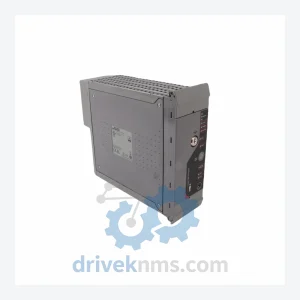
ICS Triplex Trusted TMR T8111C Modules
ICS Triplex T8111C is listed for Trusted RFQ review. Confirm quantity, condition and destination before quotation.
RFQ-ready industrial model
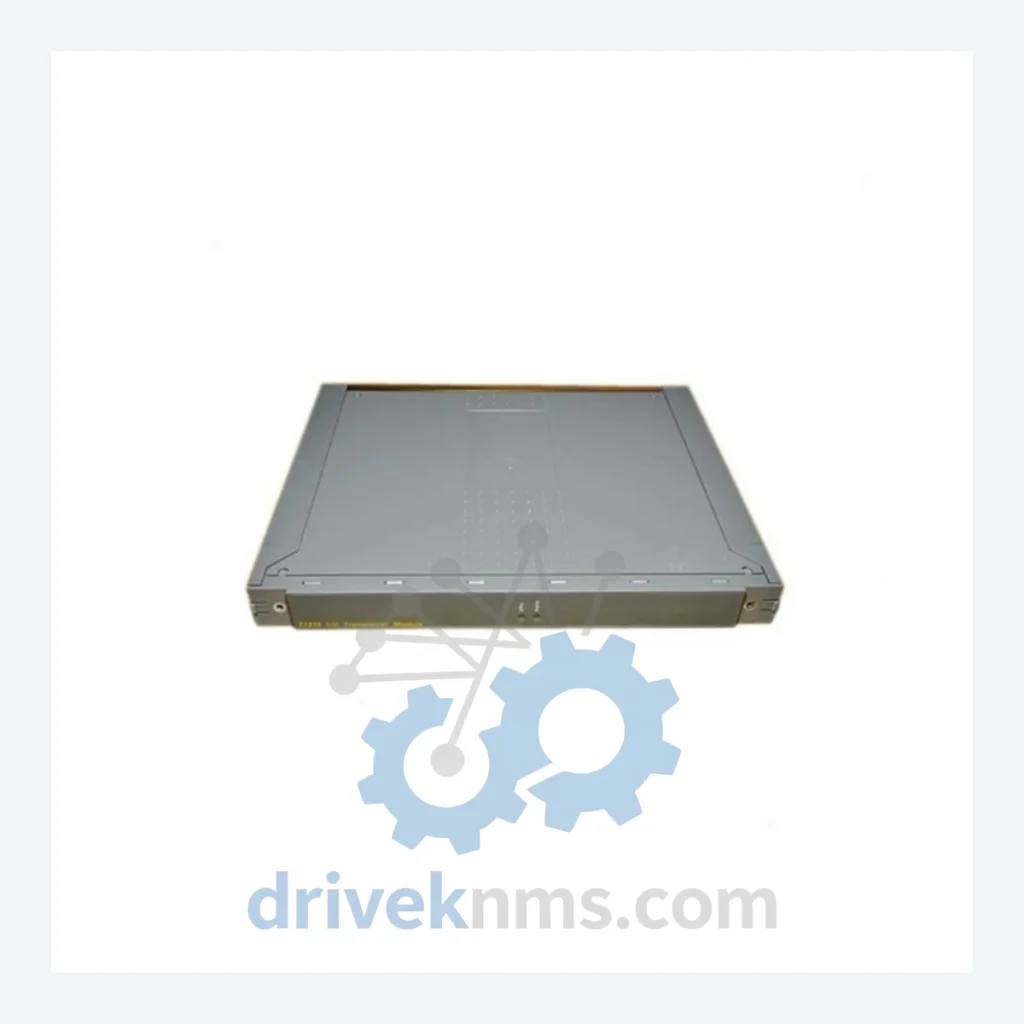
Model: T9100
Product Overview
Commercial availability is handled through direct RFQ, model verification and export-oriented follow-up rather than public cart checkout.
Datasheet Preview
Use attached product manuals when available. If the manual is not public yet, request the full file directly through RFQ.
Commercial Path
Product pages on DRIVEKNMS are designed to verify model, brand and series first, then move the buyer into one clean quotation path.
Technical Dossier
The ICS Triplex T9100 Processor Base Unit is a core component of the Trusted TMR (Triple Modular Redundancy) safety system platform, engineered for continuous operation in high-consequence industrial environments. The Trusted series holds a significant installed base across global heavy industry sectors including petrochemical complexes, offshore oil and gas platforms, nuclear power generation facilities, and refinery process units. Its TMR architecture — executing three independent processing channels simultaneously and voting on outputs — meets IEC 61508 SIL 3 and IEC 61511 requirements, making it a mandated choice in safety instrumented systems (SIS) where process shutdown failure is not acceptable. The T9100 base unit serves as the chassis backbone into which all functional modules are seated, providing the backplane bus, power distribution rails, and inter-module communication pathways for the entire controller node.
ICS Triplex introduced the Trusted platform in the early 1990s as a successor to its earlier fault-tolerant relay-based and first-generation digital safety systems. The T9100 processor base unit was designed around a VMEbus-derived backplane architecture adapted for TMR redundancy, with three physically isolated processing lanes (A, B, C) that share no common-cause failure paths at the hardware level. Early revisions of the T9100 operated with the T9110 processor module running at lower clock speeds and supported a limited I/O module count per chassis. Subsequent hardware revisions expanded the backplane slot count, increased inter-module communication bandwidth, and introduced compatibility with the T9310 and T9320 communication adapter modules for integration with DCS hosts via MODBUS, PROFIBUS, and later OPC-DA interfaces.
The T9100 platform entered its maturity phase in the 2000s, with Rockwell Automation acquiring ICS Triplex in 2007 and continuing to support the Trusted product line under the Allen-Bradley brand umbrella. Post-acquisition firmware updates extended compatibility with ControlLogix-based supervisory systems. As of 2026, the T9100 base unit and associated modules are classified as mature/end-of-active-production, with Rockwell Automation providing lifecycle extension support under its Installed Base Evaluation (IBE) program. Replacement migration paths lead to the Allen-Bradley Trusted T9800 series and the AADvance T9110 controller platform. For sites committed to long-term T9100 operation, third-party MRO suppliers such as DriveKNMS provide certified refurbished and new-surplus inventory to bridge the gap between OEM discontinuation and planned plant turnarounds.
The following SKUs represent verified, commonly stocked modules within the ICS Triplex Trusted T9100 ecosystem. Each entry reflects a distinct functional role within the TMR architecture:
T9100: Processor base unit chassis; TMR backplane with power and bus distribution rails.
T9110: TMR processor module; triple-redundant CPU executing voted logic for SIL 3 SIS applications.
T9120: Processor memory module; extended RAM for large logic programs and historian buffering.
T9130: Power supply module; redundant 24 VDC input with internal fault detection and isolation.
T9140: Chassis power distribution module; routes conditioned power to all backplane slots.
T9200: Digital input (DI) module; 24-channel, 24 VDC, TMR voted discrete input acquisition.
T9210: Digital output (DO) module; 16-channel, solid-state relay output with diagnostics.
T9220: Analog input (AI) module; 8-channel, 4–20 mA HART-compatible, TMR signal processing.
T9230: Analog output (AO) module; 4-channel, 4–20 mA, with open-loop fault detection.
T9240: Thermocouple input module; 8-channel, multi-type TC, cold junction compensation.
T9250: RTD input module; 8-channel, PT100/PT1000, 3-wire and 4-wire configurations.
T9300: Communication interface module; serial RS-232/RS-485 MODBUS RTU/ASCII gateway.
T9310: PROFIBUS DP communication adapter; master/slave configurable for DCS integration.
T9320: Ethernet communication module; Modbus TCP and OPC-DA server for SCADA connectivity.
T9330: Redundant communication bus module; inter-chassis TMR data synchronization link.
T9400: Pulse input module; 4-channel, frequency/speed measurement for turbine and flow applications.
T9500: Solenoid driver output module; 24 VDC, high-current DO for ESD valve actuation.
The TMR architecture of the T9100 series imposes specific testing requirements that differ from standard single-channel PLC modules. DriveKNMS applies a structured verification protocol to all T9100 series units prior to dispatch. Processor modules (T9110, T9120) are bench-tested using a live T9100 base unit chassis to verify all three processing lanes initialize correctly, cross-channel voting logic is functional, and no latent faults are present in the backplane communication bus. I/O modules are tested under simulated field signal conditions: DI modules are verified for correct threshold detection across all 24 channels; AI modules are calibrated against a traceable 4–20 mA reference source; DO and AO modules are load-tested to confirm output accuracy and fault-detection circuit integrity. Communication modules (T9300, T9310, T9320) are validated for correct protocol handshake, data frame integrity, and error-rate performance under continuous traffic. All tested units are documented with a test record and shipped with anti-static packaging and humidity indicators.
Continue The Model Path
Move from this exact model into the matching system hub, brand archive, model-family archive or lifecycle sourcing route before sending a final RFQ list.
Related Paths
ICS Triplex T8111C is listed for Trusted RFQ review. Confirm quantity, condition and destination before quotation.
ICS Triplex T8310C is listed for Trusted RFQ review. Confirm quantity, condition and destination before quotation.
ICS Triplex T8310 is listed for TMR RFQ review. Confirm quantity, condition and destination before quotation.