ICS Triplex TMR

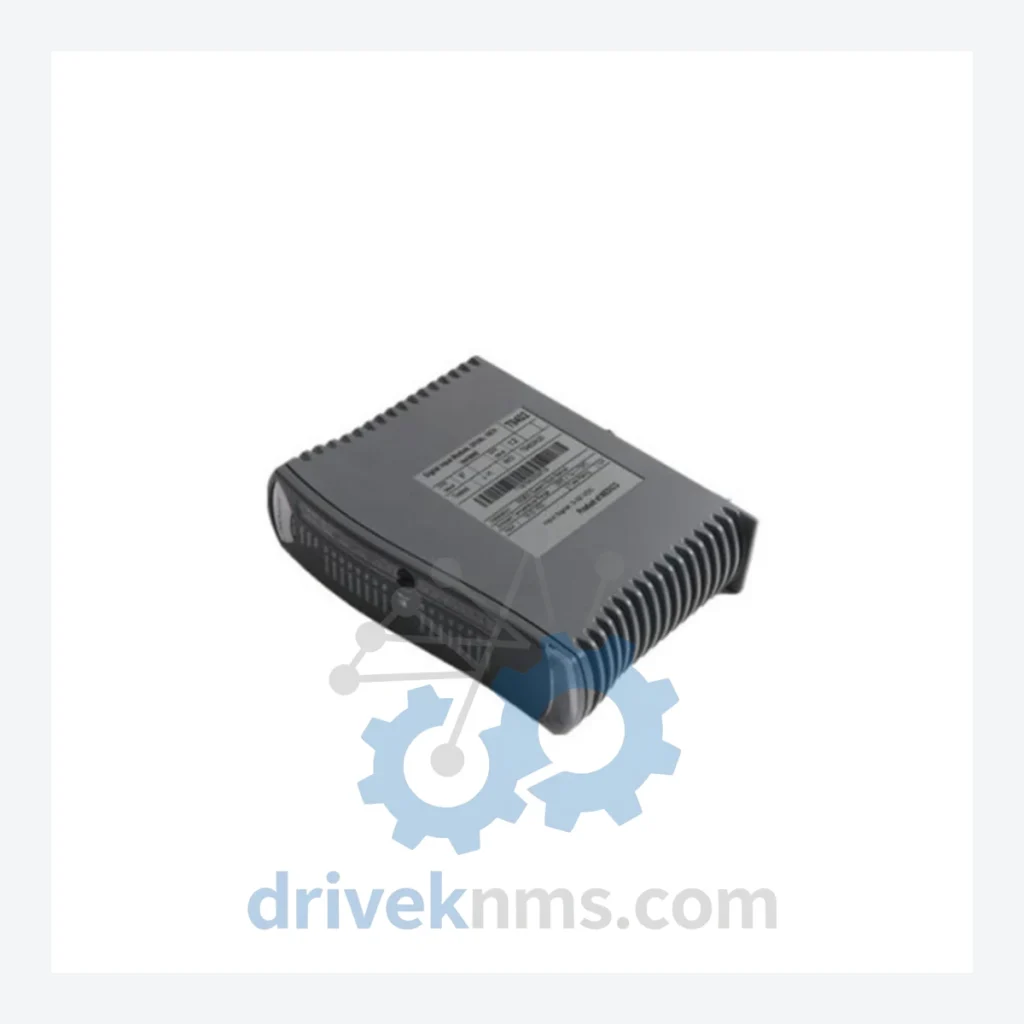
ICS Triplex T9832 Analogue Input Module – Obsolete TMR Spare Part

Model: T9832

Brand ICS Triplex
Series TMR
Model T9832
RFQ-ready model route Obsolete and surplus sourcing Export follow-up by model list

Product Overview

Commercial availability is handled through direct RFQ, model verification and export-oriented follow-up rather than public cart checkout.

Datasheet Preview

Datasheet Preview

Use attached product manuals when available. If the manual is not public yet, request the full file directly through RFQ.

Request Full Manual

Commercial Path

Use This Page To Confirm The Model, Then Move To RFQ

Product pages on DRIVEKNMS are designed to verify model, brand and series first, then move the buyer into one clean quotation path.

Technical Dossier

Product Details And Specifications

ICS Triplex T9832 Analogue Input Module – Obsolete TMR Spare Part

When the T9832 Analogue Input Module fails in a Triple Modular Redundancy (TMR) safety system, the consequences extend far beyond a single line stoppage. ICS Triplex TMR architectures are deeply embedded in high-hazard process industries — oil & gas, petrochemical, and power generation — where a forced system retirement triggered by one unavailable module can demand capital expenditure in the range of USD 2–5 million for a full Safety Instrumented System (SIS) overhaul. Engineering re-validation, new I/O mapping, updated functional safety documentation, and production downtime compound that figure further.

DriveKNMS maintains verified stock of the T9832 for facilities that cannot afford to treat a single module failure as a decommissioning event. This is not a catalogue listing — it is a supply chain contingency for asset managers who understand the true cost of unplanned system retirement.

Technical Specifications

Parameter Detail
Part Number T9832
Manufacturer ICS Triplex
Module Type Analogue Input Module
Architecture TMR (Triple Modular Redundancy)
Compatible System ICS Triplex TMR Safety System (Trusted® Platform)
Country of Origin United Kingdom
Product Status Discontinued / Obsolete – No longer manufactured
Replacement Availability No direct OEM equivalent; legacy stock only

Note: Electrical parameters (channel count, input range, resolution, power consumption) are not published here to avoid inaccuracy. Confirmed specifications are provided upon request alongside the unit's documentation package.

Solving the Discontinued Hardware Crisis

The ICS Triplex Trusted® TMR platform was engineered for continuous operation in Safety Integrity Level (SIL) 2 and SIL 3 environments. Its fault-tolerant architecture — three independent processing channels with voted outputs — made it the preferred SIS backbone for refineries and offshore platforms throughout the 1990s and 2000s. That same architectural depth is now its Achilles heel in the spare parts market: the system is too integrated to upgrade piecemeal, and too safety-critical to run with unverified substitute hardware.

The T9832 Analogue Input Module sits at the field interface layer of this architecture, conditioning signals from transmitters and sensors before they reach the voting logic. A degraded or failed T9832 does not simply reduce system capacity — in a TMR configuration, it can force the system into a 2oo2 voting state, eliminating the redundancy margin that justifies continued SIL certification. Facilities operating under IEC 61511 have a documented obligation to maintain that margin.

Sourcing a verified T9832 from DriveKNMS is not a workaround. It is the lowest-risk, lowest-cost path to restoring the system to its validated state without triggering a Management of Change (MOC) process or a new functional safety assessment.

How to extend your ICS Triplex TMR system life by 5–10 years without a full replacement:

  • Maintain a module-level spare inventory. Identify the five highest-failure-probability modules in your chassis — typically analogue I/O and power supply cards — and hold at least one verified spare of each. The carrying cost of three to five modules is a fraction of a single unplanned shutdown day.
  • Implement a scheduled proof-test rotation. Pull and bench-test analogue input modules on a 3–5 year cycle. Modules that pass can be returned to service; those showing drift or degraded isolation are retired before they cause a spurious trip or a dangerous failure.
  • Audit firmware versions across the chassis. Mixed firmware revisions in a TMR system can introduce subtle voting inconsistencies. Confirm that replacement modules match the firmware baseline of the installed system before energising.
  • Document every module swap in your safety case. Replacing a like-for-like module with a verified spare is a minor change under most functional safety management systems, but it must be recorded. Undocumented swaps create audit exposure and can invalidate your SIL certification at the next assessment.
  • Engage a specialist supplier early. The window for sourcing obsolete TMR modules narrows every year as installed base units are scrapped. Facilities that establish a supply relationship before a failure event have significantly more negotiating leverage and lead-time flexibility than those sourcing under emergency conditions.

Condition & Reliability Assurance

Obsolete modules sourced from secondary markets carry inherent risk. DriveKNMS applies a structured 5-step qualification process to every T9832 unit before it is offered for sale:

  1. Visual and mechanical inspection. Full examination of the PCB, connector pins, and housing for corrosion, mechanical damage, and evidence of prior rework or counterfeit indicators.
  2. Electrolytic capacitor assessment. Analogue input modules of this generation rely on electrolytic capacitors with a finite service life. Each unit is assessed for capacitor bulging, leakage, and ESR degradation. Units with suspect capacitors are either recapped with specification-matched components or rejected.
  3. Pin and connector integrity check. Gold-plated connector pins are inspected under magnification for oxidation, fretting corrosion, and mechanical deformation. Pins that do not meet contact resistance thresholds are not cleared for sale.
  4. Firmware version verification. Where accessible, firmware revision is read and documented. This information is provided to the buyer to support compatibility verification against the target chassis.
  5. Functional power-on test. Units are powered and observed for correct initialisation behaviour. Modules that fail to initialise cleanly or exhibit abnormal current draw are rejected regardless of visual condition.

Units that complete all five stages are classified as Tested Surplus and shipped with a condition report. Units of confirmed new-in-box provenance are classified as New Surplus and documented accordingly.

Key Features for System Maintenance

  • Drop-in replacement. The T9832 installs directly into the existing chassis slot. No backplane modification, no re-wiring, no changes to the field termination assembly.
  • No reprogramming required. The module's configuration is held in the system controller, not in the module itself. Swapping a verified T9832 does not require an engineer to re-enter I/O parameters or reconfigure the safety logic.
  • MOC footprint is minimal. A like-for-like module replacement with a verified spare is the smallest possible change in a functional safety management system. It avoids the engineering hours, documentation burden, and production hold that accompany any hardware architecture change.
  • Preserves SIL certification basis. Introducing an unvalidated substitute module — or migrating to a different platform — requires a new functional safety assessment. A verified T9832 keeps the system within its existing certification boundary.
  • Eliminates forced capital expenditure. The alternative to a verified spare is a system retirement that was not budgeted, not planned, and not timed to align with the facility's turnaround schedule.

FAQ

Q: What warranty applies to an obsolete module like the T9832?
A: DriveKNMS provides a 12-month warranty against defects in the unit as supplied. Warranty claims are assessed against the condition report issued at the time of sale. Units that have been installed in a system with known electrical faults or operated outside their rated environment are assessed on a case-by-case basis.

Q: How do I confirm the unit is genuine and not counterfeit?
A: Every T9832 supplied by DriveKNMS is inspected against known genuine reference units for label format, PCB markings, component placement, and construction quality. A provenance statement is included with each shipment. Buyers are encouraged to request photographs of the specific unit prior to purchase.

Q: Should I buy more than one unit?
A: For any facility with more than one T9832 installed, holding at least one verified spare is a minimum prudent position. For facilities with three or more units in service, a two-spare policy is defensible given the narrowing availability window. The cost of a second spare module is not comparable to the cost of a second sourcing emergency.

Q: Can DriveKNMS source other ICS Triplex TMR modules?
A: Yes. DriveKNMS maintains sourcing relationships for the broader ICS Triplex Trusted® platform. Enquiries for specific part numbers are handled individually — contact us with your full bill of materials if you are building a comprehensive spare parts inventory.

© 2026 DriveKNMS. All trademarks belong to their respective owners. Specifications are for reference only and subject to change without notice. Verify all parameters against official documentation before installation.