
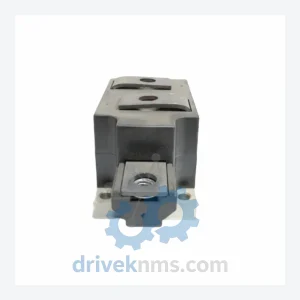
Infineon TT-N Series Thyristor Modules TT210N14KOF
Infineon Technologies TT210N14KOF is listed for Infineon TT-N Series Thyristor RFQ review. Confirm quantity, condition and destination before quotation.
RFQ-ready industrial model
Model: FZ450R12KE3
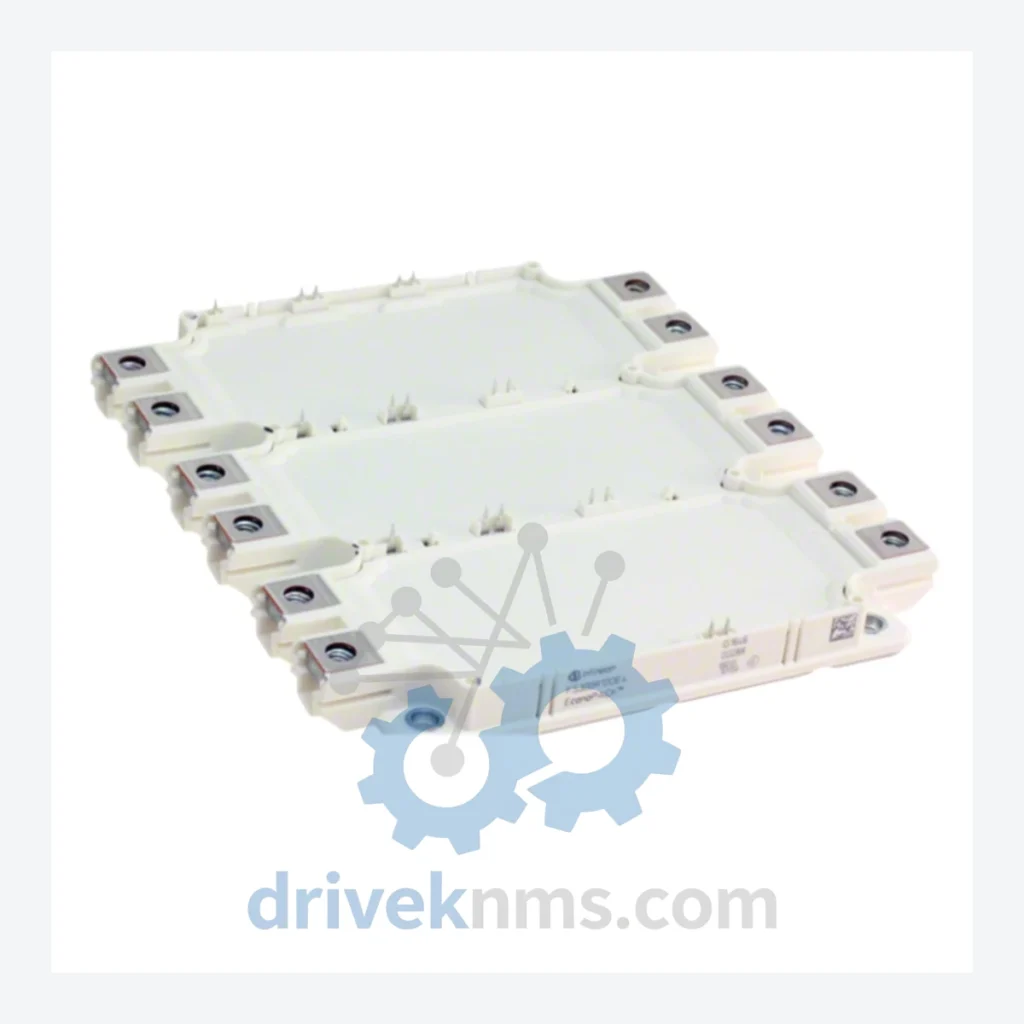
Product Overview
Commercial availability is handled through direct RFQ, model verification and export-oriented follow-up rather than public cart checkout.
Datasheet Preview
Use attached product manuals when available. If the manual is not public yet, request the full file directly through RFQ.
Commercial Path
Product pages on DRIVEKNMS are designed to verify model, brand and series first, then move the buyer into one clean quotation path.
Technical Dossier
RFQ support for obsolete parts: Send the model number, required quantity and destination so DriveKNMS can confirm sourcing options before quotation.
| Parameter | Value |
|---|---|
| Part Number | FZ450R12KE3 |
| Manufacturer | Infineon Technologies (formerly Eupec) |
| Series | PrimePACK™ 2 |
| Module Type | IGBT Power Module (Dual / Half-Bridge) |
| Collector-Emitter Voltage (VCES) | 1200 V |
| Continuous Collector Current (IC) | 450 A |
| Package | PrimePACK™ 2 |
| Country of Origin | Germany |
| Discontinuation Status | Discontinued by Infineon – No longer in production |
| Typical Legacy Systems | Siemens SINAMICS / SIMOVERT series drives, ABB ACS800 / ACS6000 series, industrial traction inverters, high-power UPS |
Note: Electrical parameters listed above are sourced from the original Infineon datasheet. No parameters have been estimated or extrapolated. If you require the full datasheet, contact us directly.
The FZ450R12KE3 was a cornerstone component in a generation of high-power industrial drives deployed between the late 1990s and mid-2010s. Systems built around this module — including Siemens SINAMICS S120 cabinet units, SIMOVERT Masterdrives, and equivalent ABB and Rockwell platforms — were engineered for 20–30 year service lives. The power electronics, however, were not designed with parts obsolescence in mind.
When Infineon transitioned its PrimePACK lineup to newer generations, the FZ450R12KE3 was phased out without a pin-compatible successor. The newer EconoPACK+ and PrimePACK 3 variants carry different footprints, gate drive requirements, and thermal interface specifications. Substitution is not a matter of swapping a part number — it requires gate driver redesign, thermal management recalculation, and in many cases, firmware-level adjustments to the drive controller. For a plant running 24/7 operations, this is not a maintenance task. It is a capital project.
How to Extend Automation Asset Life by 5–10 Years Through Critical Spare Parts Management
For plant managers facing pressure to defer capital expenditure on aging drive systems, a structured spare parts strategy is the most cost-effective path forward. The following approach has been applied successfully across petrochemical, cement, steel, and municipal water treatment facilities:
1. Failure Mode Mapping: Identify the two or three components in each drive system that, if failed, would render the entire unit non-operational. For systems using the FZ450R12KE3, the IGBT module itself is the primary single point of failure. Secondary candidates include gate driver boards and DC bus capacitor banks.
4. Vendor Qualification for Obsolete Parts: The secondary market for discontinued power electronics contains a significant volume of counterfeit and misrepresented product. Procurement teams should require documented inspection records, not just a certificate of conformance, from any supplier of discontinued IGBT modules.
5. Lifecycle Documentation: Maintain a living document for each critical drive system that records the installed module's serial number, installation date, cumulative operating hours, and thermal history. This data supports both maintenance planning and any future engineering assessment of the system's remaining service life.
Every FZ450R12KE3 unit dispatched by DriveKNMS passes through a five-stage inspection protocol developed specifically for discontinued power semiconductor modules:
Stage 1 – Visual and Mechanical Inspection: Full examination of the module housing, terminal pins, and mounting surface. Pin corrosion, case cracking, and evidence of prior thermal events are grounds for rejection at this stage.
Stage 2 – Electrolytic Capacitor Assessment: Where applicable in associated gate driver assemblies, electrolytic capacitors are evaluated for ESR drift and capacitance loss — the primary aging mechanism in power electronics stored beyond five years.
Stage 3 – Insulation and Dielectric Integrity: Hi-pot testing verifies that the isolation between the power terminals and the baseplate meets the original specification. Degraded isolation is a safety-critical failure mode that visual inspection alone cannot detect.
Stage 4 – Firmware and Marking Verification: The module's date codes, lot markings, and any embedded identification are cross-referenced against known authentic Infineon production records to screen for counterfeit product.
Stage 5 – Functional Verification: Where test equipment permits, static gate-emitter and collector-emitter characteristics are measured and compared against the original datasheet parameters.
Units that do not pass all five stages are not offered for sale. Inspection records are available to qualified buyers upon request.
The FZ450R12KE3 is a direct physical and electrical replacement for the original installed module in compatible drive systems. No gate driver redesign is required. No firmware modifications are needed. No mechanical adaptation is necessary. The module mounts to the existing heatsink using the original fastener pattern and connects to the existing bus bars and gate driver interface without modification.
How do I know the unit is genuine and not counterfeit?
Each unit is inspected against known Infineon production markings and date code formats as part of our Stage 4 verification process. Buyers with specific authentication requirements are encouraged to contact us to discuss inspection documentation before purchase.
Continue The Model Path
Move from this exact model into the matching system hub, brand archive, model-family archive or lifecycle sourcing route before sending a final RFQ list.
Related Paths
Infineon Technologies TT210N14KOF is listed for Infineon TT-N Series Thyristor RFQ review. Confirm quantity, condition and destination before quotation.
Infineon Technologies 1734-ADN is listed for Infineon DD-Series Diode RFQ review. Confirm quantity, condition and destination before quotation.
Alstom MVAJ105RA0802A is listed for MiCOM Series RFQ review. Confirm quantity, condition and destination before quotation.