INTEGRAL Technologies

INTEGRAL 9400-00096 119-8124-00 MG3-3EF-4CEE-4DAD-S1084 0040-18094 Control Module – Obsolete Legacy Spare Part
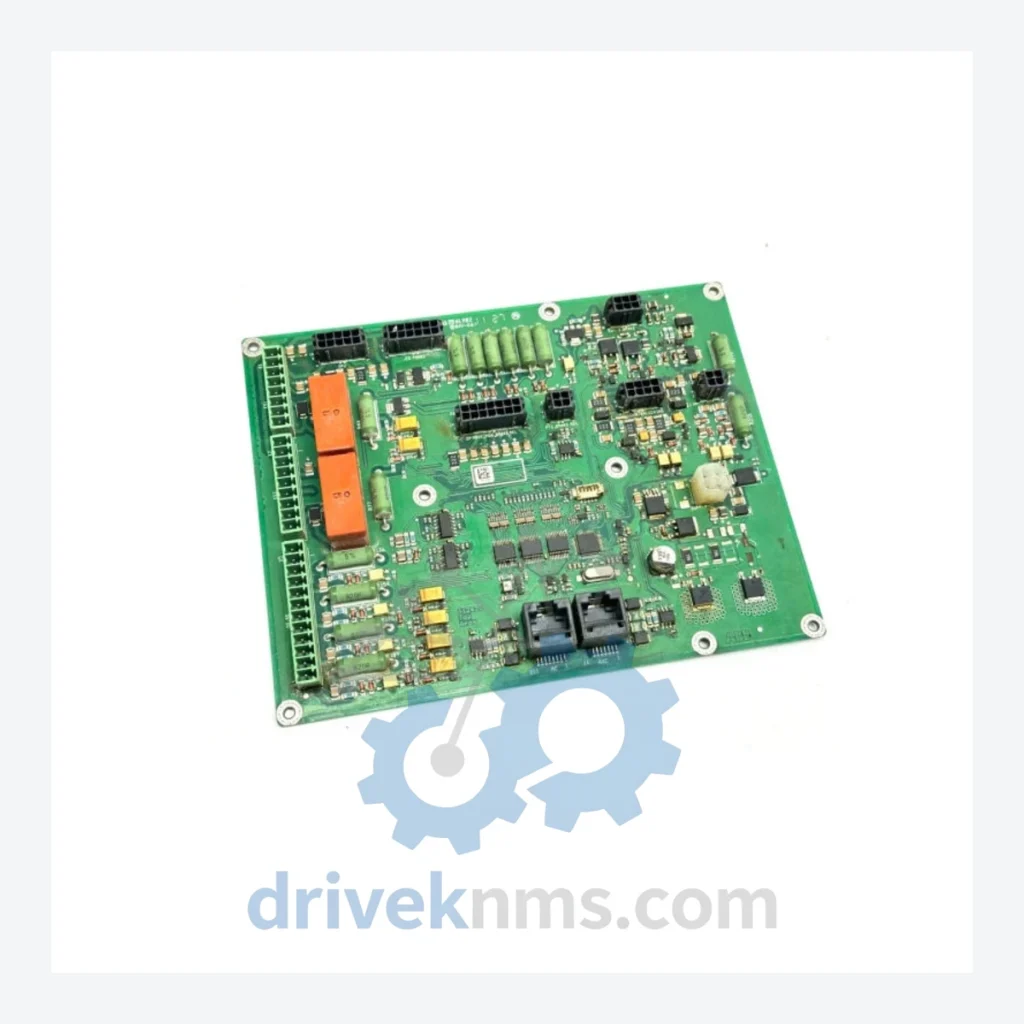
Model: 9400-00096 119-8124-00 MG3-3EF-4CEE-4DAD-S1084 0040-18094

Brand INTEGRAL Technologies
Series Pending
Model 9400-00096 119-8124-00 MG3-3EF-4CEE-4DAD-S1084 0040-18094
RFQ-ready model route Obsolete and surplus sourcing Export follow-up by model list

Product Overview

Commercial availability is handled through direct RFQ, model verification and export-oriented follow-up rather than public cart checkout.

Datasheet Preview

Datasheet Preview

Use attached product manuals when available. If the manual is not public yet, request the full file directly through RFQ.

Request Full Manual

Commercial Path

Use This Page To Confirm The Model, Then Move To RFQ

Product pages on DRIVEKNMS are designed to verify model, brand and series first, then move the buyer into one clean quotation path.

Technical Dossier

Product Details And Specifications

INTEGRAL 9400-00096 119-8124-00 MG3-3EF-4CEE-4DAD-S1084 0040-18094 Control Module – Obsolete Legacy Spare Part

When a control module fails in a legacy automation system, the consequences extend far beyond the cost of the part itself. A single discontinued module — if unavailable — can force a complete control system overhaul, triggering engineering redesign, new hardware procurement, software migration, operator retraining, and weeks of unplanned downtime. Conservative estimates place such forced upgrades in the range of hundreds of thousands to several million dollars per production line. The INTEGRAL 9400-00096 119-8124-00 (also referenced as MG3-3EF-4CEE-4DAD-S1084 / 0040-18094) is precisely this type of mission-critical component: no longer in active production, difficult to source, and irreplaceable within its original system architecture without significant capital expenditure.

DriveKNMS maintains verified stock of this obsolete module. Securing a spare now is not a purchasing decision — it is an asset protection decision.

Technical Specifications

Parameter Detail
Manufacturer INTEGRAL Technologies
Primary Part Number 9400-00096
Secondary Part Number 119-8124-00
Additional References MG3-3EF-4CEE-4DAD-S1084 / 0040-18094
Product Category Industrial Control Module
Discontinuation Status Obsolete – No longer in active manufacture
Country of Origin United States
Condition Available New Old Stock (NOS) / Professionally Refurbished

Note: Electrical parameters are not published here to prevent misapplication. Please contact our technical team to confirm compatibility with your specific system configuration before ordering.

Solving the Discontinued Hardware Crisis

Legacy industrial control systems were engineered for decades of service. The hardware that runs them, however, was not designed with an indefinite supply chain in mind. When a manufacturer like INTEGRAL Technologies discontinues a module series, the installed base — often numbering in the thousands of units across global facilities — is left without a direct replacement path.

The INTEGRAL 9400-00096 series was deployed across a range of process control and automation platforms. Its communication architecture, I/O mapping, and firmware interface are tightly coupled to the host system. Substituting a modern equivalent is not a matter of swapping hardware; it requires re-engineering the control logic, reconfiguring network topology, and in many cases, replacing adjacent modules that share the same backplane or communication bus. The engineering hours alone — before a single production minute is recovered — routinely exceed the cost of sourcing ten spare units of the original part.

For plant managers operating under capital expenditure constraints, the calculus is straightforward: a verified spare of the original module, held in climate-controlled storage, represents the lowest-cost insurance policy available against catastrophic downtime. DriveKNMS specializes in locating, verifying, and supplying exactly these components — parts that have disappeared from standard distribution channels but remain operationally essential.

How to Extend Automation Asset Life by 5–10 Years Through Strategic Spare Parts Management

Facilities running legacy control infrastructure face a predictable pressure cycle: as original equipment manufacturers exit support, internal maintenance teams are left managing aging hardware with diminishing access to replacement parts. The following framework has been applied successfully by maintenance engineers to extend the operational life of automation assets well beyond manufacturer end-of-life dates:

1. Conduct a Critical Spares Audit. Identify every module in your control system that is either discontinued or approaching end-of-life. Prioritize by failure impact: a module whose failure halts an entire production line ranks higher than one serving a redundant function. The INTEGRAL 9400-00096 typically falls into the high-priority category given its role in control system communication or processing.

2. Establish a Minimum Viable Inventory (MVI). For high-criticality obsolete modules, a minimum of two spare units per production line is a defensible standard. One unit covers an immediate failure; the second provides a buffer while sourcing is re-evaluated. The cost of two spare modules is a fraction of one hour of unplanned downtime in most process industries.

3. Negotiate Long-Term Supply Agreements with Specialist Distributors. Standard industrial distributors do not maintain stock of obsolete parts. Specialist suppliers like DriveKNMS operate dedicated obsolete parts inventories and can provide forward purchase agreements, reserving units from current stock for future delivery. This eliminates the sourcing risk that emerges when a facility needs a part urgently and the market has none.

4. Implement Condition-Based Monitoring on Legacy Modules. Many control module failures are preceded by detectable symptoms: increased error rates, intermittent communication faults, or elevated operating temperatures. Establishing baseline performance metrics and monitoring for deviation allows maintenance teams to replace modules proactively — on a planned schedule — rather than reactively during a production crisis.

5. Document and Preserve Firmware Versions. Obsolete modules often run firmware that is no longer available for download from the manufacturer. Before a module fails, capture and archive the firmware version and configuration data. This ensures that a replacement unit — whether new old stock or refurbished — can be restored to the exact operational state of the failed unit without engineering intervention.

Applied consistently, this framework has enabled facilities to defer system-wide control platform upgrades by five to ten years, redirecting capital expenditure toward revenue-generating investments rather than forced infrastructure replacement.

Condition & Reliability Assurance

Sourcing an obsolete module from the secondary market carries inherent risk. DriveKNMS applies a structured 5-step quality assurance process to every unit before it is offered for sale:

Step 1 – Visual and Physical Inspection. Each unit is examined for physical damage, corrosion on connector pins and PCB traces, and evidence of prior repair or modification. Units showing signs of unauthorized rework are rejected.

Step 2 – Electrolytic Capacitor Assessment. Electrolytic capacitors are the primary failure point in aged electronic assemblies. Units are inspected for capacitor bulging, leakage, and ESR (Equivalent Series Resistance) deviation. Where capacitor degradation is identified, units are either reconditioned by qualified technicians or removed from inventory.

Step 3 – Firmware Version Verification. Where technically accessible, firmware versions are recorded and cross-referenced against known compatible releases for the target system. Mismatched or corrupted firmware is flagged before the unit is offered for sale.

Step 4 – Functional Bench Testing. Units are powered and tested against defined operational parameters. Communication interfaces, I/O response, and power consumption are verified where test infrastructure permits.

Step 5 – Packaging and Storage Compliance. Verified units are packaged in anti-static materials and stored in climate-controlled conditions to prevent further degradation prior to shipment.

Key Features for System Maintenance

  • Drop-in replacement: The 9400-00096 is a direct hardware substitute within its original system architecture. No backplane modification, no wiring changes.
  • No reprogramming required: Control logic, I/O mapping, and communication parameters remain intact. Replacement does not trigger a revalidation cycle in most configurations.
  • Avoids engineering redesign costs: Using the original part number eliminates the need for system integrator involvement, change management documentation, and production qualification runs associated with a hardware substitution.
  • Preserves system certification: In regulated industries (pharmaceutical, food processing, energy), replacing a module with a non-equivalent part may invalidate existing system certifications. The original part number maintains compliance continuity.
  • Immediate dispatch: Stock on hand. No lead time associated with new manufacture.

FAQ

Q: What warranty applies to an obsolete module like the 9400-00096?
A: DriveKNMS provides a 90-day functional warranty on all tested and verified units. New Old Stock units carry a 180-day warranty. Warranty terms are confirmed in writing at the time of order.

Q: How do I know the unit is genuine and not counterfeit?
A: All units are sourced through documented supply chains. Physical markings, date codes, and construction quality are verified against known-genuine references. We do not source from unverified brokers. Inspection reports are available upon request for critical applications.

Q: Should I purchase more than one unit?
A: For any production-critical application, yes. Obsolete parts do not return to manufacture. Once current market stock is exhausted, the next available unit may not exist. Purchasing two to three units now — while stock is confirmed available — is standard practice for facilities with a defined asset life extension strategy.

Q: Can you source additional units if I need more than you currently stock?
A: DriveKNMS maintains active sourcing relationships across global secondary markets. Contact us with your quantity requirement and timeline, and we will provide a sourcing assessment within 24 hours.

Q: What is the lead time for shipment?
A: In-stock units ship within 2–3 business days following order confirmation and payment. Express dispatch is available upon request.

To confirm availability, request a quotation, or discuss long-term spare parts supply agreements for your facility:

WhatsApp Prefilled Inquiry Email [email protected] Phone +86 18359293191 Top Back To Top