Products / Kawasaki / 0096L05 R2AA06020FCPPJ 50601-1462 Teach Pendant
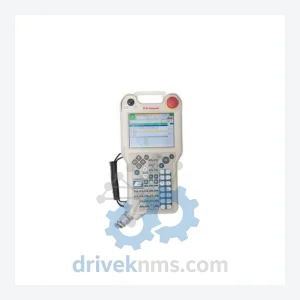
Kawasaki 0096L05 R2AA06020FCPPJ 50601-1462 Teach Pendant

Kawasaki 50817-0096L05 R2AA06020FCPPJ 50601-1462 Teach Pendant – Obsolete Kawasaki Robotics Spare Part
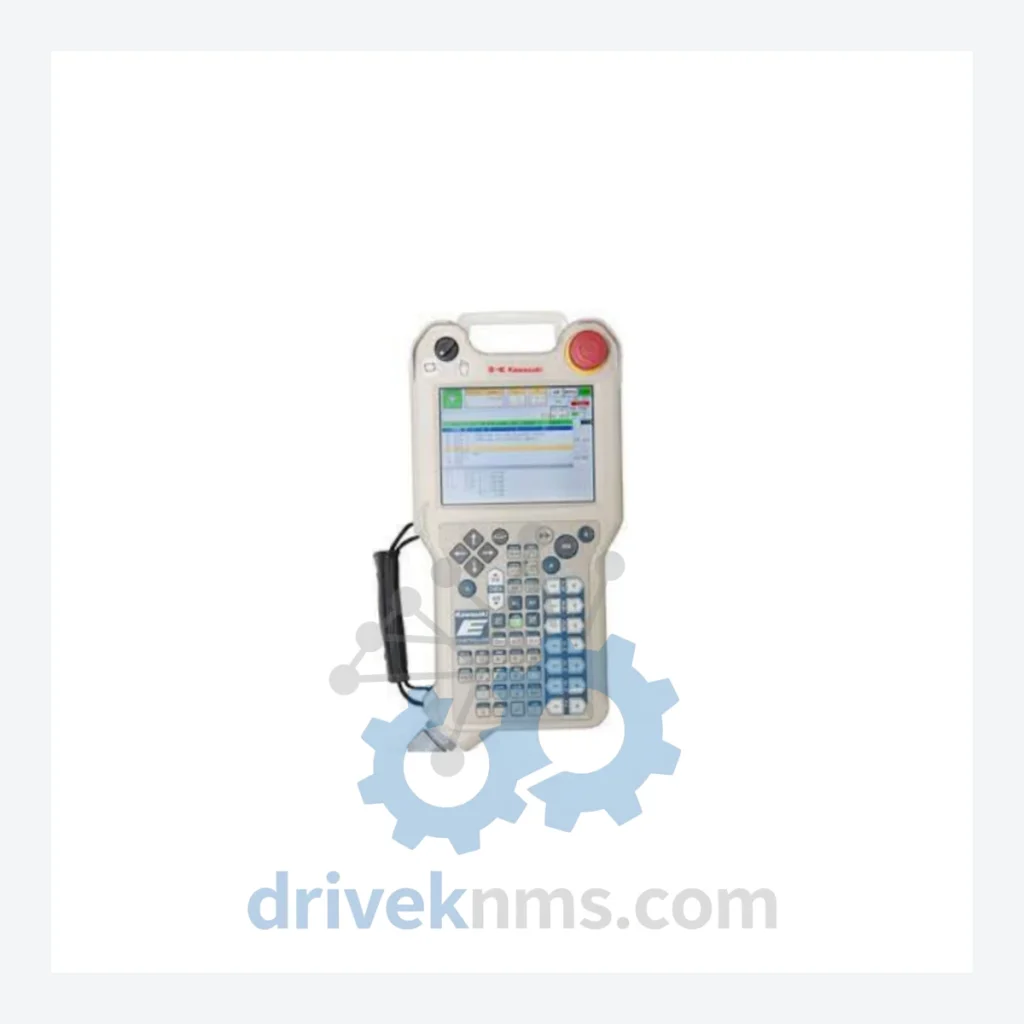
Model: 50817-0096L05 R2AA06020FCPPJ 50601-1462

Brand Kawasaki
Series 0096L05 R2AA06020FCPPJ 50601-1462 Teach Pendant
Model 50817-0096L05 R2AA06020FCPPJ 50601-1462
RFQ-ready model route Obsolete and surplus sourcing Export follow-up by model list

Product Overview

Commercial availability is handled through direct RFQ, model verification and export-oriented follow-up rather than public cart checkout.

Datasheet Preview

Datasheet Preview

Use attached product manuals when available. If the manual is not public yet, request the full file directly through RFQ.

Request Full Manual

Commercial Path

Use This Page To Confirm The Model, Then Move To RFQ

Product pages on DRIVEKNMS are designed to verify model, brand and series first, then move the buyer into one clean quotation path.

Technical Dossier

Product Details And Specifications

Kawasaki 50817-0096L05 R2AA06020FCPPJ 50601-1462 Teach Pendant – Obsolete Kawasaki Robotics Spare Part

When a teach pendant fails on a Kawasaki robot cell, the robot stops. Not slows — stops. In facilities running legacy Kawasaki controllers such as the D-series or E-series, this component is the sole human-machine interface for jogging axes, editing programs, and executing teach operations. There is no software workaround. There is no universal substitute. A single failed unit can idle an entire welding, palletizing, or assembly line for weeks while procurement teams chase a part that Kawasaki no longer manufactures to order.

The cost of a full robot cell upgrade — new controller, new pendant, re-integration, re-programming, operator retraining — routinely exceeds USD $150,000 per unit. For multi-robot lines, that figure multiplies. DriveKNMS holds verified physical stock of the Kawasaki 50817-0096L05 / R2AA06020FCPPJ / 50601-1462 teach pendant. This is not a listing built on broker speculation. Availability is confirmed at time of publication and is subject to depletion without notice.

Technical Specifications

Manufacturer Kawasaki Robotics
Part Number 50817-0096L05
Cross-Reference Numbers R2AA06020FCPPJ / 50601-1462
Component Type Teach Pendant (Operator Programming Terminal)
Country of Origin Japan
Compatibility Kawasaki D-series and E-series robot controllers (verify against your controller revision before ordering)
Discontinuation Status Discontinued – no longer available through Kawasaki standard distribution channels
Condition Available New Old Stock (NOS) / Professionally Refurbished – specified at time of inquiry

Note: Electrical parameters such as supply voltage and communication protocol are controller-dependent. Confirm compatibility with your specific controller model before procurement. DriveKNMS does not publish unverified specifications.

Solving the Discontinued Hardware Crisis

Kawasaki's D-series and E-series robot controllers were deployed extensively across automotive, food processing, and general manufacturing from the 1990s through the 2010s. Many of these installations remain mechanically sound — the robot arms themselves have decades of service life remaining. The controller electronics and peripheral interfaces, however, are no longer supported under any active Kawasaki service agreement.

The teach pendant is the most failure-prone peripheral in this ecosystem. It is a handheld device subjected to daily physical handling, cable stress at the connector junction, screen impact, and button wear. Unlike the controller backplane or servo drives, the pendant cannot be repaired at component level in most maintenance environments. When it fails, the replacement path is binary: find an original-specification unit, or commit to a full system migration.

For plant managers facing this decision, the calculus is straightforward. A verified replacement pendant — even at a premium obsolete-parts price — represents a fraction of the capital expenditure required to retire and replace a functional robot cell. More critically, it preserves the existing program library, tooling offsets, and operator familiarity that represent years of accumulated production knowledge. That institutional value does not transfer to a new platform without significant engineering effort.

Facilities that have extended the service life of legacy Kawasaki robot cells by 5 to 10 years beyond the manufacturer's support window have done so through a consistent strategy: identify every single-point-of-failure peripheral, source verified spares while they remain available on the secondary market, and store them under controlled conditions. The teach pendant is always on that list. The window to source original-specification units narrows every year as existing stock is consumed and not replenished.

Condition & Reliability Assurance

DriveKNMS applies a structured 5-step inspection protocol to all obsolete teach pendants before shipment:

  • Step 1 – Electrolytic Capacitor Assessment: Internal capacitors are inspected for bulging, leakage, and ESR degradation. Units with compromised capacitors are either recapped with equivalent-specification components or rejected from inventory.
  • Step 2 – Firmware Version Verification: Where accessible, firmware revision is documented and disclosed to the buyer. Compatibility with specific controller revisions is confirmed prior to shipment where technically feasible.
  • Step 3 – Connector and Pin Inspection: The pendant cable connector — the highest-stress mechanical point — is inspected for pin corrosion, bent contacts, and jacket integrity. Cable continuity is tested end-to-end.
  • Step 4 – Display and Keypad Functional Test: Screen backlighting, pixel integrity, and all keypad inputs are tested under power where test infrastructure permits.
  • Step 5 – Cosmetic and Structural Inspection: Housing cracks, hinge integrity (where applicable), and E-stop button mechanical function are verified. Units with structural compromise affecting safe operation are not sold.

Condition grade (New Old Stock or Refurbished) is disclosed in the sales confirmation. No unit is shipped without passing all applicable steps.

Key Features for System Maintenance

  • Drop-in replacement: This pendant is designed to interface directly with compatible Kawasaki controllers using the original connector and communication protocol. No controller-side hardware modification is required.
  • No reprogramming required: Existing robot programs, coordinate systems, and I/O assignments stored in the controller are unaffected by a pendant swap. Production resumes from the point of failure without re-teaching.
  • Avoids engineering reconstruction costs: Replacing a pendant rather than migrating to a new controller platform eliminates the need for system integrator engagement, new safety validation, and production downtime measured in weeks rather than hours.
  • Preserves existing tooling and fixture investment: Robot cells are built around specific kinematic models and program structures. A like-for-like pendant replacement keeps that investment intact.
  • Supports long-term spare parts strategy: Procurement of a second unit as a cold spare is a recognized risk mitigation practice for facilities committed to operating legacy Kawasaki cells beyond the standard support horizon.

FAQ

What warranty applies to an obsolete teach pendant?
DriveKNMS provides a 90-day warranty against defects in the unit as supplied. This covers functional failure under normal operating conditions. It does not cover damage resulting from incompatible controller pairing or physical mishandling after delivery. Warranty terms are confirmed in writing at the time of sale.

How do I know the unit is genuine and not a counterfeit?
All units sourced by DriveKNMS are inspected for manufacturer markings, label consistency, and internal construction. We do not source from unverified brokers. Provenance documentation is provided where available. Buyers are encouraged to request photos of the specific unit prior to purchase.

Should I buy more than one unit?
For any facility operating more than one Kawasaki robot on a compatible controller platform, holding a minimum of one cold spare is a defensible maintenance decision. The secondary market for this part will not improve over time. Current availability reflects existing stock being consumed, not new production. Procurement now, at a known cost, is preferable to emergency sourcing under production pressure at an unknown future price.

Can you source this part if it is not currently in stock?
DriveKNMS maintains active sourcing relationships across the industrial surplus and OEM channel network. If the part is not in current inventory, we can initiate a sourcing request. Lead times for sourced obsolete parts vary and are not guaranteed. Contact us directly to discuss your timeline.

© 2026 DriveKNMS. Status: DRAFT

WhatsApp Prefilled Inquiry Email [email protected] Phone +86 18359293191 Top Back To Top