Products / Kawasaki / 50999 Series
Kawasaki 50999 Series

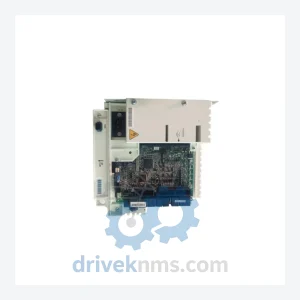
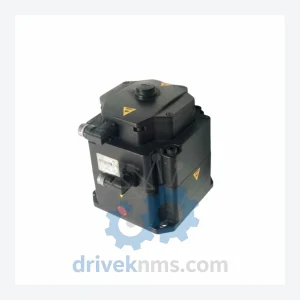
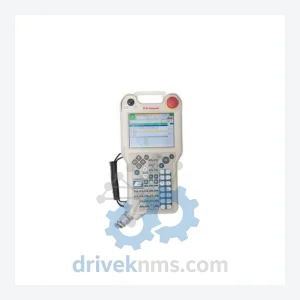
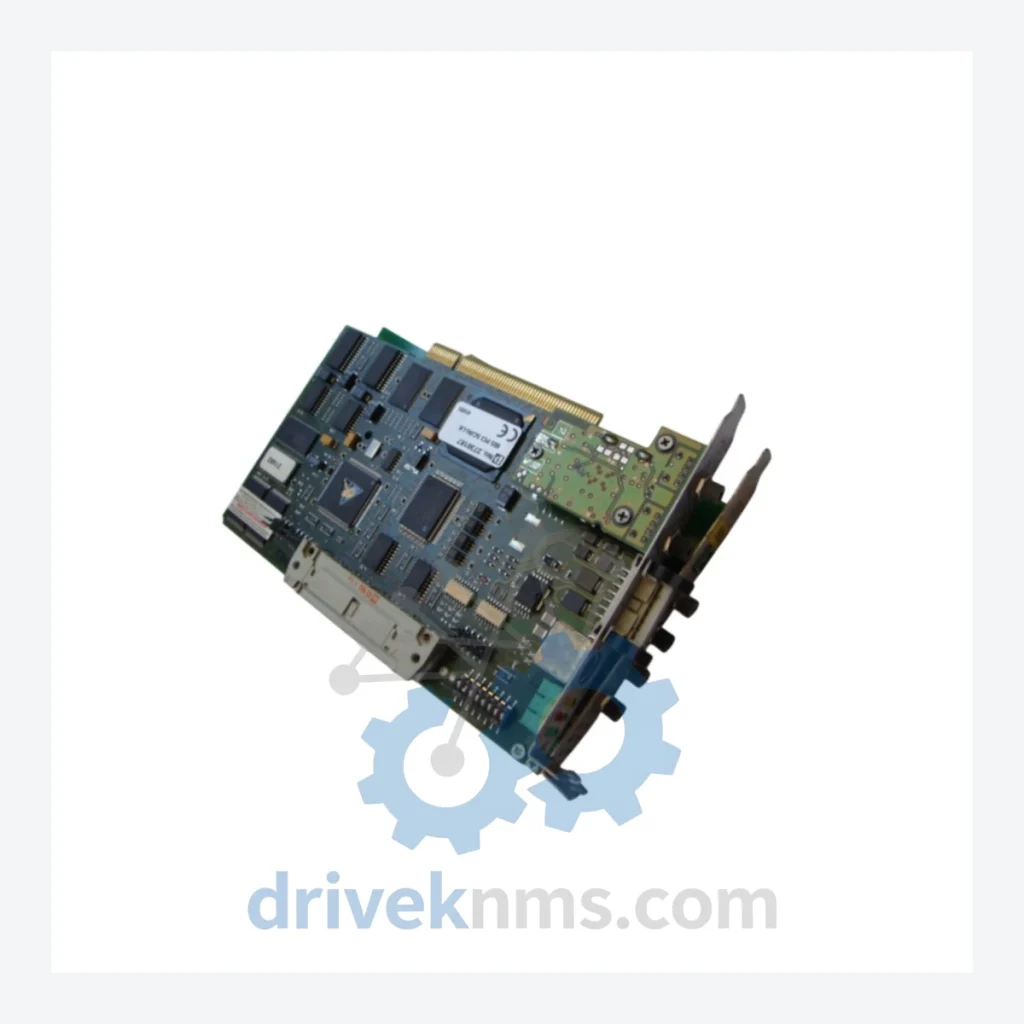
Kawasaki 50999 Series PLC Boards: 50999-2254, 50999-0020, 50999-1692 –

Model: 50999-2254 50999-0020 50999-1692
Brand Kawasaki
Series 50999 Series
Model 50999-2254 50999-0020 50999-1692
RFQ-ready model route Obsolete and surplus sourcing Export follow-up by model list

Product Overview

Commercial availability is handled through direct RFQ, model verification and export-oriented follow-up rather than public cart checkout.

Datasheet Preview

Datasheet Preview

Use attached product manuals when available. If the manual is not public yet, request the full file directly through RFQ.

Request Full Manual

Commercial Path

Use This Page To Confirm The Model, Then Move To RFQ

Product pages on DRIVEKNMS are designed to verify model, brand and series first, then move the buyer into one clean quotation path.

Technical Dossier

Product Details And Specifications

Kawasaki 50999 Series PLC Boards: Comprehensive Module Range and Technical Overview

The Kawasaki 50999 Series represents a core family of programmable logic controller (PLC) boards deployed across heavy industrial automation systems globally. These boards are embedded in robotic welding lines, automotive body assembly, press automation, and material handling systems in facilities operated by tier-1 manufacturers across Japan, North America, Europe, and Southeast Asia. The 50999 Series is specifically associated with Kawasaki robot controller platforms — including the D, E, and F Series robot controllers — where they serve as the primary computational and I/O interface substrate. Their presence in long-cycle industrial environments (chemical processing, automotive stamping, nuclear component manufacturing) means that demand for spare and replacement units persists well beyond the original production window.

The Evolution of 50999 Series Architecture

The 50999 Series boards were developed as modular PCB assemblies integrated into Kawasaki's proprietary robot controller backplane architecture. Early iterations were designed for the D-Series controllers (circa late 1980s–1990s), where discrete logic and early ASIC-based motion control were the dominant design paradigm. As Kawasaki transitioned through the E-Series and into the F-Series controllers (2000s–2010s), the 50999 board family evolved to accommodate higher-density I/O, improved bus communication protocols, and enhanced EMI shielding for factory floor environments.

Compatibility across generations is a critical consideration: 50999-series boards are not universally interchangeable across controller generations. Substitution requires verification of the controller firmware revision, backplane slot assignment, and connector pinout. Boards from the D-Series era use a different edge connector standard than F-Series equivalents. End-users performing controller upgrades must cross-reference the Kawasaki controller service manual for the specific robot model (e.g., ZX, RS, BA, BX series robots) before sourcing a replacement board.

As of 2026, the majority of 50999 Series boards are in the mature-to-end-of-life phase of their product lifecycle. Kawasaki Robotics no longer manufactures most variants as new production units. This places the global supply of these boards entirely within the secondary market — refurbished, tested-used, and new-old-stock (NOS) channels.

50999 Series Full Catalog & Functionalities (SKU List)

The following SKUs represent verified models within the Kawasaki 50999 Series PLC board family, classified by primary function:

CPU & Main Control Boards

  • 50999-2254: Main CPU control board for Kawasaki D/E-Series robot controllers; primary motion computation substrate.
  • 50999-0020: Processor interface board; manages data bus arbitration between CPU and peripheral I/O modules.
  • 50999-1692: Control logic board; handles sequence execution and axis interpolation command relay.
  • 50999-1050: Master CPU board variant for multi-axis coordinated motion control applications.
  • 50999-1051: Secondary CPU board; used in dual-processor controller configurations for redundancy.

I/O Interface Boards

  • 50999-0610: Digital input board; 32-channel DI module for external sensor and safety interlock integration.
  • 50999-0611: Digital output board; 32-channel DO module for actuator and relay command output.
  • 50999-0620: Analog input board; 8-channel AI module, 12-bit resolution, for process variable monitoring.
  • 50999-0621: Analog output board; 8-channel AO module for servo reference and process control signals.
  • 50999-0630: Combined DI/DO board; 16-channel mixed I/O for compact controller configurations.

Communication & Network Adapter Boards

  • 50999-1200: DeviceNet communication board; enables integration with DeviceNet field device networks.
  • 50999-1210: Profibus-DP adapter board; for integration into Siemens and ABB Profibus-based plant networks.
  • 50999-1220: Ethernet/IP communication board; supports EtherNet/IP protocol for modern plant network connectivity.
  • 50999-1230: CC-Link interface board; for integration into Mitsubishi CC-Link industrial networks.

Power Supply & Regulation Boards

  • 50999-0800: Primary power distribution board; regulates and distributes DC bus voltage to controller modules.
  • 50999-0810: Auxiliary power board; provides isolated 24VDC supply for I/O and communication modules.

Sourcing Hard-to-Find & Obsolete 50999 Series Parts

DriveKNMS maintains a dedicated inventory program for end-of-life Kawasaki 50999 Series boards. As Kawasaki Robotics has discontinued new production of most variants in this family, the primary sourcing channels are: tested-used boards recovered from decommissioned robot cells, new-old-stock (NOS) units sourced from authorized service centers and OEM surplus channels, and refurbished boards that have undergone full functional restoration.

DriveKNMS provides lifecycle extension support for facilities that cannot justify a full robot controller upgrade. This includes cross-referencing obsolete part numbers against current Kawasaki service bulletins, identifying compatible substitute boards where direct replacements are unavailable, and providing documentation packages (test reports, revision history) to support maintenance engineering sign-off. Lead times for hard-to-find variants such as 50999-2254 and 50999-1692 are quoted on a per-inquiry basis due to variable secondary market availability.

Quality Control for the 50999 Series Range

The 50999 Series boards present specific quality control challenges due to their backplane bus architecture and multi-layer PCB construction. DriveKNMS applies the following test protocol to all 50999 Series units prior to shipment:

  • Visual inspection: Full board examination for capacitor bulge, trace corrosion, solder joint fatigue, and connector pin damage under 10x magnification.
  • In-circuit test (ICT): Verification of passive component values, continuity of power rails, and absence of short circuits across the backplane connector.
  • Functional power-on test: Board is energized within a compatible controller test bench. CPU boards are verified for boot sequence completion and bus communication handshake.
  • I/O channel verification: For DI/DO and AI/AO boards, each channel is individually stimulated and the output verified against specification tolerances.
  • Communication protocol test: For network adapter boards (DeviceNet, Profibus, EtherNet/IP), protocol stack initialization and data frame integrity are verified using a network analyzer.
  • Burn-in cycle: Boards are operated under load for a minimum of 4 hours at elevated ambient temperature (45°C) to screen for latent component failures.
  • Final documentation: Each board ships with a test report recording pass/fail results for each test stage, board serial number, and firmware revision (where applicable).
WhatsApp Prefilled Inquiry Email [email protected] Phone +86 18359293191 Top Back To Top