
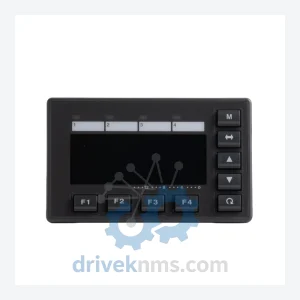
KEYENCE KV-D30 Operator Interface Display – KV Series
Keyence KV-D30 is listed for KV Series RFQ review. Confirm quantity, condition and destination before quotation.
RFQ-ready industrial model
Model: VT5-W07 17-260359-00 716-011923-001
Product Overview
Commercial availability is handled through direct RFQ, model verification and export-oriented follow-up rather than public cart checkout.
Datasheet Preview
Use attached product manuals when available. If the manual is not public yet, request the full file directly through RFQ.
Commercial Path
Product pages on DRIVEKNMS are designed to verify model, brand and series first, then move the buyer into one clean quotation path.
Technical Dossier
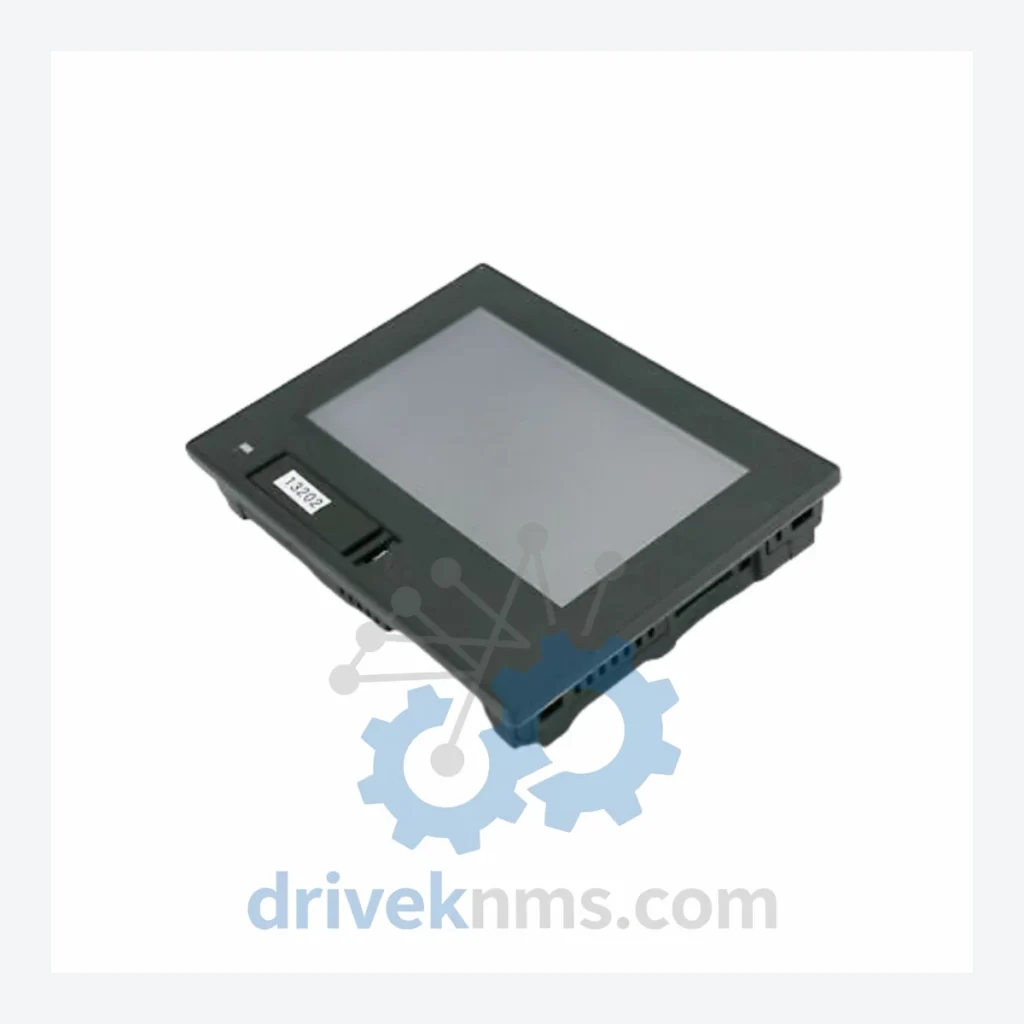
A failed HMI display does not merely inconvenience an operator — it stops production. The Keyence VT5-W07 is a 7-inch widescreen operator panel from Keyence's VT5 series, a platform that has reached end-of-life with no direct OEM replacement path. When this unit fails on a running line, the facility faces a choice that is rarely straightforward: locate a verified replacement on the secondary market, or initiate a full HMI migration project.
HMI migration on a legacy line is not a plug-and-play exercise. The VT5 series uses Keyence's proprietary VT Studio programming environment. Screen projects, tag databases, and communication driver configurations built for the VT5 platform are not forward-compatible with current Keyence HMI generations without engineering rework. For facilities running validated processes — food and beverage, pharmaceutical packaging, automotive assembly — that rework triggers re-validation cycles that can run into six figures before a single unit of production resumes.
DriveKNMS holds RFQ-reviewed sourcing status of the Keyence VT5-W07 (P/N: 17-260359-00 / 716-011923-001). This listing exists for plant managers and maintenance engineers who have already done the math and understand that a secondary-market spare is the lowest-risk, lowest-cost path to restoring production continuity.
RFQ support for obsolete parts: Send the model number, required quantity and destination so DriveKNMS can confirm sourcing options before quotation.
| Field | Detail |
|---|---|
| Manufacturer | Keyence Corporation |
| Part Number | VT5-W07 |
| Alternate P/N | 17-260359-00 / 716-011923-001 |
| Series | VT5 |
| Display Size | 7-inch widescreen TFT LCD |
| Form Factor | Panel-mount HMI operator terminal |
| OEM Production Status | Discontinued – End of life, no longer manufactured or supported by Keyence OEM |
| Country of Origin | Japan |
| Condition Available | New surplus / Tested refurbished (specified at time of order) |
| Compatible Systems | Keyence VT5 series installations; legacy lines using VT Studio project files |
The Keyence VT5 series was deployed extensively across discrete manufacturing lines throughout the 2000s and 2010s. Its 7-inch widescreen format, combined with Keyence's VT Studio configuration software, made it a common choice for machine builders integrating operator interfaces into compact panel enclosures. The VT5-W07 specifically — the widescreen 7-inch variant — appears in packaging machinery, injection molding cells, conveyor control panels, and general-purpose machine tool interfaces across multiple industries.
The core problem with VT5 obsolescence is not the hardware itself — it is the software dependency. VT Studio project files created for the VT5 series encode screen layouts, PLC communication drivers, tag mappings, and alarm configurations in a format tied to the VT5 runtime environment. Migrating that project to a current Keyence HMI generation, or to a third-party panel, requires a qualified HMI programmer to rebuild the project from scratch — or at minimum perform a full conversion, test, and sign-off cycle.
For a single machine, that engineering cost is manageable. For a facility with ten, twenty, or fifty machines running the same HMI platform, the aggregate migration cost becomes a capital project in its own right. Maintaining a verified spare VT5-W07 unit defers that project on a machine-by-machine basis, buying the facility time to plan migrations on its own schedule rather than under emergency conditions.
The following approach applies directly to facilities managing legacy Keyence VT5 HMI installations:
1. Spare Unit Inventory: Identify every machine in the facility running a VT5-W07 or other VT5 variant. For any machine with a planned service life exceeding 24 months, holding one spare panel is minimum prudent practice. The secondary market for VT5 units is finite and will not improve over time.
2. VT Studio Project Backup: Ensure that the VT Studio project file for every VT5-equipped machine is backed up off the panel and stored in a version-controlled location. A replacement panel with no project file is not a functional spare — it is a blank screen. This is the single most common failure point in legacy HMI replacement scenarios.
3. Communication Driver Documentation: Record the PLC communication protocol, station address, and baud rate settings configured in each VT5 installation. These parameters must be re-entered on any replacement unit and are frequently undocumented in aging facilities.
4. Display Backlight Monitoring: TFT LCD backlights degrade over time. Dimming or color shift on a VT5-W07 is an early indicator of impending display failure — not a reason to defer replacement planning, but a signal to accelerate spare procurement before an unplanned outage forces the issue.
5. Supplier Qualification: Secondary market HMI panels vary significantly in condition. Verify that your supplier performs powered functional testing — not just visual inspection — before dispatch review. A panel that powers on but has a failing touch matrix or corrupted firmware is not a usable spare.
DriveKNMS applies a 5-step qualification protocol to all legacy HMI panels before dispatch review:
Step 1 – Physical Inspection: Full examination of the panel housing, display surface, connector pins, and mounting hardware. Units with cracked bezels, damaged connectors, or compromised sealing are rejected.
Step 2 – Display and Backlight Assessment: The TFT panel is powered and inspected for dead pixels, backlight uniformity, and color accuracy. Panels with visible display defects are rejected or disclosed.
Step 3 – Touch Matrix Verification: The resistive or capacitive touch layer is tested across the full active area. Zones with degraded or non-responsive touch response are identified and documented.
Step 4 – Firmware and Boot Verification: The unit is powered through a full boot cycle. Firmware version is recorded and disclosed to the buyer prior to shipment.
Step 5 – ESD Packaging and Condition Certification: All panels ship in anti-static packaging with a condition certificate specifying inspection findings and test status.
Drop-in Replacement: The VT5-W07 is a direct physical replacement for the original panel position. Panel cutout dimensions and mounting hole patterns are unchanged. No mechanical modification to the enclosure is required.
No Re-Programming Required: Provided the VT Studio project file is available and the replacement unit runs a compatible firmware version, restoring operation requires loading the existing project — not rebuilding it. This is the critical cost avoidance factor that makes a verified spare worth holding.
Avoids Engineering Reconstruction Costs: A full HMI migration to a current platform — new panel, new project, new communication drivers, testing, and sign-off — is a multi-day engineering engagement at minimum. A verified spare VT5-W07 eliminates that path entirely for single-panel failures.
Protects Validated Process State: For facilities operating under GMP, HACCP, or automotive quality frameworks, hardware continuity preserves the validated HMI configuration. Platform migration triggers re-validation. Spare panel replacement does not.
Q: I don't have the VT Studio project file. Can you still help?
A: We supply the hardware. VT Studio project recovery from a running panel (if one remains operational) or reconstruction from machine documentation is an engineering task outside our scope, but we can refer you to qualified Keyence integrators.
Q: Should I buy more than one unit?
A: For any facility with multiple machines running VT5-W07 panels, or with a planned service life exceeding 24 months on a single machine, holding at least one additional spare is advisable. Secondary market availability of VT5 units is declining and will not recover.
Continue The Model Path
Move from this exact model into the matching system hub, brand archive, model-family archive or lifecycle sourcing route before sending a final RFQ list.
Related Paths
Keyence KV-D30 is listed for KV Series RFQ review. Confirm quantity, condition and destination before quotation.
Keyence KV-N3AM ,KV-N8EXT I/O UNIT KV-N24DT RFG 1250 2305125-A 7.04435E+17 is listed for KV-N Series RFQ review. Confirm quantity, condition and destination before quotation.
Keyence LJ-V7001 is listed for LJ-V Series RFQ review. Confirm quantity, condition and destination before quotation.