
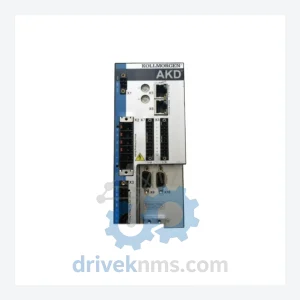
Kollmorgen AKD Series Drives AKD-P00306-NBEC-0000
Kollmorgen AKD-P00306-NBEC-0000 is listed for AKD Series RFQ review. Confirm quantity, condition and destination before quotation.
RFQ-ready industrial model
Model: AKD-P00606-NBCC-I000
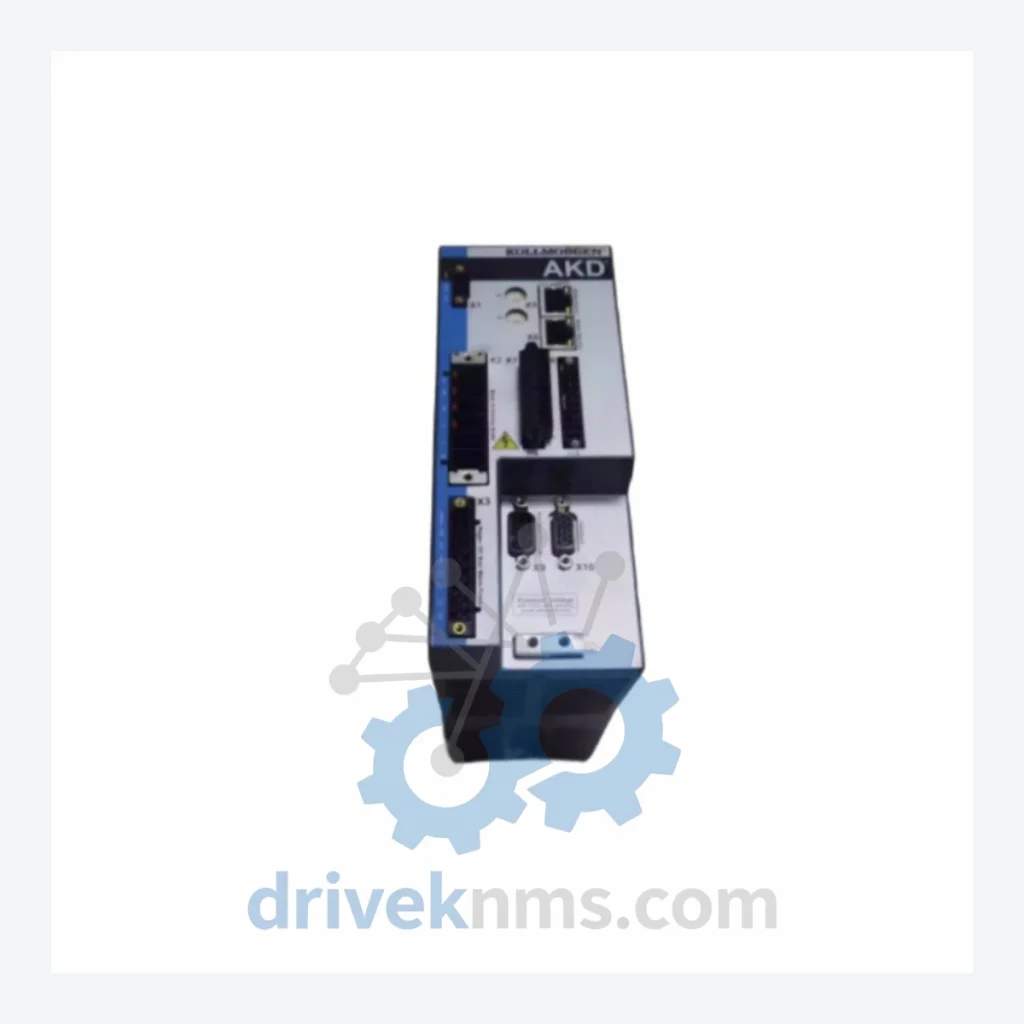
Product Overview
Commercial availability is handled through direct RFQ, model verification and export-oriented follow-up rather than public cart checkout.
Datasheet Preview
Use attached product manuals when available. If the manual is not public yet, request the full file directly through RFQ.
Commercial Path
Product pages on DRIVEKNMS are designed to verify model, brand and series first, then move the buyer into one clean quotation path.
Technical Dossier
The Kollmorgen AKD series represents one of the most widely deployed servo drive platforms in global heavy industry. Installed across petrochemical refineries, nuclear power auxiliary systems, offshore drilling rigs, automotive body-in-white lines, and precision packaging machinery, the AKD platform has established a dominant position in motion control applications requiring deterministic torque response, high dynamic stiffness, and multi-protocol fieldbus integration. Its compact DIN-rail and panel-mount form factors, combined with a unified software environment (WorkBench), have made it the reference architecture for machine builders across North America, Europe, and Asia-Pacific since its commercial introduction in 2010.
The AKD series is engineered to operate with Kollmorgen's AKM, CDDR, and TBM motor families, and supports resolver, SFD (Smart Feedback Device), EnDat 2.2, BiSS-C, and incremental encoder feedback natively. Continuous output current ratings span from 3 A to 96 A (peak to 144 A), covering servo axes from sub-kilowatt positioning stages to multi-kilowatt industrial robots.
The AKD platform was introduced in 2010 as a successor to the Kollmorgen S700 and Servostar 600 series, consolidating analog, CANopen, EtherCAT, PROFINET, and EtherNet/IP variants under a single hardware chassis differentiated only by the communication option card installed at the factory. This modular communication architecture — encoded in the drive's part number at the 5th field (e.g., NBCC = EtherCAT, NAAN = Analog/RS232, NACC = CANopen) — allowed OEMs to standardize mechanical design while selecting fieldbus topology per end-user requirement.
Compatibility note: AKD drives are not backward-compatible with Servostar 600 or S700 parameter files. WorkBench software version must match drive firmware generation; mixing firmware 1.x and 2.x parameter sets causes initialization faults (F501, F502).
The following SKUs represent the core AKD single-axis product matrix. Each entry reflects a real, catalogued Kollmorgen part number. SKUs are organized by current rating and communication variant.
3 A Continuous Output — Compact Axis
6 A Continuous Output — General Purpose
12 A Continuous Output — Mid-Power
24 A Continuous Output — High Power
48 A Continuous Output — Heavy Duty
Our sourcing protocol for AKD spare parts includes: verification of manufacture date code and firmware revision against the customer's installed base; cross-referencing of communication option card variant (NAAN / NACC / NBCC / NBEC / NBFC) to confirm drop-in compatibility; and inspection of the DC bus capacitor bank condition for units sourced from secondary market channels. For customers operating AKD drives installed prior to 2015, we recommend proactive replacement of the internal fan assembly (Kollmorgen service part 804-00-0001) and DC bus capacitors as part of a scheduled maintenance interval.
DriveKNMS stocks or can source the following AKD-adjacent components: AKD-PDMM (drive-based multi-axis motion controller), AKD-N (decentralized servo drive for direct motor mounting), external regenerative resistor assemblies, and WorkBench software license media for offline commissioning environments.
Each AKD unit processed by DriveKNMS undergoes a structured inspection and functional test sequence designed around the specific failure modes documented in Kollmorgen's field service bulletins for this platform.
Stage 1 — Visual and Mechanical Inspection: examination of the power connector block (X8) for arc tracking or thermal discoloration; inspection of the feedback connector (X10) for bent pins; verification of the communication option card seating and locking tab integrity.
Stage 2 — Power-On and Firmware Verification: controlled energization at reduced DC bus voltage using a variac; confirmation of drive firmware version via WorkBench service connection; verification that the drive initializes to the correct operational mode (position, velocity, or torque) without fault codes F001–F999.
Stage 3 — Dynamic Load Test: the drive is connected to a matched AKM motor on a dynamometer test bench and commanded through a standardized velocity profile (0–3000 RPM ramp, hold, reverse) to verify current loop bandwidth, encoder feedback integrity, and thermal performance at rated continuous current.
Stage 4 — Communication Bus Test: for fieldbus variants (EtherCAT, EtherNet/IP, PROFINET), the drive is connected to the corresponding master controller and verified for correct PDO mapping, synchronization, and fault response behavior.
All test results are documented and available to the customer upon request.
Continue The Model Path
Move from this exact model into the matching system hub, brand archive, model-family archive or lifecycle sourcing route before sending a final RFQ list.
Related Paths
Kollmorgen AKD-P00306-NBEC-0000 is listed for AKD Series RFQ review. Confirm quantity, condition and destination before quotation.
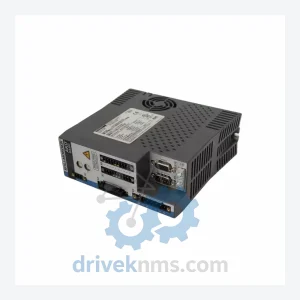
Kollmorgen AKD-P00306-NBEC-0069 CET002000003 is listed for AKD Series RFQ review. Confirm quantity, condition and destination before quotation.
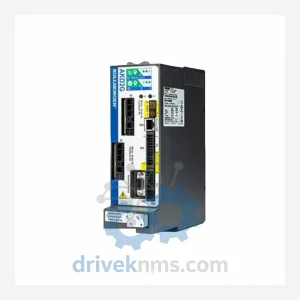
Kollmorgen AKD-P01206-NBCC-I000 is listed for AKD Series RFQ review. Confirm quantity, condition and destination before quotation.