Products / Kuka / 168-334 Teach Pendant
Kuka 168-334 Teach Pendant

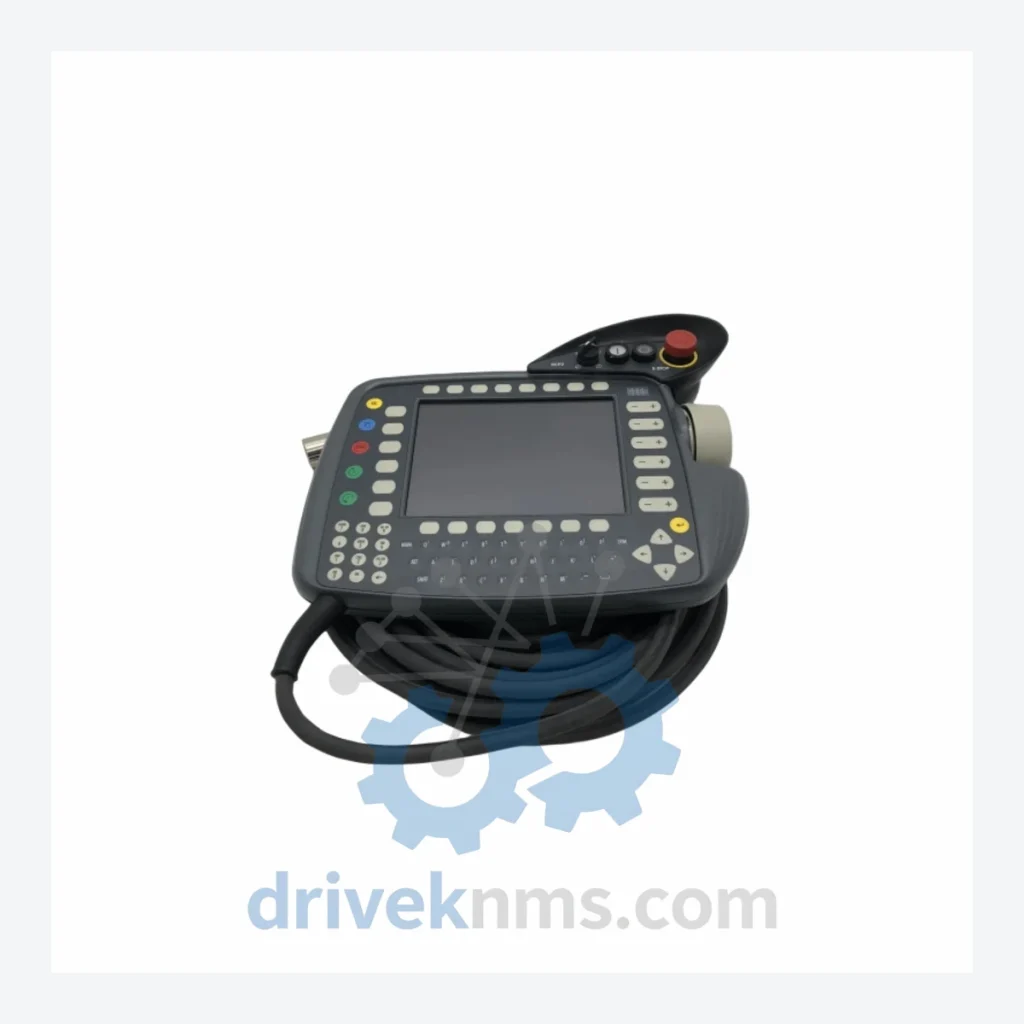
KUKA 00-168-334 Teach Pendant – Obsolete KCP Series Spare Part

Model: 00-168-334

Brand Kuka
Series 168-334 Teach Pendant
Model 00-168-334
RFQ-ready model route Obsolete and surplus sourcing Export follow-up by model list

Product Overview

Commercial availability is handled through direct RFQ, model verification and export-oriented follow-up rather than public cart checkout.

Datasheet Preview

Datasheet Preview

Use attached product manuals when available. If the manual is not public yet, request the full file directly through RFQ.

Request Full Manual

Commercial Path

Use This Page To Confirm The Model, Then Move To RFQ

Product pages on DRIVEKNMS are designed to verify model, brand and series first, then move the buyer into one clean quotation path.

Technical Dossier

Product Details And Specifications

KUKA 00-168-334 Teach Pendant – Obsolete KCP Series Spare Part

When a KUKA teach pendant fails on a legacy robot cell, the production line does not pause politely. It stops. For facilities still operating KUKA KRC1 or KRC2-based robot systems, the KUKA 00-168-334 KCP Teach Pendant is the operator's sole interface for programming, jogging, and fault diagnosis. There is no software workaround. There is no generic substitute. The moment this unit becomes inoperable, the path of least resistance for most OEMs and system integrators is to recommend a full controller upgrade — a project that routinely exceeds USD $150,000–$400,000 per robot cell when engineering, downtime, re-programming, and re-validation costs are factored in.

DriveKNMS maintains verified physical stock of the 00-168-334. For plant managers and maintenance engineers who understand the true cost of forced obsolescence, this is not a commodity purchase — it is a capital protection decision.

Technical Specifications

Parameter Detail
Part Number 00-168-334
Manufacturer KUKA Roboter GmbH
Description Control Panel HMI Teach Pendant (KCP)
Compatible Controllers KUKA KRC1, KRC2
Country of Origin Germany
Discontinuation Status Discontinued – No longer in KUKA active production
Interface Proprietary KCP connector to KRC controller cabinet
Note on Parameters Detailed electrical specifications are controller-revision dependent. Contact DriveKNMS for compatibility verification before ordering.

Solving the Discontinued Hardware Crisis

The KUKA KRC1 and KRC2 platforms were workhorses of automotive and general manufacturing automation throughout the late 1990s and 2000s. Tens of thousands of these robot cells remain in active service globally — in body shops, foundries, palletizing lines, and assembly operations — because the mechanical arms themselves have decades of structural life remaining. The controller hardware, however, is a different matter.

KUKA officially discontinued support for the KRC1 and KRC2 platforms. Replacement parts, including the 00-168-334 teach pendant, are no longer manufactured. The KCP teach pendant is the most operator-exposed component in the system: it is handled daily, subject to drops, cable stress, and display degradation. It is statistically the first major component to fail in an aging KRC cell.

When it fails without a spare on hand, the options narrow quickly: source a used unit from the secondary market (with unknown history), pay a premium for emergency broker sourcing, or face the capital expenditure of a full KRC4/KRC5 migration. None of these outcomes are acceptable for a plant running on a maintenance budget. Holding a verified spare 00-168-334 is the only rational hedge against this failure mode.

How to extend your KUKA KRC robot cell life by 5–10 years at a fraction of replacement cost:

  • Identify your single points of failure. The teach pendant, the KPS power supply, and the DSE/ESC safety boards are the three components most likely to cause unplanned downtime. Audit your installed base and map which cells have zero spares coverage.
  • Establish a minimum spare parts buffer. For a fleet of 5–20 KRC1/KRC2 robots, one spare teach pendant per 5 units is a defensible maintenance standard. The cost of one spare 00-168-334 is a fraction of one hour of unplanned line stoppage in most automotive or tier-1 supplier environments.
  • Negotiate long-term supply agreements with specialist distributors. Secondary market availability of KRC1/KRC2 components is declining year over year as donor machines are consumed. Locking in supply now, before scarcity drives prices further, is a procurement decision with a measurable ROI.
  • Document firmware and software versions. KRC1 and KRC2 systems run specific KUKA System Software (KSS) versions. Before replacing a teach pendant, confirm the replacement unit's firmware compatibility with your controller's KSS version. DriveKNMS can assist with compatibility verification.
  • Schedule proactive cable inspection. The KCP cable is a common failure point independent of the pendant itself. Inspect the cable assembly at the controller cabinet entry point annually. A cable replacement is a low-cost intervention that prevents pendant damage from intermittent signal faults.

Condition & Reliability Assurance

Sourcing discontinued industrial hardware from the secondary market carries inherent risk. DriveKNMS applies a structured 5-step qualification process to every unit before it is offered for sale:

  1. Visual and mechanical inspection. Housing integrity, keypad tactile response, emergency stop button function, and cable connector condition are assessed against original KUKA manufacturing standards.
  2. Electrolytic capacitor aging check. Aging electrolytic capacitors are a primary failure mode in electronics manufactured in the KRC1/KRC2 era. Units showing evidence of capacitor bulge, leakage, or ESR deviation are rejected or recapped before sale.
  3. Firmware version verification. The installed KSS-compatible firmware version is documented and disclosed. Customers receive this information prior to shipment to confirm compatibility with their specific controller revision.
  4. Pin and connector corrosion inspection. The KCP connector pins are inspected under magnification for oxidation, mechanical deformation, and contact resistance anomalies. Corroded pins are cleaned or the connector assembly is replaced.
  5. Functional power-on test. Where test equipment permits, units are powered and display function, keypad matrix response, and communication handshake with a compatible controller are verified.

Units that do not pass all five stages are not offered for sale. Condition grade (New Old Stock, Refurbished, or Tested Used) is disclosed on every order confirmation.

Key Features for System Maintenance

  • Drop-in replacement. The 00-168-334 connects directly to the KRC1/KRC2 controller cabinet via the original KCP interface. No hardware modification to the controller is required.
  • No reprogramming required. Robot programs, tool data, and system parameters reside in the KRC controller, not the teach pendant. Swapping the pendant does not affect stored programs or require re-teaching of positions.
  • No engineering re-validation. Because the replacement is functionally identical to the original, safety validation and process re-qualification are not triggered by a like-for-like pendant replacement in most regulatory frameworks. Confirm with your local safety officer.
  • Avoids controller migration costs. Migrating from KRC2 to KRC4 or KRC5 involves new cabinet hardware, new KSS licensing, complete robot re-programming, and production downtime measured in weeks. A spare teach pendant eliminates this forced decision for the duration of the asset's productive life.

FAQ

What warranty applies to a discontinued part like the 00-168-334?
DriveKNMS provides a 90-day functional warranty on all tested and refurbished units. New Old Stock (NOS) units carry a 180-day warranty. Warranty covers functional failure under normal operating conditions and excludes physical damage after delivery.

How do I know the unit is genuine KUKA and not a counterfeit?
All units sourced by DriveKNMS are verified against KUKA part number markings, date codes, and manufacturing identifiers. We do not deal in replica or third-party manufactured substitutes. Documentation of origin is available on request.

Should I buy more than one spare?
For any facility operating more than three KRC1/KRC2 robots, holding a minimum of two spare teach pendants is a sound maintenance posture. The 00-168-334 is becoming progressively harder to source as the installed base of donor machines shrinks. Procurement decisions made today will be more cost-effective than emergency sourcing decisions made under production pressure.

Can DriveKNMS source other KRC1/KRC2 spare parts?
Yes. DriveKNMS specializes in obsolete and hard-to-find industrial automation components across multiple platforms. Contact us with your full bill of materials for a consolidated sourcing assessment.

© 2026 DriveKNMS. All trademarks belong to their respective owners. Specifications are for reference only and subject to change without notice. Verify all parameters against official documentation before installation.

WhatsApp Prefilled Inquiry Email sale@driveknms.com Phone +86 18359293191 Top Back To Top