Technical Dossier
Product Details And Specifications
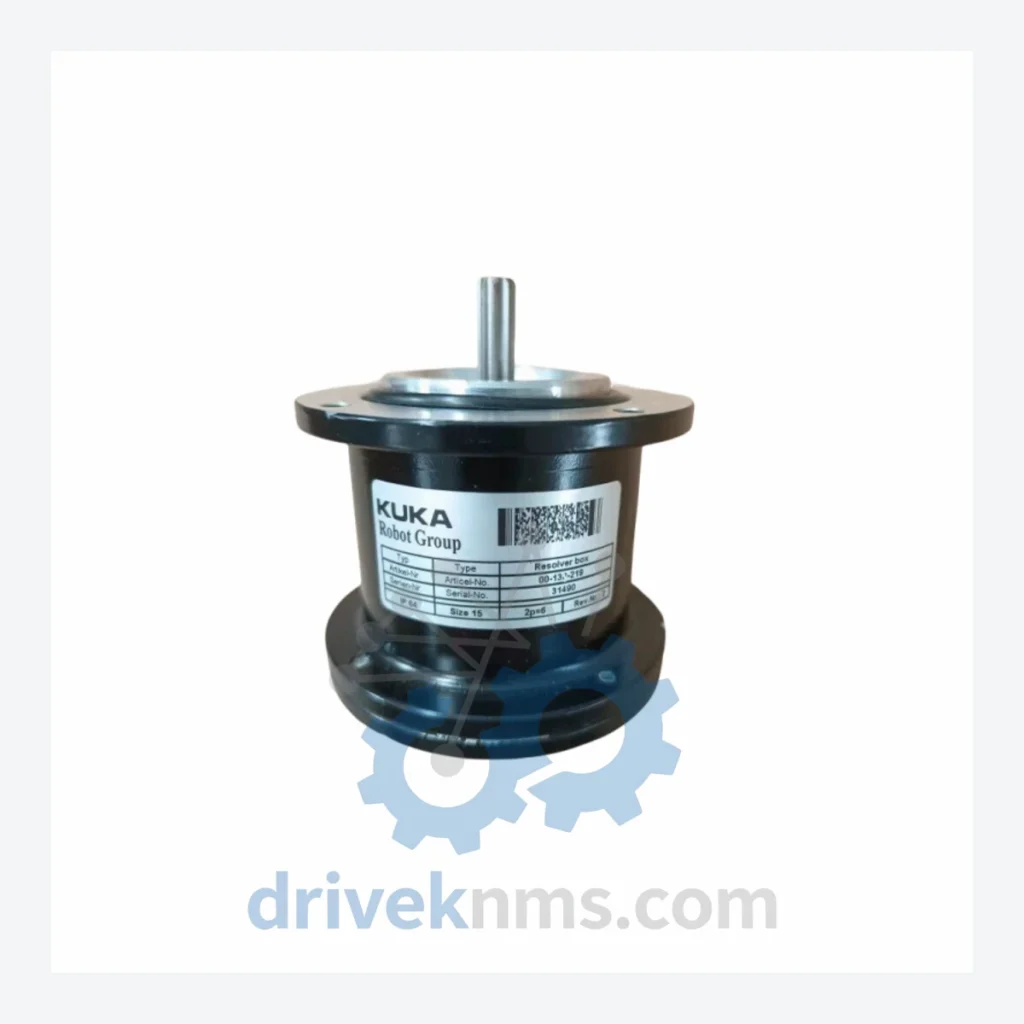
KUKA 00-192-268 Robot Encoder – Obsolete GA12 Series Spare Part
DriveKNMS holds RFQ-reviewed sourcing status of the KUKA 00-192-268 GA12 encoder (cross-referenced: KRC4 RDC 00-246-872 / 00-179-517). This is not a catalog listing. Inventory is finite and is not replenished through standard distribution channels.
RFQ support for obsolete parts: Send the model number, required quantity and destination so DriveKNMS can confirm sourcing options before quotation.
Technical Specifications
Note: Electrical parameters specific to this encoder variant are not published in open documentation. DriveKNMS does not fabricate specifications. Confirmed technical data is provided upon request with part verification.
Solving the Discontinued Hardware Crisis
The RDC (Robot Drive Computer) relies on encoder feedback from each axis to maintain positional accuracy and safe motion control. A degraded or failed encoder on any axis triggers fault codes that take the entire robot offline. Unlike a worn gear or a damaged cable — faults that can sometimes be managed temporarily — an encoder failure is binary: the robot stops, and it stays stopped until the part is replaced.
Facilities that have implemented a structured critical-spare strategy for their KUKA GA12 fleets report measurable reductions in mean time to repair (MTTR) and have successfully deferred robot platform upgrades by five to ten years — preserving capital for higher-priority investments while maintaining production commitments.
Condition & Reliability Assurance
Obsolete parts sourced from the secondary market carry inherent risk. DriveKNMS applies a five-step inspection protocol before any encoder is offered for sale:
1. Visual and Mechanical Inspection — Housing integrity, connector condition, and shaft concentricity are checked against OEM tolerances. Parts with physical damage are rejected at this stage.
2. Electrolytic Capacitor Assessment — Aging electrolytic capacitors are a primary failure mode in encoder electronics that have been in storage or light service for extended periods. Each unit is assessed for capacitor condition; units showing ESR drift or visible swelling are not offered for sale.
3. Firmware Version Verification — Where applicable, firmware revisions are documented and cross-checked against known KRC4 compatibility matrices to prevent version-mismatch faults on installation.
Q: How are RFQ terms confirmed?
A: Quantity, required condition, documentation needs, destination and sourcing route are confirmed during RFQ review before quotation.
5. Functional Bench Test — Units that pass steps 1–4 are bench-tested for signal output integrity before packaging.
Key Features for System Maintenance
Facilities running mixed fleets of GA12 and later-generation KUKA robots benefit from the fact that KRC4 controller architecture is consistent across this generation, meaning maintenance teams already familiar with the platform can handle the replacement without additional training investment.
Q: How is condition confirmed before quotation?
A: Available condition, photos, test records and documentation are checked according to the requested model and sourcing channel before a formal RFQ response.
Can you source other KUKA GA12 or KRC4 spare parts?
Yes. DriveKNMS specializes in hard-to-find and obsolete components across major industrial automation brands. If you have a bill of materials for your GA12 fleet's critical spares, send it to us for a consolidated availability check.