Products / Kuka / 200-588 MG_35_84_25 Teach Pendant
Kuka 200-588 MG_35_84_25 Teach Pendant

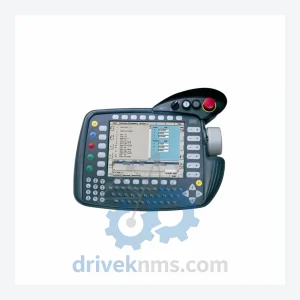
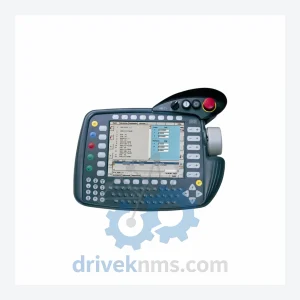
KUKA 00-200-588 MG_35_84_25 Teach Pendant – Obsolete KR C1/C2 Spare Part

Model: 00-200-588 MG_35_84_25 00200588
Brand Kuka
Series 200-588 MG_35_84_25 Teach Pendant
Model 00-200-588 MG_35_84_25 00200588
RFQ-ready model route Obsolete and surplus sourcing Export follow-up by model list

Product Overview

Commercial availability is handled through direct RFQ, model verification and export-oriented follow-up rather than public cart checkout.

Datasheet Preview

Datasheet Preview

Use attached product manuals when available. If the manual is not public yet, request the full file directly through RFQ.

Request Full Manual

Commercial Path

Use This Page To Confirm The Model, Then Move To RFQ

Product pages on DRIVEKNMS are designed to verify model, brand and series first, then move the buyer into one clean quotation path.

Technical Dossier

Product Details And Specifications

KUKA 00-200-588 MG_35_84_25 Teach Pendant – Obsolete KR C1/C2 Spare Part

When a teach pendant fails on a KUKA KR C1 or KR C2 robot controller, the robot stops. Not slows — stops. In a production environment running legacy KUKA systems, that single point of failure can trigger a cascade: line shutdown, emergency engineering calls, and — if no compatible replacement exists — a forced migration to a current-generation controller platform. Conservative estimates place a full KR C1-to-KR C4 migration, including re-integration, re-programming, and downtime, at USD $80,000–$250,000 per robot cell. The KUKA 00-200-588 (also referenced as MG_35_84_25 or 00200588) teach pendant is no longer in production. DriveKNMS maintains a limited physical inventory of this unit, sourced through controlled industrial channels. For plant managers and maintenance engineers committed to protecting existing automation assets, this is a direct, low-cost alternative to system retirement.

Technical Specifications

Parameter Detail
Part Number 00-200-588
Cross Reference MG_35_84_25 / 00200588
Description Teach Pendant (Hand-Held Programmer)
Compatible Controllers KUKA KR C1, KUKA KR C2
Manufacturer KUKA Roboter GmbH
Country of Origin Germany
Production Status Discontinued / Obsolete – No longer manufactured
Condition Available New Old Stock (NOS) / Professionally Refurbished

Note: Electrical parameters specific to individual unit revisions are not published here to avoid misapplication. Confirm compatibility with your controller serial number before ordering.

Solving the Discontinued Hardware Crisis

The KUKA KR C1 and KR C2 controller platforms were deployed extensively throughout the 1990s and early 2000s in automotive body shops, foundries, and general manufacturing. Tens of thousands of these robot cells remain in active service globally. KUKA's official support for KR C1 hardware ended years ago, and the KR C2 platform is in its final support phase. The teach pendant — part number 00-200-588 — is the primary human-machine interface for these controllers. It handles all manual jogging, program loading, override control, and fault acknowledgment. There is no workaround if this unit fails. A damaged or non-functional teach pendant renders the robot inoperable for any task requiring manual intervention or program modification.

Sourcing a direct replacement through standard distribution channels is no longer possible. The options available to most facilities are: locate a compatible used unit from an unverified source, attempt a controller-generation upgrade, or retire the robot. DriveKNMS exists specifically to provide a fourth option — verified, tested inventory of parts like the 00-200-588, held specifically for facilities that have made a deliberate decision to extend the operational life of their existing assets rather than absorb the capital cost of premature replacement.

For plant managers facing pressure to modernize: a single verified spare teach pendant, held on-site, eliminates the single largest unplanned downtime risk for a KR C1/C2 cell. The cost of that spare is a fraction of one hour of unplanned line stoppage.

Extending Automation Asset Life 5–10 Years: A Practical Strategy

The decision to retire a robot controller is rarely driven by the robot's mechanical condition. Articulated robot arms — KUKA, Fanuc, ABB — routinely operate for 20–30 years with proper maintenance. What forces retirement is the unavailability of control-side components: teach pendants, servo drives, I/O modules, and communication cards. A structured spare parts strategy directly addresses this constraint.

Recommended approach for KR C1/C2 asset protection:

  • Identify the three highest-failure-risk components in your controller cabinet. For KR C1/C2 systems, the teach pendant, the KPS power supply module, and the DSE/RDW communication board are historically the most common failure points.
  • Hold a minimum of one verified spare for each critical component. For a multi-robot facility, two spares per model is a defensible position.
  • Establish a rotation schedule. Spare parts held in storage degrade. Electrolytic capacitors in power supplies have a shelf life. A rotation policy — where stored spares are periodically swapped into service and tested — keeps your inventory in known-good condition.
  • Document firmware versions. KR C1 and KR C2 systems are sensitive to firmware mismatches between the teach pendant and the controller. Before storing a spare, record the firmware version and confirm compatibility with your installed controller revision.
  • Negotiate a long-term supply agreement with a specialist distributor. Spot-buying obsolete parts at the moment of failure is the most expensive and least reliable procurement strategy. Pre-positioning inventory, even in small quantities, eliminates emergency freight costs and sourcing delays.

Facilities that implement this approach consistently report 5–10 additional years of productive service from controller platforms that would otherwise have been retired on a timeline driven by parts availability rather than mechanical condition.

Condition & Reliability Assurance

Obsolete parts sourced from secondary markets carry inherent risk. DriveKNMS applies a structured 5-step qualification process to every unit before it is offered for sale.

  1. Visual and mechanical inspection: Housing integrity, keypad condition, cable and connector examination. Units with cracked housings, damaged emergency-stop buttons, or corroded connector pins are rejected at this stage.
  2. Electrolytic capacitor assessment: Internal capacitors — particularly in the power regulation circuitry — are the primary age-related failure point in stored electronic assemblies. Each unit is assessed for capacitor condition. Units showing evidence of electrolyte leakage or bulging are not offered for sale.
  3. Firmware version verification: The firmware version present on the unit is identified and documented. Compatibility with KR C1 and KR C2 controller revisions is confirmed prior to listing.
  4. Pin and contact inspection: All connector pins are examined under magnification for oxidation, corrosion, and mechanical deformation. Affected contacts are cleaned or the unit is rejected.
  5. Functional test (where test equipment is available): Units are powered and tested for display function, keypad response, and communication handshake with a compatible controller. Test results are documented and available on request.

Key Features for System Maintenance

  • Drop-in replacement: The 00-200-588 is a direct hardware replacement for the original teach pendant in KR C1 and KR C2 installations. No controller-side hardware modification is required.
  • No re-programming required: Robot programs reside in the controller, not the teach pendant. Replacing the pendant does not affect stored programs, coordinate systems, or I/O configurations.
  • Avoids engineering re-integration costs: A controller-generation upgrade requires mechanical re-mounting, electrical re-wiring, software migration, and re-certification of all robot programs. A direct pendant replacement requires none of these steps.
  • Immediate operational restoration: In a verified swap scenario, a replacement teach pendant can restore robot operability within the time required for physical installation — measured in minutes, not days.

FAQ

What warranty applies to an obsolete part like the 00-200-588?
DriveKNMS provides a 90-day warranty covering functional defects identified under normal operating conditions. Given the obsolete status of this part, we recommend customers treat the purchased unit as a working spare and contact us regarding long-term supply arrangements.

How do I confirm the unit is new or professionally refurbished — not simply cleaned and re-sold?
Each unit sold by DriveKNMS is accompanied by a condition report documenting the results of our 5-step qualification process. We do not describe units as "new" unless they are confirmed New Old Stock with original packaging. Refurbished units are described as such, with the specific work performed documented.

Should I buy more than one unit?
For any facility operating more than one KR C1 or KR C2 robot, holding a minimum of two teach pendants is a defensible maintenance position. Inventory of the 00-200-588 is finite and will not be replenished by the manufacturer. Current availability does not predict future availability.

Can this pendant be used with KR C3 or KR C4 controllers?
No. The 00-200-588 is designed for KR C1 and KR C2 platforms. It is not compatible with KR C3 or KR C4 controller generations, which use a different pendant interface and communication protocol.

WhatsApp Prefilled Inquiry Email sale@driveknms.com Phone +86 18359293191 Top Back To Top